13 Best Things to Do in Bergen in Winter (2026)
Discover the best things to do in Bergen in winter, from fjord cruises and mountain views to cozy brunches and UNESCO sites. Includes a 3-day itinerary and packing tips.
On this page
13 Best Things to Do in Bergen in Winter
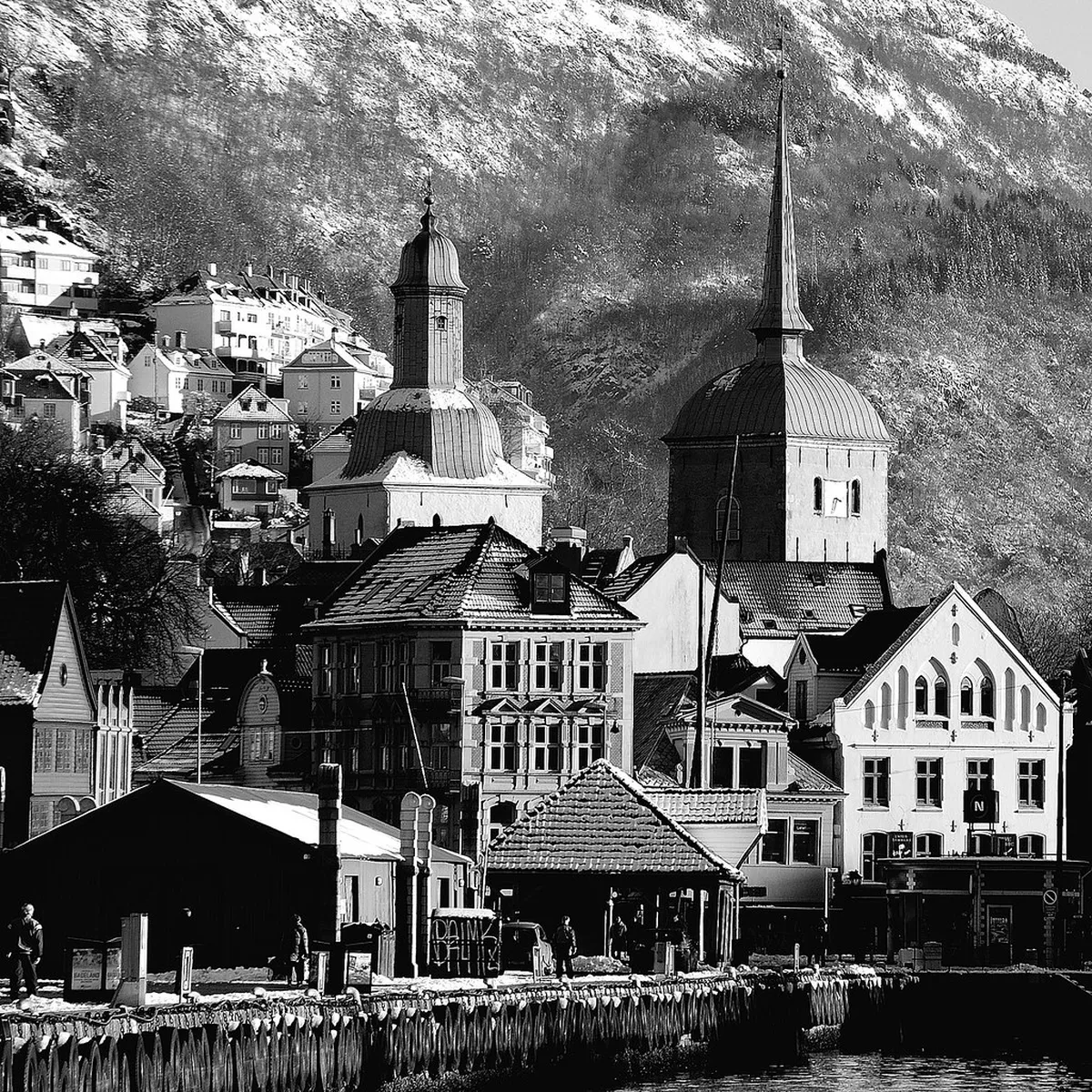
I have returned to Bergen four times during the winter months to experience its unique coastal charm. While the city is famous for rain, the winter season brings a magical atmosphere that summer visitors often miss. The streets glow with warm lights, the surrounding mountains wear fresh snow, and the crowds that pack the harbor in July have completely vanished.
Planning for the short daylight hours is essential for seeing the best winter activities in Bergen. In late December you get roughly six hours of usable light, with the sun rising around 9:45 and setting by 15:30. Structure outdoor activities in the narrow midday window, then lean into museums, concerts, and cozy bars after dark. For current events and official travel information, Visit Bergen maintains the authoritative city calendar.
The Gulf Stream keeps the harbor surprisingly temperate — temperatures typically hover between 0°C and 5°C, though wind and dampness make it feel colder. Expect a mix of crisp blue hours and dramatic misty mornings that make for extraordinary photography. This guide covers all thirteen essential activities, a complete three-day itinerary, logistics, and honest advice on what winter in Bergen is actually like.
Explore the UNESCO Bryggen Waterfront
Bryggen is Bergen's most iconic sight — a row of narrow, leaning timber warehouses first built by Hanseatic merchants in the 14th century. The site is a UNESCO World Heritage Site because the buildings still stand on their original 12th-century foundations, rebuilt after each fire using the same medieval layout and joinery techniques. In winter, without the July cruise-ship crowds, you can actually hear your footsteps on the wooden boardwalks.

The best time to photograph Bryggen in winter is the Blue Hour, roughly 15:00–16:00, when the warm amber light from the windows contrasts with the deep blue sky behind the wharf. Walk around to the harbor side to get the classic postcard shot looking back at the buildings. Then walk deep into the narrow rear alleyways to find small artisan workshops, woolen textile shops, and the Hanseatic Museum — all of which are far less crowded than in summer.
Admission to wander Bryggen itself is free. The Hanseatic Museum and Schøtstuene, which explains the merchant quarters and assembly halls behind the wharf, costs around 130 NOK for adults and is open daily. Allow at least two hours to do both the exterior and the museum justice.
Visit the Fish Market and Torgallmenningen Square
Bergen's Fish Market dates back to the 1200s and sits right on the harbor a short walk from Bryggen. In winter, skip the outdoor stalls and head directly inside to Mathallen, the covered hall facing the water. Here you can sit down for a bowl of Bergen's famous fish soup — a smoky, cream-based broth with white fish — or order a plate of skrei, the firm winter cod that Norwegian fishermen haul from the Lofoten waters January through April. A main dish typically runs 180–280 NOK.
Torgallmenningen, the broad pedestrian square just up from the harbor, is the social heart of central Bergen. In winter it connects the fish market with the KODE museums and the main shopping street, making it the most logical navigation hub if you want to move between sites without getting lost. The square is entirely walkable and links covered shopping arcades that give you shelter when the rain turns heavy.
For a more affordable feed, head up Strandkaien from the fish market to Søstrene Hagelin, a tiny counter-service spot where locals line up for inexpensive fish cakes and fish soup. It is the kind of place that does not appear in tourist brochures but fills up with off-duty harbor workers at lunch.
Ascend Mount Fløyen and Mount Ulriken
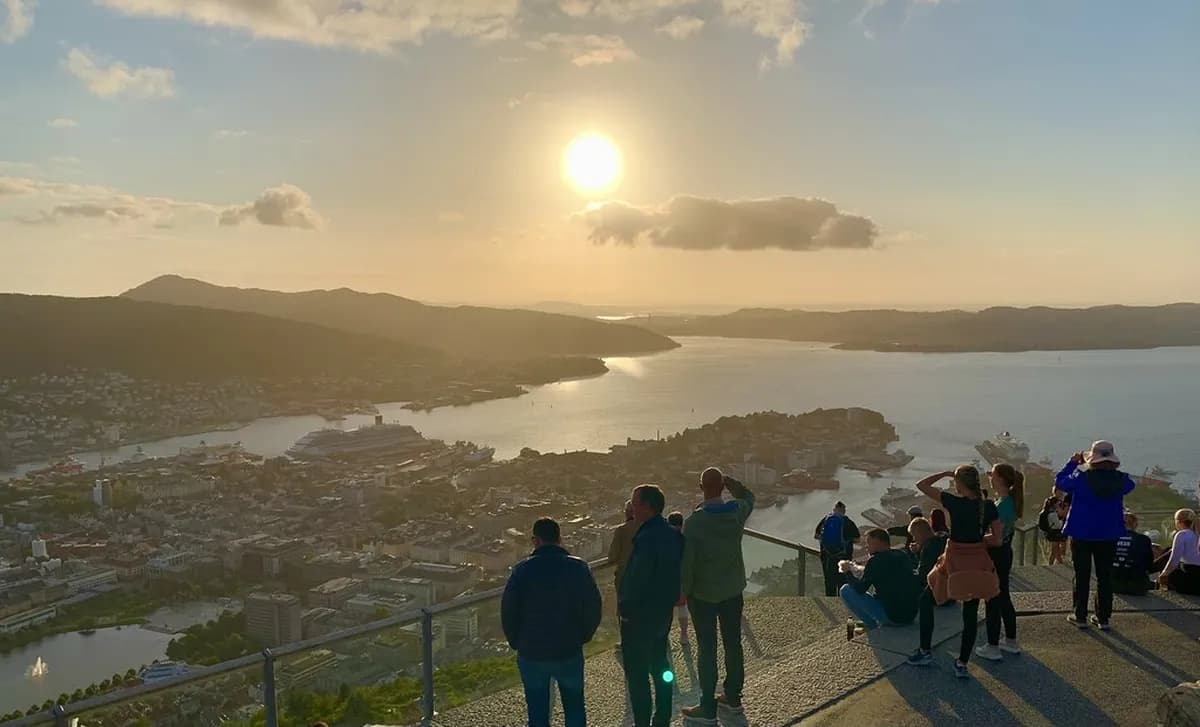
Mount Fløyen is the easier and more popular of Bergen's seven mountains. The Fløibanen funicular departs from the city center, 150 metres from Bryggen, every 15 minutes from 08:00 to 23:00. A round-trip ticket costs around 110 NOK for adults. The official Fløyen site provides live operating status and current hours. In winter the summit at 425 metres is often dusted with snow, and the café at the top serves waffles with brown cheese — the ideal warm-up after taking photos in the cold. Aim to reach the summit no later than 15:00 to catch the last of the daylight over the city and fjord.
Mount Ulriken, the tallest of Bergen's seven mountains at 643 metres, offers a very different experience. The Ulriken cable car (Ulriksbanen) costs around 230 NOK return and runs daily from 09:00. At this altitude you are frequently above the cloud layer, with clear views over the surrounding fjords when the valley below is socked in with grey mist. Strong winds can close the cable car at short notice, so check the Ulriksbanen website on the morning of your visit.
For those who want to hike rather than ride, the Skredderdalen route up Fløyen starts close to the city center and feels genuinely wild within minutes — far fewer people than the paved path from the funicular base. In winter, bring microspikes for the icy upper sections. If you want a gentler walk, the Lovstien path around the base of Fløyen stays below the snowline and takes about 90 minutes at an easy pace.
Pepperkakebyen: The World's Largest Gingerbread Town
One thing virtually no other travel guide covers for Bergen in winter is Pepperkakebyen — the Gingerbread City. Every November and December, tens of thousands of schoolchildren, families, and local businesses build an elaborate city entirely from gingerbread dough at Bergenhus Fortress. The result is a sprawling miniature town with gingerbread houses, trains, bridges, and even a harbor complete with small boats. It is genuinely one of the most charming winter experiences in all of Scandinavia, yet it appears on almost no international itineraries.
The display typically opens in late November and runs through late December or early January. Entry is a small fee of around 50–80 NOK, with children often free. The venue is warm inside, which makes it a welcome respite on a biting afternoon. Visiting in the evening adds atmosphere because the gingerbread structures are backlit and the fortress courtyard glows with candlelight.
Even if you visit Bergen in January after Pepperkakebyen has closed, the Christmas market at Festplassen in the city center usually runs until shortly before Christmas, featuring warm drinks, a Ferris wheel, and local craft stalls. Both events give Bergen a festive energy that the summer tourist circuit entirely misses.
Book a Fjord Day Trip Cruise
A winter fjord cruise is one of the most memorable things you can do in Bergen. The fjords are quieter, the waterfalls run full with snowmelt, and the dramatic light at this latitude turns the water a deep, almost black slate color. Two options dominate the market: the Mostraumen cruise and the longer Nærøyfjord route.
The Mostraumen cruise takes roughly three hours and navigates the tight, narrow channel of Mostraumen near Bergen. This is the better choice for winter because the entire journey fits within the available daylight window. Boats typically depart at 10:00, leaving enough light for the full sail and return. Tickets cost around 650–750 NOK and the boat has a heated indoor saloon so you can move between the outdoor deck and a warm seat as needed.
The Nærøyfjord, a UNESCO-listed branch of Sognefjord, is more dramatic but requires a full day. In December that means starting in the dark and returning in the dark, with only a few hours of grey daylight at the narrowest point of the fjord. If you have the time and can tolerate an early 07:00 start, it is extraordinary. If you only have three days and short daylight matters, Mostraumen is the smarter call. Prices for the full Nærøyfjord day trip via Norway in a Nutshell run around 1,500–1,800 NOK per person.
Attend a Winter Concert or Cultural Event
Bergen has a cultural life that punches well above its size. The Bergen Philharmonic Orchestra performs at Grieghallen, the city's main concert hall, throughout the winter season. The Philharmonic is one of the world's oldest orchestras, founded in 1765, and performs a regular winter programme that includes works by Edvard Grieg. Tickets typically start around 350–450 NOK and the hall itself is beautiful. Check the Bergen Philharmonic website for the 2026 season schedule.
For contemporary and local acts, Kulturhuset USF on the western harbor is the main alternative venue — it hosts everything from jazz and folk to experimental music and film. If you want something more intimate, Troldhaugen, Grieg's historic home about 20 minutes by bus from the city center, hosts recitals in the small Troldsalen concert hall with room for only 200 listeners. The combination of the historic villa setting and live Grieg music in winter is genuinely moving.
KODE, Bergen's art museum complex along the Lille Lungegårdsvannet lake, runs rotating temporary exhibitions through winter that are worth checking. A combined ticket for all four KODE buildings costs around 160 NOK. The Rasmus Meyer Collection inside KODE 3, with its major Munch and J.C. Dahl works, provides hours of dry, warm exploration on a stormy afternoon.
Tour King Håkon's Hall and Rosenkrantz Tower
When the weather turns truly ugly — and it will — King Håkon's Hall at Bergenhus Fortress is the perfect indoor refuge. Built by King Håkon Håkonsson in the 1260s as a royal residence, it is one of the best-preserved secular medieval buildings in Norway. The great hall's thick stone walls are impervious to wind and rain, and the atmospheric interior is reportedly the inspiration for the Great Hall at Hogwarts (you can judge for yourself). Admission is around 120 NOK per adult and the hall is open daily 11:00–15:00 in winter.
Directly adjacent, the Rosenkrantz Tower served as both a fortified residence and a defensive watchtower from the 13th century onward. Climbing the narrow internal stairs is mildly vertiginous but the views through the ancient window slits over the harbor are worth it. Tickets for the tower are often bundled with the hall for a small additional fee. Combined, the two sites take about 90 minutes and keep you completely sheltered from any weather.
The surrounding Bergenhus Fortress grounds are also pleasant for a quiet winter walk even without entering the buildings. The fortress saw German occupation in World War II and a small display inside the tower covers this period. Book tickets at the Bergen City Museum website, which manages both sites.
Join a Bergen Bar Crawl or Cozy Pub Evening
Bergen's bar scene is small but excellent for an evening of koselig — the Norwegian concept of warmth and coziness that is hard to translate but impossible to miss when you experience it. Apollon Platebar on Nygårdsgt is a record shop that doubles as a bar, with 35 beers on tap and walls lined with vinyl. It is relaxed, unpretentious, and the perfect place to sit alone with a local craft beer and a stack of borrowed records.
No Stress, close to Bryggen, is tiny — maybe 20 seats — but the cocktails are excellent and the low lighting and vintage furniture make it one of Bergen's most genuinely cozy spots. If No Stress is full, Dark & Stormy a short walk away has a larger space, exceptional cocktails, and an outdoor garden with heaters that local Bergensers use even in January. Sjøboden, a bar with historical roots near the wharf, has live music most nights and a knowledgeable bar staff — it is the kind of place where you show up for one drink and stay for three hours.
For solo travelers, the bar inside the Fish Market building is reliably open and social. Café Opera on Engen functions as a lunch spot by day and a cocktail bar with live DJs by night. Norway's alcohol laws mean bars close by 02:00 and the wine monopoly (Vinmonopolet) closes by 18:00 on weekdays, so plan accordingly and stock up before evening.
Enjoy Brunch at Bergen Brunsj
Bergen Brunsj is the city's most popular brunch destination and a genuine institution among locals. The menu centers on generous platters of cured fish, local cheeses, flatbreads, and eggs, served with excellent filter coffee during the dark morning hours. A full brunch plate typically costs around 250–300 NOK. The setting — exposed brick, warm light, the smell of fresh bread — makes it ideal for a long, slow winter morning.
The critical practical detail: Bergen Brunsj fills completely on weekend mornings and booking a table in advance is essential, not optional. Walk-ins on a Saturday or Sunday rarely work out. Weekday visits are slightly easier but still worth reserving. It is best suited to food-focused travelers and couples who want a leisurely mid-morning meal rather than a quick fuel stop before a museum sprint.
If Brunsj is full or you want a lighter option, Godt Brød has multiple locations across the city — including one right outside the Fløibanen funicular — and makes excellent cardamom pastries and sourdough. Det Lille Kaffekompaniet, just below the funicular, is tiny and often full but worth a visit for the coffee. Frescohallen inside the historic stock exchange building is worth visiting for breakfast as much for the dramatic fresco-covered interior as the food.
The Aurora Borealis: Bergen vs. Tromsø — an Honest Take
Many first-time visitors to Bergen come specifically hoping to see the northern lights. It is worth being direct: Bergen is at 60°N latitude, which puts it too far south for reliable aurora borealis. The lights do occasionally appear on exceptionally active geomagnetic nights, but cloud cover — Bergen sees rain or cloud more than 230 days per year — makes sightings rare even when the solar activity is strong enough. You should not book a Bergen winter trip primarily for the aurora.
If the northern lights are your main goal, Tromsø at 69°N is the correct destination. The aurora season there runs from late September to mid-March with far better odds of clear skies and much higher activity. A direct flight from Bergen to Tromsø takes about 90 minutes and the cities make a natural pairing for a longer Norway trip. Bergen gives you fjords, history, and urban culture; Tromsø gives you the aurora, the Arctic landscape, and the polar night. Combining both in one trip is a popular approach and worth the extra travel day.
Bergen does have genuine winter magic — it is just not the aurora. The Blue Hour light, the snow-capped peaks above the city, the glow of Bryggen's windows at dusk, and the festive energy of Pepperkakebyen are the city's real winter gifts. Match your expectations to what Bergen actually delivers and you will not be disappointed.
Follow a 3-Day Winter Itinerary
On day one, orient yourself in the city center. Start the morning at Bergen Brunsj (book ahead) then walk to Bryggen for the late-morning light. Spend the early afternoon at the Hanseatic Museum or King Håkon's Hall to stay sheltered from the midday weather. By 14:30 take the Fløibanen funicular up to Mount Fløyen to catch the sunset from above the city. In the evening, dine at Bryggeloftet & Stuene for traditional reindeer or fish soup, then explore Sjøboden or Apollon Platebar for a nightcap. Use the Bergen Card to cover museum entries and public transport.
Day two belongs to the water. Book the Mostraumen fjord cruise for the 10:00 departure, which returns by 13:00. Use the afternoon for the KODE art museums — the Munch collection in KODE 3 alone takes two hours — and then visit the Fish Market's Mathallen for an early dinner of skrei or a seafood platter. If December or January, check whether Pepperkakebyen is open at Bergenhus Fortress for a festive evening visit.
On day three, head for altitude. Take the Ulriken cable car up for panoramic morning views, then come back down and walk to the city via the harbor. Finish the afternoon at Nordnes Sjøbad for a sauna session and, if you are brave, a dip in the cold fjord water — the classic Norwegian wellness contrast. It is a fittingly energizing way to close out a Bergen winter trip before your train or flight home.
Master Bergen Logistics and Getting Around
The Bybanen light rail is the fastest and cheapest link between Bergen Airport Flesland and the city center. The journey takes 45 minutes and costs around 50 NOK — dramatically less than the Flybussen airport bus (189 NOK, 30 minutes) or a taxi (500–700 NOK for a 20-minute ride). Buy your ticket at the platform machine before boarding. The Flybussen is worth considering only if you are staying right at Bryggen, as it stops directly outside.
Central Bergen is very walkable, but winter cobblestones can be treacherous after overnight frost. Wear boots with genuine grip rather than fashion footwear — sprained ankles on Bryggen's uneven stones are a real and embarrassing risk. Most major attractions cluster within a 20-minute walk of Torgallmenningen, which makes the area easy to navigate without public transport for everyday sightseeing. Bergen's public transport system by bus or tram is straightforward for trips to Fantoft or Troldhaugen.
The Bergen Card covers unlimited light rail and bus travel plus free or discounted entry to most museums, the Fløibanen, and the Bergen Aquarium. A 24-hour card costs around 345 NOK; a 48-hour card around 490 NOK. If you plan to visit three or more museums and use the funicular at least once, the card pays for itself. Pick it up at the tourist office on Strandkaien or buy it digitally via the Visit Bergen app.
Choose the Best Places to Stay in Bergen
Staying within five minutes of Torgallmenningen or Bryggen is the clear best choice for winter. You minimize exposed walking in the cold and rain, and the harbor area — with its concentrated restaurants, bars, and the funicular base — becomes immediately accessible. Det Hanseatiske Hotel, inside a 16th-century Bryggen building, offers one of Bergen's most atmospheric experiences. Bergen Børs Hotel in the old stock exchange on Torgallmenningen is consistently praised for its exceptional breakfast. Both sit at the luxury end; expect 2,000–4,000 NOK per night in winter, which is notably lower than summer rates.
For mid-range, Bergen Citybox in the center offers clean, functional rooms at around 900–1,500 NOK per night. Consult a detailed guide on Bergen's best neighborhoods and hotels for a full neighborhood breakdown including the quieter Nordnes peninsula, where charming white wooden houses and local cafes like Løvetann give a more residential feel while remaining a short walk from the action.
Book early regardless of budget. Bergen has fewer hotel rooms than its visitor numbers demand, and even mid-range properties fill up during the Christmas market season in November and December. January and February see lower demand and correspondingly lower prices — often 20–30% below December peaks — which makes those months a good value window for budget-conscious travelers.
What to Pack for a Norwegian Winter
Bergen's coastal weather is notoriously changeable — rain, wind, wet snow, and brief sunshine can all occur within a single afternoon. The single most important item you can pack is a waterproof outer shell: either a high-quality rain jacket or a hybrid waterproof/down coat. Avoid wool coats that absorb water. Helly Hansen is the brand of choice among locals for a reason. Thermal merino wool base layers are essential underneath — they regulate temperature and remain odor-resistant through multiple days of wear.
Footwear is the other non-negotiable. Choose waterproof insulated boots with a grippy outsole. If you plan to hike, add a pair of lightweight microspikes that slip over your boot soles — they transform icy mountain trails into safe terrain and cost about 200–400 NOK at any Bergen outdoor gear shop. Avoid leather boots, heeled shoes, or anything with a smooth sole on Bergen's cobblestones in below-freezing conditions.
Round out your kit with a warm hat, waterproof gloves, and a merino neck gaiter to guard against the harbor wind. A compact daypack is useful for carrying your camera, a thermos of hot coffee, and spare layers on mountain trips. Pack the Bergen Card in your wallet and a portable charger for your phone — batteries drain faster in the cold, and you will use maps constantly on the hilly streets.
Frequently Asked Questions
Is it very cold in Bergen during the winter?
Bergen is milder than most of Norway due to the Gulf Stream. Temperatures typically hover around 32°F to 40°F (0°C to 5°C). However, the high humidity and wind can make it feel much chillier than the thermometer suggests.
Does it snow a lot in Bergen city center?
Snow in the city center is inconsistent and often turns to rain quickly. While the surrounding mountains are usually white, the streets are more likely to be wet or slushy. Always check the mountain webcams for current snow conditions before heading up.
How many hours of daylight does Bergen get in winter?
In late December, Bergen receives about six hours of daylight, with the sun rising at 9:45 AM and setting by 3:30 PM. The days lengthen quickly through January and February. Plan your outdoor activities for the midday window to maximize visibility.
Visiting Bergen in winter offers a rare chance to see one of Europe's most beautiful cities without the summer rush. By balancing your time between the snowy mountain peaks, the UNESCO wharf, the fjord cruises, and the warm museum halls, you can enjoy the best of all Bergen's worlds. The city's koselig spirit will keep you warm even when the coastal weather turns misty and cold.
Pack your waterproof boots and a good camera to capture the Blue Hour over the Hanseatic buildings and the snow-dusted peaks. Whether you are cruising Mostraumen at midday or warming your hands at Pepperkakebyen on a December evening, winter in Bergen is an experience you will not quickly forget.
You might also like


Continue reading
More guides you'll find useful