Oslo to Bergen Train: The Ultimate Bergensbanen Guide
Plan your Oslo to Bergen train journey with our guide to the Bergensbanen. Includes timetables, ticket booking tips, the best side for views, and Flåm Railway connections.
On this page
Oslo to Bergen Train: The Ultimate Bergensbanen Travel Guide
The Bergen Railway — Bergensbanen — connects Oslo to the western coast in roughly seven hours of continuously changing scenery. You cross forests, mirror-calm lakes, and the vast Hardangervidda mountain plateau before descending through gorges toward Bergen's rainy harbour. At 1,222 metres above sea level, Finse Station is the highest point on any main railway line in Northern Europe. This guide covers everything you need: timetables, Minipris booking tactics, the Myrdal transfer, and how to choose a seat.
Whether you ride in midsummer daylight or under a February snowpack, the Bergensbanen delivers. Read on to plan the journey in 2026 with specific prices, departure patterns, and the practical details that first-timer guides usually skip.
The Bergensbanen Experience: What to Expect
The Bergensbanen is repeatedly cited among the most scenic train journeys on the planet, and it earns that reputation through sheer variety. The 496-kilometre route passes through 182 tunnels and across more than 300 bridges. You depart from Oslo's city-centre station, climb gradually through pine forests, and then emerge onto the treeless Hardangervidda plateau — the largest high-mountain plateau in Northern Europe — before dropping toward the fjord country.
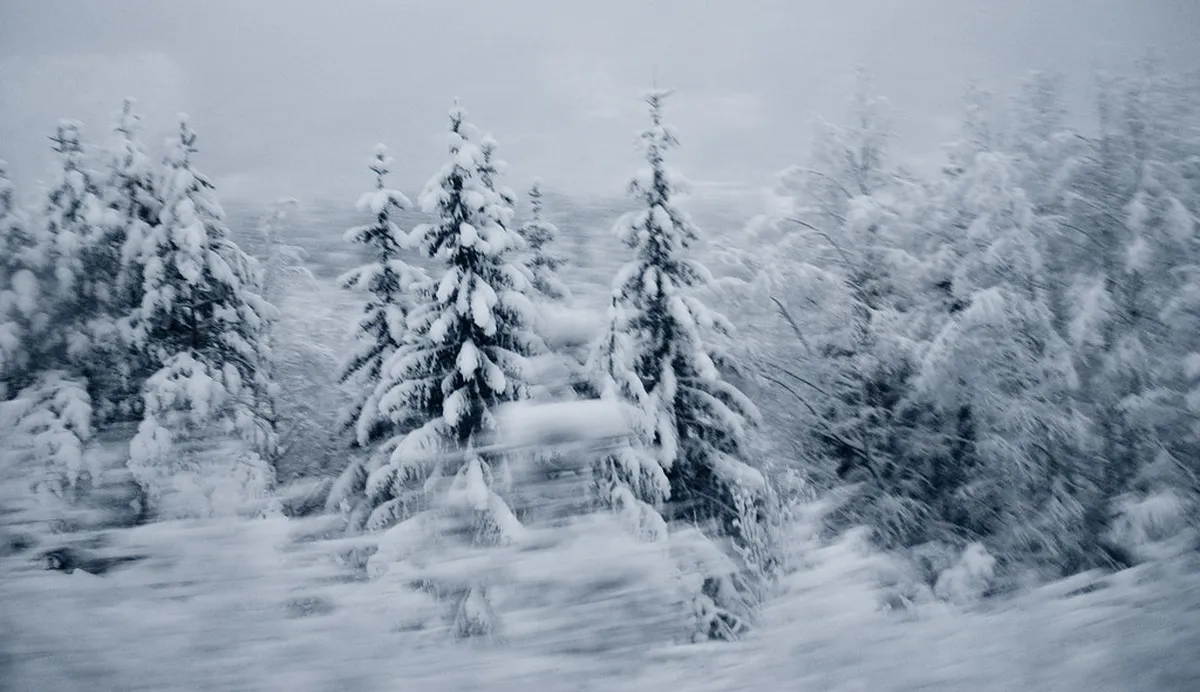
The transition in landscape is more dramatic than photographs suggest. East of Geilo the scenery is green and lake-dotted. By Finse everything is rock, ice, and sky. West of Myrdal the train descends steeply into a landscape of waterfalls and deep canyons. Arriving in Bergen you pass a patchwork of islands before pulling into the compact city-centre station.
The railway was completed in 1909 and served as a strategic link long before tourism became its calling card. Today Vy (formerly NSB) operates the route year-round with modern double-decker carriages on the daytime departures. The Norwegian rail infrastructure is maintained to high standards, and the train runs on schedule reliably; major delays are rare outside of severe winter storms.
Oslo to Bergen Train Timetable and Duration
In 2026, Vy runs five westbound departures per day in summer (June–August), dropping to four in winter. Morning trains depart Oslo S at around 07:58 and 09:58, arriving in Bergen at approximately 14:54 and 16:54 respectively. There is also a midday departure around 13:05 and an afternoon service. The overnight train departs Oslo S at 23:05 and reaches Bergen at 06:47, saving a hotel night but sacrificing the views entirely.
Total journey time is advertised at between 6 hours 30 minutes and 7 hours 30 minutes depending on the specific service and the number of stops. Express-pattern trains stop at fewer intermediate stations and are marginally faster. Check vy.no for the live schedule, as exact departure times shift slightly between seasons.
Night trains are available for those who want to save on a night of accommodation. However, taking the sleeper train means you will miss the spectacular views of the plateau. See our complete transport guide for arriving in Bergen for alternatives and timing. The schedule remains fairly consistent throughout the year, though winter weather can cause minor delays.
How to Book Tickets: Minipris, Vy Pluss, and Eurail
Vy releases its cheapest fares — called Minipris — approximately 90 days before the departure date. At that point you can often find one-way tickets for as little as 249–399 NOK (roughly €22–35). These allocations are limited and go fast during June and July, so set a calendar reminder for exactly 90 days before your planned travel date and book the moment seats drop.
Standard Flex tickets cost between 700 NOK and 1,100 NOK (€62–97) and can be changed or refunded. Last-minute walk-up fares at the station can reach 1,400 NOK or more. Children under 16, seniors (67+), and students qualify for percentage discounts on most fare classes when booking via the Vy app or vy.no.
If you carry a Eurail or Interrail pass, the Bergensbanen pass as an included route — but you still need to book a seat reservation in advance. The reservation fee is 90 NOK (about €8) and is mandatory for all seat-reservation trains, including this one. You cannot simply board with a pass without a reservation; staff will charge you the full walk-up fare. Book the reservation through vy.no, selecting "pass holder" when prompted. Consider a Bergen Card for discounts on museums and transit after you arrive — it does not cover the train itself, but offers good value on local transport and attractions.
| Fare Class | Price Range (NOK) | Price Range (€) | Key Features |
|---|---|---|---|
| Minipris | 249–399 | €22–35 | Non-refundable, limited allocation, book 90 days ahead |
| Standard Flex | 700–1,100 | €62–97 | Refundable, changeable, spacious seats, WiFi, power outlets |
| Vy Pluss | 900–1,300+ | €80–115+ | Premium carriage, complimentary hot drinks, wider seats, quieter environment |
| Walk-up | 1,400+ | €125+ | Last-minute booking at station, limited availability in peak season |
Standard vs. Vy Pluss: What You Actually Get
Vy Pluss is the premium carriage on daytime Bergensbanen services. The differences are real and worth knowing before you book. Standard seats are spacious by European train standards, with a fold-down tray, power outlet at every seat, and generous legroom. WiFi is available throughout the train, though signal drops in the longer tunnels — this is unavoidable due to the 182-tunnel count.
Vy Pluss adds four things beyond standard: complimentary hot drinks (coffee, tea, hot chocolate) available throughout the journey; a quieter carriage environment with a stronger social norm against phone calls; slightly wider seats with more recline; and priority boarding at Oslo S. The coffee alone can offset the price gap if you drink several cups on a seven-hour journey. Vy Pluss is worth it if you are working remotely or want a calmer environment; standard is entirely adequate for most leisure travelers.
The onboard Kafé carriage is accessible to all passengers. It serves Norwegian waffles with brown cheese and jam, reindeer wraps, hot soup in winter, and cold drinks. Prices are roughly double what you would pay in a Bergen cafe — a waffle with topping runs about 65 NOK (€6). Many budget travelers bring their own food from a Rema 1000 near Oslo S. The Kafé is also a social hub mid-journey, popular around the Finse stretch when passengers gather to watch the plateau.
The Best Views: Which Side of the Train to Sit On?
There is a standard answer to this question — left side from Oslo — and then there is a more accurate one. Rail Ninja's own page notes that panoramas are strong on both sides throughout the journey, and that is largely true once you reach the high plateau. The scenery is 360-degree by Finse, and windows on both sides show open snowfield and glaciers. Worrying too much about side selection is wasted energy on this route.
That said, practical guidance: traveling from Oslo to Bergen, the left side (A seats) offers slightly better lake views in the first two hours as the train climbs out of the Numedal valley. After Geilo, both sides become equally dramatic. Between Myrdal and Voss the right side (D seats) provides a better look down into the canyon section. On the final approach to Bergen, the left side catches the most water and island scenery.
If you are traveling as a couple, book one A seat and one D seat in the same row. For solo travelers, an A seat in the first two-thirds of the journey satisfies most photographers. Window-seat availability drops sharply for summer dates when booked close to departure; seat selection is enabled during booking on vy.no, so choose deliberately rather than accepting the default assignment.
Key Stops: Finse, Myrdal, and the Flåm Railway Transfer
Finse sits at 1,222 metres and is one of the most remote stations in Norway. There are no roads to Finse — the train is the only motorised access. The station is famous among cyclists as the start of the Rallarvegen gravel road and among film historians as one of the locations used for Hoth in The Empire Strikes Back (1980). Even if you do not exit, the platform stop at Finse gives you a few minutes in the cold, clear mountain air.
Myrdal is the junction station for the Flåmsbana (Flåm Railway), which descends 863 metres in 20 kilometres to the village of Flåm on the Aurlandsfjord. The transfer window is 5–10 minutes depending on the service. This sounds tight and it is. The Flåm Railway platform is directly across from the Bergensbanen platform — it is a very short walk — but if you have large suitcases or are traveling with young children the pace required is uncomfortable. One practical move: position yourself in the rear carriages before arriving at Myrdal, as the Flåm Railway train boards from the rear end of the platform. If you miss the connection, the next Flåmsbana departure is typically 2 hours later; you will need to wait at Myrdal, which has a small café but limited shelter in bad weather.
Voss and Geilo are the other notable stops worth knowing. Voss is a hub for outdoor adventure — white-water rafting, bungee jumping, and skiing in winter — and is only 1 hour from Bergen by train. Geilo is a compact ski resort town midway across the plateau; worth a night if you are flexible. Neither stop requires advance reservations beyond your seat booking.
Once you arrive, explore Bergen's top attractions and neighborhoods within easy reach of the central station to maximize your first day in the city.
Norway in a Nutshell vs. Direct Train: Which is Right for You?
The direct Bergensbanen takes approximately 7 hours and costs from 249 NOK with Minipris. The Norway in a Nutshell route combines the Bergensbanen to Myrdal, the Flåm Railway to Flåm, a fjord cruise on the Nærøyfjord, a bus from Gudvangen to Voss, and a final train leg to Bergen — adding up to 12–14 hours and typically 900–1,600 NOK per person depending on booking timing and season.
Choose the direct train if you are arriving tired after a long flight, are carrying large bags (the Flåm Railway has limited luggage space), are traveling with toddlers, or simply want to reach Bergen to start exploring. The mountain scenery on the direct route is exceptional on its own terms and does not leave you feeling you missed out.
Choose Norway in a Nutshell if you have a full spare day, the fjord cruise is on your must-do list, and you are comfortable with the multi-modal logistics. The Nærøyfjord section — a UNESCO-listed narrow arm of the Sognefjord — is genuinely not replicable from a train window. People with back problems or poor mobility should know that the Flåm Railway carriages have narrower aisles and less overhead luggage space than the main Bergensbanen trains. If fjord scenery is your priority but logistics worry you, book the Nutshell as a guided package; if you want flexibility, book the components separately through vy.no and visitflam.com.
Navigating Oslo S and Bergen Central Station
Oslo Central Station (Oslo S) is a large, modern hub with clear signage, multiple food options, and a well-stocked Narvesen convenience store near the main hall. The Bergensbanen typically departs from tracks 10–13 on the lower platform level. Arrive at least 20 minutes early during summer peak season because the platforms fill up quickly and the escalators can be slow with luggage. Luggage lockers are available on the ground floor and accept credit cards; a standard locker costs around 50–80 NOK per day.
Bergen Central Station is compact and immediately pleasant after Oslo S. It opens directly onto the city's main pedestrian street, and the famous Bryggen wooden wharf is a 10-minute walk. Use our local transport guide for navigating Bergen to plan how you'll reach your hotel. Luggage lockers are available at Bergen station as well, which is useful if you want to walk to your hotel unencumbered.
Both stations have accessible platforms with step-free access and assistance available on request through Vy's accessibility service (book 24 hours in advance via vy.no). Bicycles can be transported for an additional fee of around 110 NOK; book the bike space when purchasing your ticket, as capacity is limited per departure.
Best Time of Year and Daylight Reality Check
The ideal travel window for maximum scenery is late May through mid-August. June and July give you 17–19 hours of daylight in Norway; on a morning departure from Oslo you are in full light for every kilometre of the route. The plateau is snow-free from mid-June, showing its distinctive moonscape of bare rock, arctic flowers, and glacier remnants. Wildflowers are at their peak in early July.
September and October offer golden valley colours below the treeline before the plateau turns brown and then white again. These months have fewer tourists, cheaper Minipris fares, and roughly 12–14 hours of daylight — entirely workable for the 7-hour journey on a mid-morning departure. November through January is the honest challenge: a 07:58 departure from Oslo in December reaches the plateau in darkness (sunrise is around 09:30) and the day fades by 15:00. If you take the overnight train in winter, you obviously see nothing. A late-February or March departure — with 9–11 hours of daylight and heavy snow still on the plateau — is one of the most visually striking times to ride, and ticket prices are well below summer levels.
Review seasonal weather patterns for Bergen to pack appropriately for your travel dates. Bergen itself is rainy in all seasons; the east side of the mountains is drier.
Luggage, Packing, and Practical Tips
The Bergensbanen has generous overhead racks and large floor-level luggage bays at the ends of each carriage. Standard 70-litre backpacks and carry-on-size suitcases store easily. Hardside spinner suitcases in the 90-litre range are fine on the direct train but become a problem at Myrdal if you intend to transfer to the Flåm Railway — the Flåmsbana carriages are older and have limited luggage space. If you are taking the Nutshell route, travel light or leave a bag in a Bergen station locker to collect on arrival.
Dress in layers. The train is heated to around 22°C, but a brief stop at Finse in winter means stepping onto a platform at -15°C or colder. Comfortable walking shoes matter if you plan to visit the Kafé carriage repeatedly. Keep a rain jacket accessible in your daypack — Bergen's weather greets almost every arrival with drizzle regardless of what the forecast said that morning.
Download the Vy app before your journey. It stores your digital ticket, shows live delay information, and lets you order food from the Kafé to your seat (on selected services). The app also handles seat changes if you realise after boarding that you are on the wrong side for a particular stretch. Mobile data is sparse in tunnels; download offline maps of Bergen before you leave Oslo.
Frequently Asked Questions
How long is the train journey from Oslo to Bergen?
The direct train journey typically takes between 6.5 and 7.5 hours. This duration depends on the specific departure and the number of stops along the route. Most travelers find the time passes quickly due to the incredible scenery. Our the Bryggen wharf provides details on visiting this famous wooden district once you arrive.
Which side of the train has the best views?
For the journey from Oslo to Bergen, the left side is often considered best for the initial climb. However, the right side offers more dramatic views of the fjords and canyons after passing through Finse. Booking seats on both sides is the best strategy for groups.
How much do tickets for the Bergensbanen cost?
Ticket prices vary significantly based on how far in advance you book your seat. Standard fares can range from 300 NOK to over 1,000 NOK for last-minute bookings. Look for Minipris deals to find the lowest possible rates for your travel dates.
Is there a night train option available?
Yes, Vy operates a night train with sleeping compartments between Oslo and Bergen. This is a great way to save time and money on a hotel stay. However, you will miss the famous mountain scenery that makes this route so iconic.
Riding the Bergensbanen is as straightforward as Norwegian train travel gets: book at least 90 days out for Minipris prices, choose your seat deliberately, position yourself near the rear carriages if you plan to transfer at Myrdal, and bring layers for Finse. The seven hours go quickly when the landscape is this varied.
Bergen is an excellent base for further exploration of the western fjords, and arriving by train rather than plane puts you in the centre of the city without any airport transfer. Whether you continue on to the Nærøyfjord or spend your days in Bergen's compact neighbourhoods, the train ride itself will likely be one of the highlights of your Norway trip.
You might also like

Continue reading
More guides you'll find useful