Bergen Weather by Month: 10 Things to Know Before You Go
Plan your trip with our Bergen weather by month guide. Discover the best time to visit, monthly rainfall totals, and essential packing tips for Norway.
On this page
Bergen Weather by Month: 10 Things to Know Before You Go
Bergen is Europe's rainiest city, receiving around 2,250mm of precipitation per year across roughly 230 wet days. Knowing what each month actually delivers — temperatures, rainfall totals, and daylight hours — is the difference between a well-prepared trip and a soggy disaster. This guide covers every month with real data and practical advice so you can plan confidently. Understanding when to visit Bergen starts with grasping its famously moody climate.
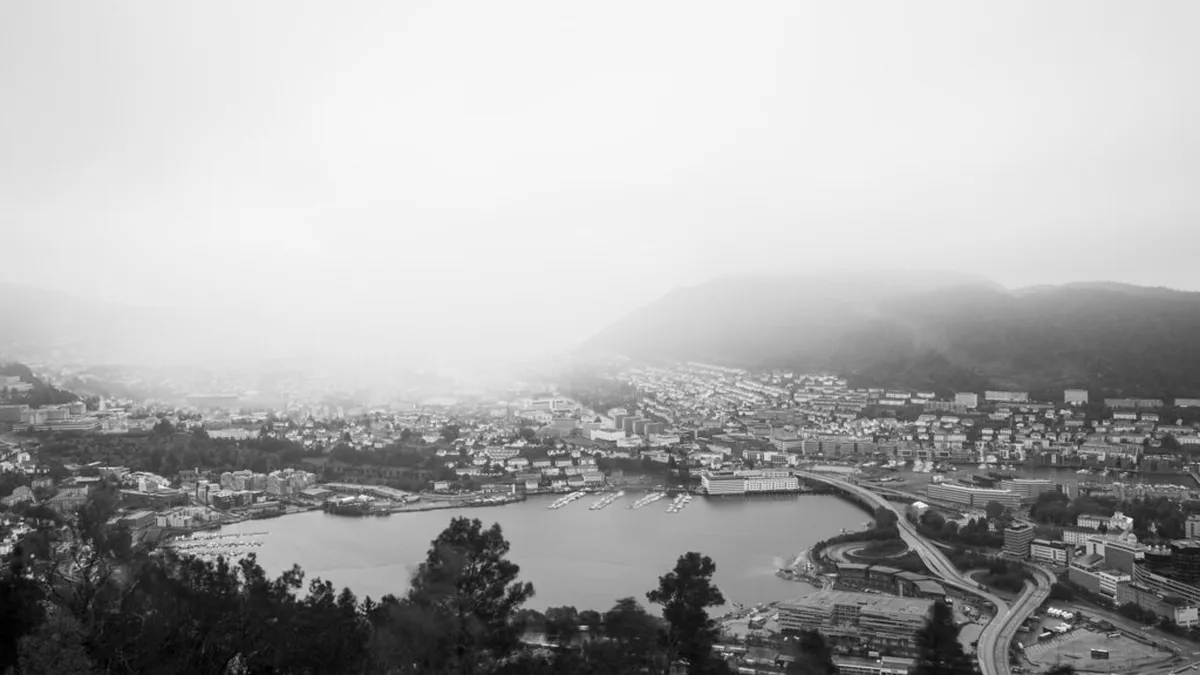
The city sits at sea level in a natural bowl formed by seven mountains. Warm, moist air rolls in off the North Sea and hits those peaks, releasing rain directly over the city center. Locals don't complain — the same rain keeps the landscape an impossible shade of green and the waterfalls thundering into the fjords. The right gear and a flexible mindset make Bergen enjoyable in any month of 2026.
Bergen Climate Overview: Understanding the City of Rain
Bergen's climate is classified as oceanic (Cfb), heavily moderated by the warm Gulf Stream that flows along Norway's west coast. This current keeps the harbor ice-free year-round and prevents the brutal cold you would expect at 60°N latitude. Average annual temperatures range from around 1°C in January to 17°C in July — mild by Norwegian standards. The flip side is persistent cloud cover and rainfall that persists even into June, the technically "driest" month.

The Seven Mountains (De syv fjell) surrounding the city are the direct cause of Bergen's legendary rainfall. As Atlantic air masses push inland, they rise over these peaks in a process called orographic lift. The rising air cools, condenses, and falls as rain — directly over the city center and the historic wharf at Bryggen. The surrounding mountains receive the bulk of that moisture, which is why high-altitude trails on Mount Fløyen are often wetter than the streets below.
Humidity remains high year-round, typically between 75% and 85% on the coast. That coastal dampness is why Bergen feels colder than it actually is. A November afternoon at 6°C with 80% humidity and wind off the fjord feels genuinely raw. Always consult Visit Bergen's official climate page for current-season conditions before you pack.
Monthly Temperature Averages in Bergen
Bergen's temperatures are mild but rarely warm. The warmest month is July, when daytime highs average around 20°C / 68°F. January is the coolest month, with daytime highs around 3–4°C / 37–39°F and lows that occasionally dip below freezing. Snow falls each winter but rarely settles at sea level for more than a day or two — the salt air and rain wash it away quickly, though the mountain peaks stay white through April.
Spring warms slowly: March still averages only 7°C by day, while May reaches a pleasant 14°C. Autumn cools just as gradually — September still feels like a warm month at 15–16°C before October and November bring sharp drops. The table below shows the full monthly picture alongside rainfall and daylight, the three numbers you need for trip planning.
| Month | Avg High (°C/°F) | Avg Low (°C/°F) | Rainfall (mm) | Rain Days | Daylight (hrs) |
|---|---|---|---|---|---|
| January | 4 / 39 | 0 / 32 | 190 | 20 | 7 |
| February | 4 / 39 | 0 / 32 | 152 | 17 | 9 |
| March | 7 / 45 | 1 / 34 | 170 | 18 | 12 |
| April | 10 / 50 | 3 / 37 | 145 | 17 | 14 |
| May | 15 / 59 | 7 / 45 | 125 | 15 | 17 |
| June | 18 / 64 | 10 / 50 | 132 | 14 | 19 |
| July | 20 / 68 | 12 / 54 | 155 | 15 | 18 |
| August | 20 / 68 | 12 / 54 | 190 | 17 | 16 |
| September | 16 / 61 | 9 / 48 | 240 | 20 | 13 |
| October | 11 / 52 | 5 / 41 | 270 | 22 | 10 |
| November | 7 / 45 | 2 / 36 | 220 | 20 | 7 |
| December | 4 / 39 | 0 / 32 | 200 | 20 | 6 |
Data sourced from the Norwegian Meteorological Institute via Yr.no. Rain days reflects days with at least 1mm of precipitation. October's 270mm is consistently the highest monthly total, making it Bergen's rainiest month on record.
Rainfall in Bergen: What to Expect Each Month
No month in Bergen is genuinely dry — even June, the driest month, averages 132mm across 14 rain days. What varies is the intensity and character of the rain. Summer showers tend to arrive fast and pass quickly, often within 30 minutes. Autumn and winter bring slower, heavier systems that can settle over the city for 48 hours at a stretch.
The wettest stretch runs from September through November. October's 270mm average is nearly double what June delivers. These are not gentle drizzles: strong Atlantic fronts push in from the southwest, and the combination of rain and wind makes umbrellas useless. Locals universally skip the umbrella and rely on a quality rain shell with a fitted hood.
February and April are the relatively drier winter and spring months, each averaging around 145–152mm. If you want the best statistical chance of a dry afternoon, visit in May or June. You still need your rain gear — but you are more likely to get a full day of clear skies in late May than at any other time of year. Plan rainy-day Bergen ideas as your backup even then.
Bergen's rain often follows a predictable daily pattern: clearing skies in the morning (07:00–11:00) before Atlantic fronts push back in by early afternoon. Check Yr.no hourly forecasts and schedule outdoor hikes for morning window, leaving museums and Bryggen for the afternoons when rain returns.
Sunshine Hours and Daylight Variations
Bergen's daylight swings dramatically across the year. In June, the sun rises before 04:30 and sets after 23:00, giving you nearly 19 hours of usable light. This is the defining feature of a Norwegian summer — outdoor dinners at 21:00 with full daylight are completely normal. The long evenings make June and July feel abundant even when clouds block direct sun.
December is the opposite extreme. Sunrise comes around 09:30 and sunset by 15:30, leaving just six hours of daylight. Actual sunshine hours are scarce — cloud cover means Bergen averages only about 2 hours of direct sun per day in December. January improves slightly, and by March the days lengthen fast: you gain roughly 3–4 minutes of light per day through the spring equinox.
Actual sunshine hours (sun breaking through cloud) are modest even in summer. July averages around 7 hours of sunshine per day, which is the annual peak. That number drops to roughly 3–4 hours in May and June despite the long daylight window, because cloud cover is persistent. For northern Europe, though, this is still serviceable hiking and sightseeing weather — you get usable outdoor light even under overcast skies.
October and November are Bergen's cloudiest and wettest months, with up to 270mm of rain and 22 rain days. Heavy Atlantic fronts bring steady, drenching weather and strong winds that can cancel fjord cruises overnight. Plan indoor activities as your primary itinerary, not backups, when visiting in autumn.
Best Time to Visit Bergen for Fjord Cruises
Late spring — specifically mid-May to mid-June — offers the most dramatic fjord scenery. Snowmelt from the surrounding mountains feeds dozens of waterfalls that cascade directly into the water. Visibility is often sharp and the foliage is that brilliant early-season green. Summer has the most cruise departures and the longest operational windows, making July and August the most convenient months for ferry booking.
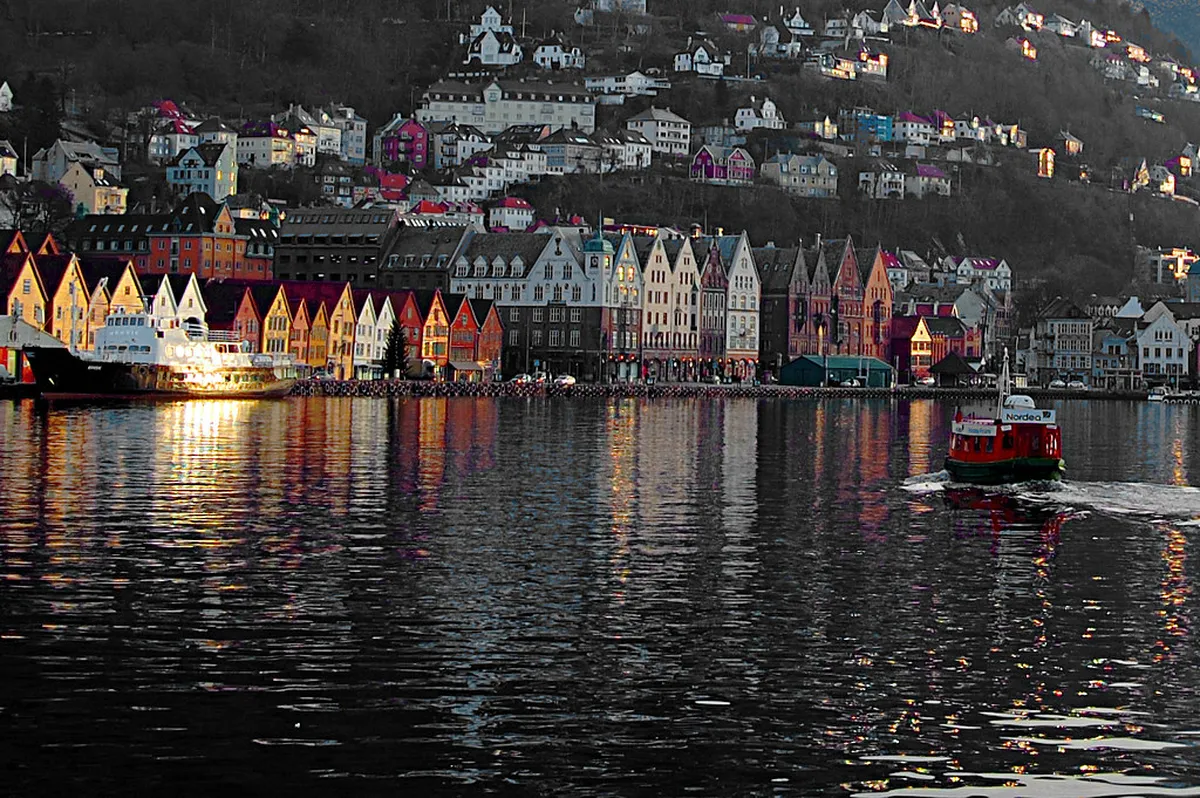
Autumn cruises in September and early October offer low-angle golden light and intense colors on the hillsides. The waterfalls are still running strong from the autumn rains. Cloud can hang low over the peaks, creating a moody, cinematic atmosphere that many photographers prefer to the flat summer light. Winter cruises run on reduced schedules but offer snow-dusted cliffs and remarkably clear water when the big storms pass through.
The Bergen fjord cruise to Mostraumen runs year-round but with fewer departures between November and March. Always book directly with the operator and check the day-before forecast — strong winds can cancel departures at short notice in autumn and winter.
Best Time to Visit Bergen for Hiking and Outdoors
The seven mountains around Bergen are accessible to hikers from late May through October. Before late May, the upper trails are often snowbound or icy, especially above 400m. July and August deliver the warmest conditions and the most reliable trail surfaces. The Fløyen and Ulriken routes are open year-round at the lower sections, even in winter, because the funicular and cable car make the first elevation gain effortless.
Early September is an underrated window for hiking. Crowds thin sharply after the school summer holidays end in mid-August, but temperatures remain comfortable at 15–16°C. The heather on the open ridgelines turns deep purple-red, and the light has a warmth that midsummer actually lacks. Rain probability ticks upward from mid-September, but morning starts before 08:00 often catch dry weather before afternoon fronts arrive.
High-altitude hikes — including the routes above Ulriken toward Rundemanen — should be avoided from November through April unless you carry crampons and know mountain weather. The Mount Ulriken cable car closes in severe wind, which is common in winter. Always check Yr.no before any mountain outing: conditions at 600m can be dramatically different from what you see on the waterfront.
What to Do in Bergen on a Rainy Day
Bergen's indoor culture is rich enough to fill several rainy days without repetition. The KODE Art Museums — spread across four buildings around Lille Lungegårdsvann — hold Norway's second-largest Edvard Munch collection alongside works by Picasso, Astrup, and Kittelsen. A combined ticket covers all four buildings and costs around 170 NOK (2026). The Bryggens Museum sits directly under the medieval archaeological site and takes about 90 minutes.
The Bergen Aquarium on the Nordnes peninsula is 15 minutes on foot from Bryggen. It has a shark tunnel, sea lion feeding sessions at 12:00 and 15:00, and penguins in an outdoor enclosure (yes, even in rain). For families with children, VilVite Science Centre near the train station runs hands-on exhibits and is free for children under three. All three venues are reachable on foot from the Fish Market under covered arcades.
Locals follow a specific rainy-day ritual: meet at Den Blå Steinen (the Blue Stone), a granite block at the junction of Torgallmenningen and Strandgaten that has been the city's unofficial meeting point for generations. From there you can duck into the covered shopping gallery in Galleriet, grab coffee at one of the many bakeries along Kong Oscars gate, or simply walk the colorful Bryggen alleyways — the wooden building frontages actually look better in wet light than in full sun.
The Rain Shadow Secret: When to Escape Bergen's Weather
Bergen's mountains don't just trap rain over the city — they also create a pronounced rain shadow to the east. The inland village of Voss, just 90 minutes from Bergen by train or car, receives around 1,100mm of rain per year compared to Bergen's 2,250mm. On days when Bergen is buried under cloud and steady drizzle, Voss and the Hardangerfjord valley behind it are frequently sunny. This pattern is consistent enough that locals plan day trips specifically to chase the dry side of the mountains.
The mechanism is simple: once the Atlantic air has dropped its moisture over the western peaks, it descends on the eastern side as warmer, drier air. The farther east you travel along the E16 or the Bergen railway, the more reliably you escape the coastal weather systems. Flåm, at the end of the Aurlandsfjord branch, receives around 900mm per year and often sees blue skies when Bergen is overcast. If you have a flexible itinerary and a heavy rain week hits, re-ordering your schedule to push fjord valley trips to the wet days and save Bergen city exploration for the partially-clear ones is a genuinely effective strategy.
Check the hourly Yr.no forecasts for both Bergen and Voss before any day trip. The two places can have completely different conditions simultaneously, even though they are less than 100km apart. This is the planning insight that most weather guides for Bergen completely ignore.
How to Use the Bergen 3-Day Forecast for Planning
General weather apps are unreliable in Bergen because the city's microclimate changes faster than their algorithms update. The Yr.no app, operated by the Norwegian Meteorological Institute, is the tool locals actually use. It provides hourly forecasts down to neighborhood level and updates every 30–60 minutes during active weather systems. Set Bergen Sentrum as your location, not just "Bergen," which can pull data from a station on the surrounding hills.
Focus on the morning window from 07:00 to 11:00. Bergen's rain often follows a pattern of clearing briefly in the morning before fronts push back in by early afternoon. If Yr.no shows less than 30% precipitation probability for the morning hours, head to the mountains immediately. Schedule Bryggen, museums, and the Fish Market for the afternoons when rain returns. Have the KODE Museums or Bergen Aquarium loaded on your phone as a zero-hesitation backup.
The "Blue Stone" strategy used by locals is relevant here: plan to meet or regroup at Den Blå Steinen when rain pivots your plans. It is central, covered on two sides by building overhangs, and within 200m of a dozen indoor alternatives. Flexible planning around the forecast, rather than fixed daily itineraries, is what separates a great Bergen trip from a miserable one.
Essential Packing List for Bergen: All Seasons
The single most important decision is the rain jacket. Umbrellas fail in Bergen — the wind catches them, turns them inside out, and leaves you soaked anyway. Locals wear a technical rain shell with a fitted hood and taped seams, from brands like Helly Hansen, Bergans, or Norrøna. A 2.5-layer shell is fine for summer; a 3-layer hardshell with pit zips is worth it for autumn and winter. Do not arrive without one regardless of the month.

Footwear must be waterproof from day one. The historic cobblestones at Bryggen are uneven and perpetually damp. Gore-Tex trail runners work well in summer and early autumn. Full waterproof leather boots are more appropriate from October through April. Wool socks — merino, not cotton — are standard kit for Norwegians because they stay warm even when wet.
- Waterproof hooded rain shell (taped seams, fitted hood) — non-negotiable in every month
- Merino wool base layer (mid-weight for spring/autumn, lightweight for summer)
- Fleece or down mid-layer for October through April
- Waterproof boots or Gore-Tex trail shoes with ankle support
- Wool socks — bring at least three pairs, they dry slowly
- Waterproof day pack or rain cover for your bag and camera
- Lightweight gloves and a wool hat for May through October in the mountains, all months November–March in the city
In summer you can leave the heavy insulation at home, but always carry the shell and at least one merino layer even in July. Temperatures on Mount Fløyen run 3–5°C cooler than in the city center, and wind chill above the tree line is significant even on warm days. The Bryggen wharf area channels wind off the harbor — gear up before you step out onto the quay.
Frequently Asked Questions
What is the rainiest month in Bergen?
October is statistically the rainiest month in Bergen. It receives an average of 270mm of precipitation. Expect frequent heavy showers and windy conditions during this time.
Does it snow in Bergen during winter?
Yes, snow falls in Bergen but rarely stays for long. The coastal location keeps temperatures mild enough that snow often turns to rain. Higher mountain peaks remain white throughout the winter.
Is Bergen worth visiting in the rain?
Bergen is absolutely worth visiting in the rain. The city is designed for it, with many indoor attractions and covered walkways. The rain adds a beautiful, moody atmosphere to the fjords.
Bergen rewards visitors who accept the rain rather than fight it. The same climate that makes it Europe's wettest city also makes it one of its most spectacular — every waterfall, every lush hillside, every emerald fjord is a direct product of all that moisture. Pack the right gear, use Yr.no religiously, know your indoor backup plans, and remember that the sun is often shining just 90 minutes east in Voss. The rain is simply part of Bergen's character. For a full list of activities once you've arrived, explore what to do in Bergen across every season.
You might also like



Continue reading
More guides you'll find useful