10 Best Museums in Bergen: A Local's Guide to Culture (2026)
Discover the 10 best museums in Bergen, from Hanseatic history to Edvard Grieg's home. Includes pricing, hours, and tips on using the Bergen Card in 2026.
On this page
10 Best Museums in Bergen
Bergen punches well above its size when it comes to museums. The city holds a UNESCO World Heritage waterfront, the world's third-largest Munch collection, and one of the few preserved leprosy hospitals on the planet — all within a compact area you can largely cover on foot. Whether you are sheltering from the famous rain or chasing a clear summer afternoon, these ten institutions offer the deepest possible insight into Norwegian history and culture.
This guide was last refreshed in June 2026 with current ticket prices, opening hours, and Bergen Card eligibility. Most sites are managed by either Bymuseet i Bergen or KODE Art Museums, which simplifies ticketing considerably. A single KODE day pass (around 160 NOK adults) covers all four buildings — no need to buy separately at each door.
I have ordered the list by how central and impactful each site is for a first-time visitor. Before you plan your days, check our comprehensive Bergen guide to decide how long to stay and what to prioritise beyond the museum circuit.
1. The Hanseatic Museum and Schøtstuene
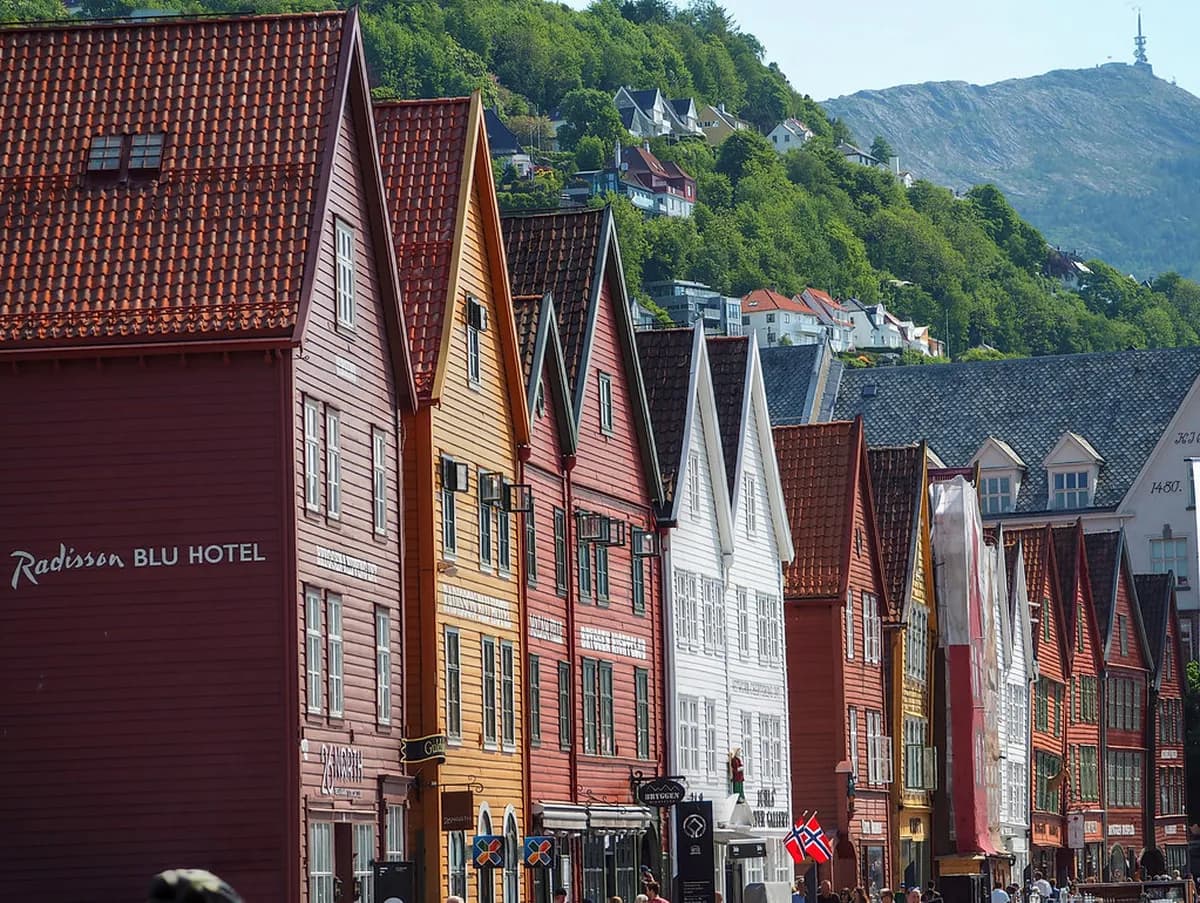
The Hanseatic Museum is the single best starting point for understanding medieval Bergen. Housed inside an original timber merchant's building on Bryggen Wharf, it recreates the daily lives of German Hanseatic merchants who dominated the city's fish trade from around 1360 until 1754. The dark sleeping berths, communal fire kitchens, and coded contract boards feel genuinely preserved rather than reconstructed.
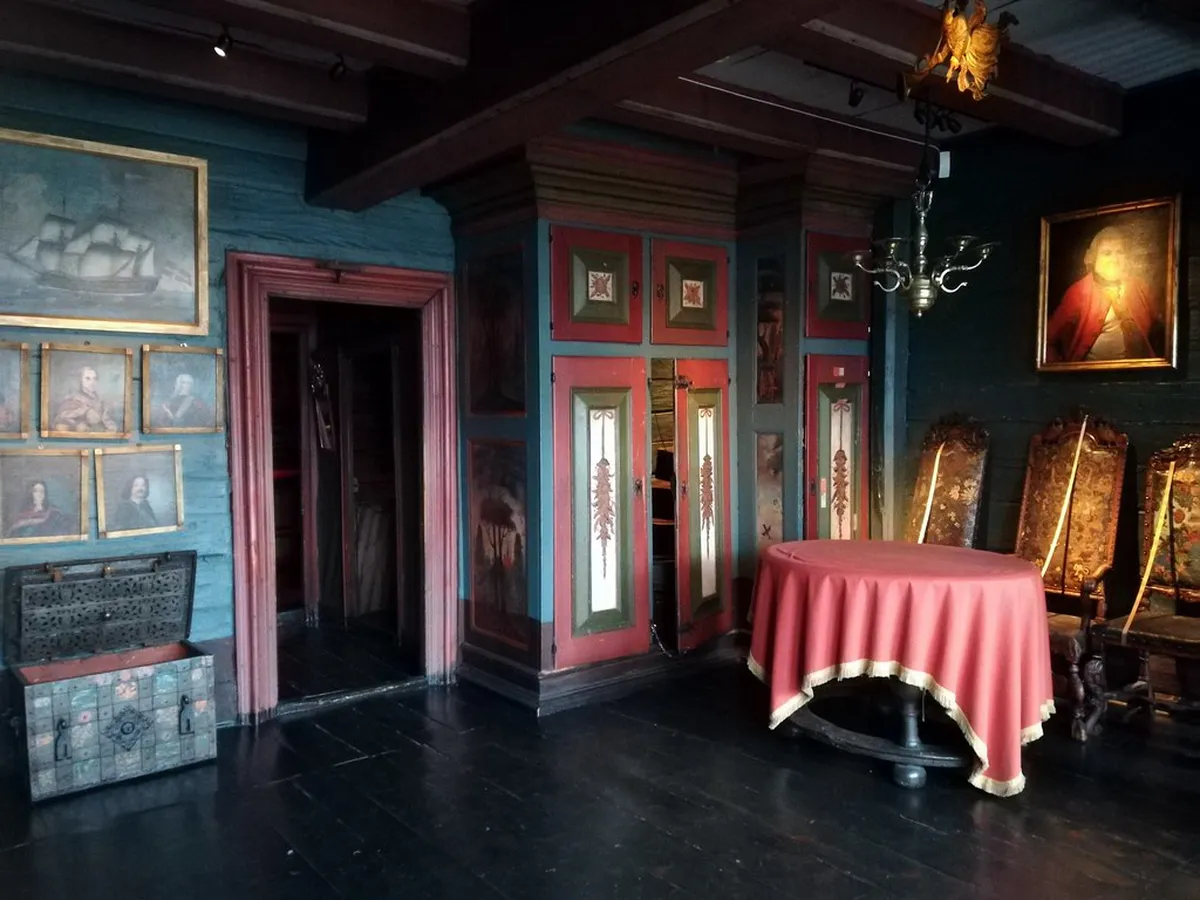
A combined ticket also grants access to the Schøtstuene assembly halls a few minutes' walk behind the wharf. These were the social and judicial heart of the Hanseatic operation — you can stand in the same banquet hall where disputes over cod exports were settled centuries ago. The Bergen Card covers entry to both sites.
Tickets cost approximately 130 NOK for adults. The museum opens daily 10:00–17:00 in summer (late May through August) and Tuesday–Sunday 11:00–15:00 the rest of the year. Mondays are closed outside summer. Rainy day rating: excellent — entirely indoors in atmospheric historic rooms.
2. KODE Art Museums (KODE 1–4)
KODE is four separate buildings clustered around Lille Lungegårdsvannet, the small lake a ten-minute walk from Bryggen. Together they hold more than 50,000 works — the largest art collection in Scandinavia. One day pass (approximately 160 NOK) covers all four, and the Bergen Card includes free entry to each building.
KODE 3 houses the Rasmus Meyer Collection, which is the reason serious art visitors come to Bergen. It contains the world's third-largest collection of Edvard Munch paintings — around 50 works — displayed in quiet, uncrowded rooms. If you have visited the Munch Museum in Oslo you will know how packed that experience can be; KODE 3 gives you Munch at roughly a tenth of the crowd density. The collection also includes major works by J.C. Dahl, Harriet Backer, and Nikolai Astrup in their original period frames.
KODE 2 focuses on applied art and design; KODE 1 holds temporary exhibitions; KODE 4 covers international contemporary art. All four open Tuesday–Sunday 10:00–17:00 (closed Monday except in peak summer). Rainy day rating: outstanding — four interconnected galleries, a cafe, and a full morning or afternoon of dry walking.
3. Troldhaugen (Edvard Grieg Museum)
Troldhaugen is the hillside villa where Edvard Grieg and his wife Nina lived for the last 22 summers of his life. Grieg himself called it "my best opus so far" when construction finished in 1885. The house, the small lakeside composing hut where he wrote most of his major works, and the gravesite carved into the cliff face are all on the same grounds.
The modern Troldsalen concert hall seats 200 and hosts lunchtime recitals (roughly 12:30 most days in summer) where professional pianists perform Grieg's piano music within metres of where it was composed. Booking in advance is advisable. Admission to the museum is approximately 150 NOK adults; the Bergen Card provides a discount rather than free entry. The site opens daily 09:00–18:00 in summer and Tuesday–Sunday 10:00–16:00 in shoulder season.
Getting there takes about 45 minutes from the city centre. Take the Bybanen light rail from Bergen Storsenter to Hop station, then follow the 20-minute signed walking path through a quiet residential area. Alternatively, bus 60 runs from the city centre to Troldhaugen directly. For more day-excursion options in this direction, see our nearby excursions guide. Rainy day rating: good — the museum building and concert hall are fully enclosed, though the grounds are outdoors.
4. Bryggens Museum
When a fire cleared part of Bryggen in 1955, archaeologists uncovered the oldest surviving foundations of Bergen beneath the ash — structures dating to the 12th century. Bryggens Museum was built directly over those excavations, so the original wooden posts and artefacts are still visible below the modern floor level as you walk through.
The most compelling exhibits are the runic sticks: small pieces of carved wood used by medieval residents for everything from trade receipts to love notes and what can only be described as pointed gossip about neighbours. The museum also explains how the Bryggen wharf's coloured wooden facades were rebuilt repeatedly after fires, always on the same medieval street plan — a continuity that earned the site UNESCO World Heritage status in 1979.
Entry is approximately 120 NOK adults; the Bergen Card covers free admission. Opening hours are daily 10:00–16:00 year-round. It sits directly adjacent to the Hanseatic Museum, so visiting both on the same morning requires no extra transit. Rainy day rating: excellent — small but entirely indoors, and the underground archaeology section is best appreciated slowly.
5. Old Bergen Museum (Gamle Bergen Museum)
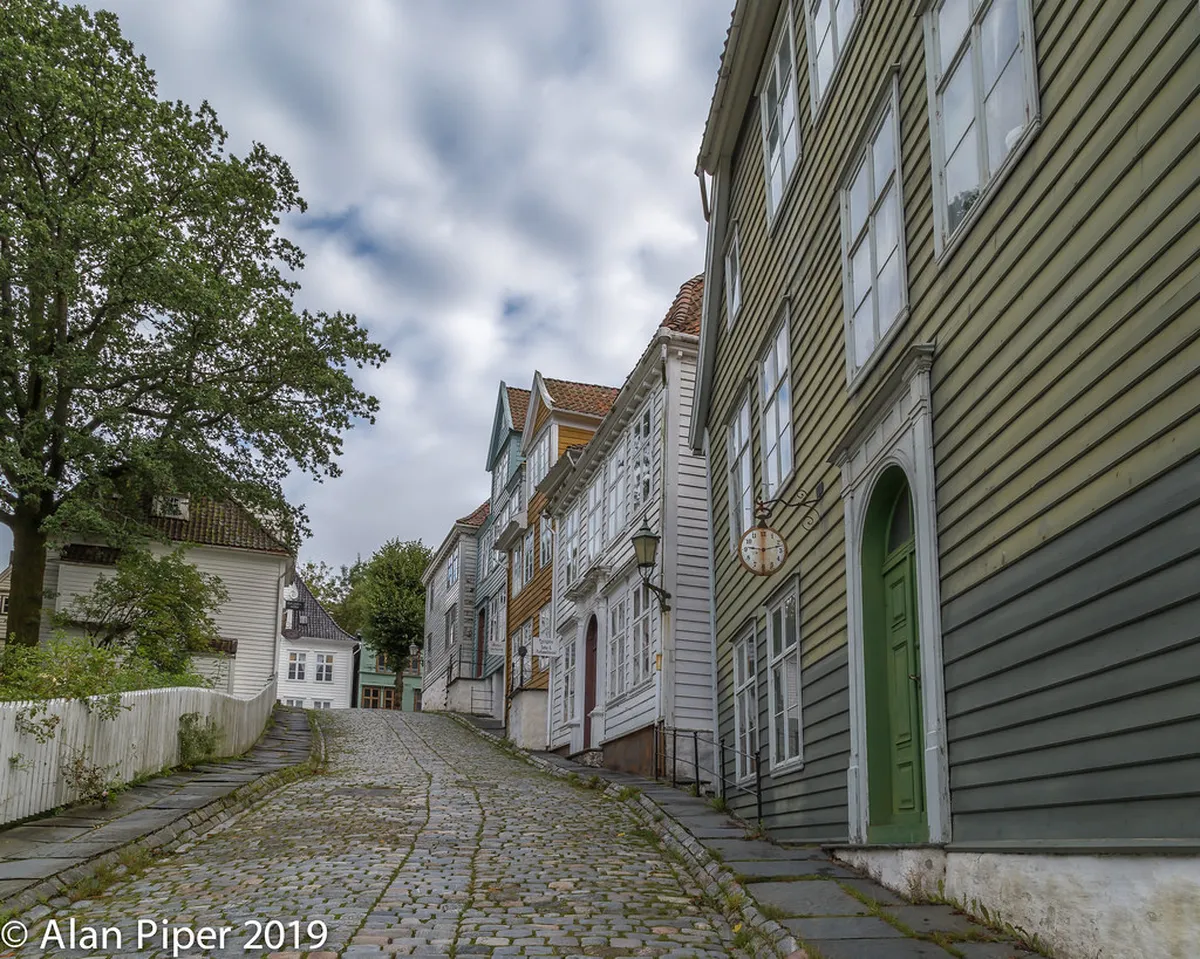
Old Bergen is an open-air museum of over 50 wooden houses relocated from across the city and reassembled on a hillside in Sandviken to recreate a Bergen street scene from the 1800s. In summer, actors in period dress operate the shops, dental practice, and bakery, making it one of the more interactive history experiences in Norway.
The setting feels genuinely lived-in rather than sterile, largely because the buildings were moved complete with their original fittings. The dentist's chair and the apothecary's shelving both look ready for use. Children tend to respond well here — the open spaces, costumed staff, and the slightly unsettling taxidermy in the general store hold attention effectively.
Admission is approximately 130 NOK adults; children under 16 enter free. The museum opens daily 10:00–17:00 from mid-May through August. It is closed outside this season. Take bus 3 or 4 from the city centre (around 10 minutes). Rainy day rating: poor to fair — the path between buildings is outdoor and uneven, making heavy rain unpleasant. Save this for a dry day.
6. Bergen Maritime Museum
The Bergen Maritime Museum (Bergens Sjøfartsmuseum) sits on the university hill south of the city centre, about a 15-minute walk from KODE. It covers Norwegian seafaring from Viking-era craft through the modern offshore oil industry — a span of roughly 1,200 years. The collection is one of Norway's oldest specialist museums, established in 1921.
Standout exhibits include scale models of Bergen's historic sailing fleet, a section on the WWII merchant marine (Norwegian sailors suffered disproportionate losses protecting Allied supply lines), and an immersive film about the Norwegian coast shown on a large screen in the basement theatre. The oil-rig section places Bergen squarely at the heart of Norway's offshore boom, which is relevant context that most visitors miss.
Standard entry is approximately 100 NOK adults; the Bergen Card provides free entry. Opening hours are Monday–Friday 11:00–15:00, Saturday–Sunday 11:00–16:00. It is open year-round. Rainy day rating: good — compact, entirely indoors, and easy to combine with the University Museum next door.
7. The University Museum of Bergen
The University Museum is split across two buildings on the university campus — a natural history section (geology, zoology, botany) and a cultural history section. Both are housed in imposing 19th-century stone buildings that feel properly academic. The whale hall in the natural history building is the highlight: full skeletons of multiple species are suspended from the ceiling, including a 26-metre blue whale jaw.
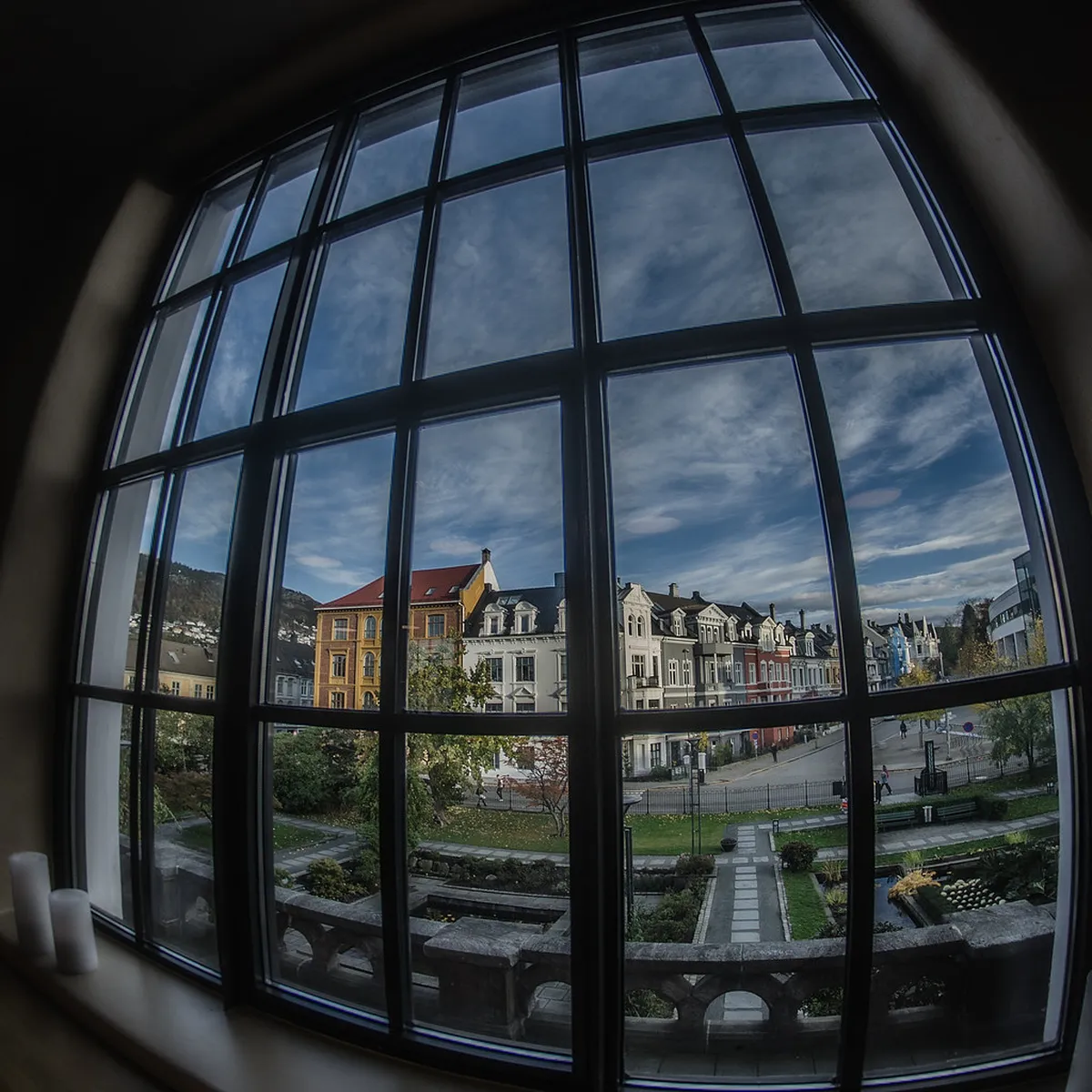
The cultural history wing covers Norwegian folk life, Viking-age artefacts, and the history of the Sami people. It is more thoughtfully curated than the maritime or fortress collections, with clear English labelling throughout. The recent renovation (completed 2023) replaced dated dioramas with modern interactive displays that hold the attention of younger visitors considerably better.
Admission is approximately 120 NOK adults; children under 16 are free. Hours are Tuesday–Sunday 10:00–16:00, closed Monday. The Bergen Card covers free entry. Rainy day rating: excellent — two full buildings of indoor content, easily a half-day.
8. Rosenkrantz Tower and Håkon's Hall
Rosenkrantz Tower and Håkon's Hall stand inside Bergenhus Fortress at the entrance to the harbour, about a five-minute walk from the Hanseatic Museum along the wharf. The tower dates in its earliest form to the 1270s and served as a combined royal residence and coastal defence point. Medieval stonework, tight spiral staircases, and a rooftop terrace with close-up views over arriving cruise ships make it a worthwhile 30-minute stop.
Håkon's Hall next door is Bergen's largest medieval secular building — built for King Håkon Håkonsson around 1261 for royal receptions and still used for events today. Entry to both is covered by one combined ticket of approximately 100 NOK adults; the Bergen Card grants free entry. Hours are daily 10:00–16:00 in summer, with reduced hours October through April.
These two sites pair naturally with a Bryggen and Hanseatic Museum morning. The fortress grounds are free to walk through even without paying for the tower, and the waterfront views from the grass are some of the best in the city. Rainy day rating: fair — the tower interior is sheltered, but the walk between buildings is exposed.
9. Norwegian Fisheries Museum
The Norwegian Fisheries Museum occupies a row of authentic warehouses in the Sandviken neighbourhood, about 2 km north of Bryggen along the waterfront. It tells the story of Bergen's centuries-long relationship with the sea — salted herring, stockfish exports to southern Europe, and the development of the modern fishing industry that still underpins the Norwegian economy.
The most practical tip for this museum is also the most enjoyable: skip the bus and take the Beffen ferry instead. Beffen is a small heritage passenger vessel that has run across the inner harbour since 1885. The crossing takes about 10 minutes from Murhvelvingen near the fish market, costs a few kroner, and gives you a sailor's view of Bryggen from the water. No competitor guide flags this properly — it is genuinely the better way to arrive, and it is one of Bergen's authentic local experiences rather than a tourist attraction.
Entry is approximately 120 NOK adults; the Bergen Card covers it. Hours are daily 10:00–17:00 in summer, Tuesday–Sunday 11:00–15:00 in low season. The museum cafe, located in a converted warehouse with waterfront seating, is a good lunch stop. Rainy day rating: good — mostly indoors, with some outdoor warehouse sections that can be damp in heavy weather.
10. Leprosy Museum (St. Jørgen's Hospital)
Bergen's Leprosy Museum is one of the most unusual institutions in Norway and one of the few preserved leprosy hospitals left anywhere in the world. St. Jørgen's Hospital, founded around 1411, housed patients until 1946. The building is essentially intact — patient wards, chapel, and garden — because the disease became extinct in Norway faster than the infrastructure was repurposed.
Bergen was the global centre of leprosy research in the 19th century. Physician Armauer Hansen identified the bacterium causing leprosy here in 1873 — the first time a bacterium was proven to cause a human disease. The exhibition is sober and empathetic, telling personal stories of patients who spent decades confined here while the science caught up. It is tucked in a quiet courtyard behind Nygård park, about a 10-minute walk from the train station.
Admission is approximately 100 NOK adults; the Bergen Card covers it. Hours are Tuesday–Sunday 11:00–15:00 in summer. The museum closes in low season (check ahead October through April). Rainy day rating: good — the main exhibits are indoors, though the courtyard garden is outdoor.
Is the Bergen Card Worth It for Museums?
The Bergen Card costs 289 NOK for 24 hours, 389 NOK for 48 hours, and 489 NOK for 72 hours (2026 prices). It covers free entry to KODE (all four buildings), the Hanseatic Museum and Schøtstuene, Bryggens Museum, Rosenkrantz Tower, Håkon's Hall, the Bergen Maritime Museum, the University Museum, and the Norwegian Fisheries Museum. It also includes unlimited rides on city buses and the Bybanen light rail — which matters when you need to reach the Old Bergen Museum or the University campus.
Running the numbers: KODE alone costs 160 NOK, Hanseatic Museum 130 NOK, and Bryggens Museum 120 NOK — that is 410 NOK for three sites, already more than the 24-hour card. If your itinerary includes those three plus transport, the card pays for itself before lunch on day one. The card does not give free entry to Troldhaugen, but it provides a discount on the 150 NOK ticket, reducing it to around 110 NOK.
Families with children under 16 get less value because most Bymuseet and KODE sites admit children free anyway. If you are travelling with two adults and two children, the card is still worth buying purely for the transport saving plus adult admissions. You can buy it online via Visit Bergen's official Bergen Card page or at the tourist information office on Strandkaien near the fish market.
| Museum | Focus | Adult Price (NOK) | Hours (Summer) |
|---|---|---|---|
| KODE Art Museums (1–4) | Art, Munch collection, design | 160 | Tue–Sun 10:00–17:00 |
| Hanseatic Museum & Schøtstuene | Medieval merchant history | 130 | Daily 10:00–17:00 |
| Bryggens Museum | Medieval archaeology, runic artifacts | 120 | Daily 10:00–16:00 |
| Troldhaugen (Grieg Museum) | Composer residence, music history | 150 | Daily 09:00–18:00 |
| Bergen Maritime Museum | Naval history, WWII merchant marine | 100 | Mon–Fri 11:00–15:00, Sat–Sun 11:00–16:00 |
| University Museum | Natural history, Viking artifacts, whale skeletons | 120 | Tue–Sun 10:00–16:00 |
| Old Bergen Museum | Open-air 1800s street recreation | 130 | Daily 10:00–17:00 (May–Aug only) |
| Leprosy Museum (St. Jørgen's) | Medical history, social heritage | 100 | Tue–Sun 11:00–15:00 |
Museum Row: Walking Times and Logistics
Bergen's central museums are unusually compact. From the Hanseatic Museum to KODE 3 is a 12-minute walk along Bryggen and around the harbour towards the lake. From KODE to Bryggens Museum takes about 10 minutes in reverse. That triangle — Hanseatic, Bryggens, KODE — is what locals call the museum row, and you can cover all three sites in a single day without any public transport.
The Norwegian Fisheries Museum is 2 km north, which makes the Beffen ferry the logical connector. The ferry departs from the small dock at Murhvelvingen, roughly 300 metres north of Bryggen, and arrives at the museum's front door. The entire harbour crossing takes about 10 minutes. Rosenkrantz Tower and Håkon's Hall sit at the western end of Bryggen — they are the first things you see arriving by ferry and easily absorbed into a Bryggen morning with no extra navigation.
Troldhaugen and the Old Bergen Museum both require a bus or light rail ride of 15–45 minutes. I suggest keeping these for a dedicated half-day each rather than combining them with the central circuit. For a rainy day, anchor your itinerary at KODE and work outwards — the four buildings alone justify staying off the streets for a full afternoon. Check our indoor activity guide for a full wet-weather plan.
Frequently Asked Questions
Are museums in Bergen open on Mondays?
Many museums in Bergen, including the KODE art galleries, are closed on Mondays during the low season. However, major sites like the Hanseatic Museum often remain open daily in summer. Always check the official website before visiting on a Monday.
Which Bergen museums are best for kids?
The Old Bergen Museum and the University Museum are excellent choices for families with children. Old Bergen features live actors and open spaces, while the University Museum has impressive whale skeletons. Both offer interactive elements that keep younger visitors engaged.
How do I get to the Edvard Grieg museum?
To reach Troldhaugen, take the Bergen Light Rail (Bybanen) to the Hop station from the city centre. From there, it is a well-marked 20-minute walk through a pleasant residential neighbourhood. The total journey takes about 45 minutes.
Bergen's museums offer a genuine journey through Norwegian history — from Hanseatic trade records carved in wood to Munch's most intimate paintings to the quiet wards of a medieval hospital. By starting at the museum row (Hanseatic, Bryggens, KODE) and using the Bergen Card for transport and free entry, you can cover the essential circuit efficiently even on a one or two-day visit. Don't forget to plan for a few fjord excursions if you want to see how the landscape shaped the history you've just read about.
Whether you spend your morning in the Munch rooms at KODE 3 or catching the Beffen ferry to the Fisheries Museum at dusk, Bergen's culture will leave a lasting impression. Enjoy your 2026 visit to one of the most concentrated museum cities in Northern Europe.
You might also like
Continue reading
More guides you'll find useful