Is the Bergen Card Worth It? (2026 Cost & Value Guide)
Is the Bergen Card worth it for your 2026 trip? See the latest prices, a 48-hour cost breakdown, and our verdict for cruisers and budget travelers.
On this page
Is the Bergen Card Worth It? (2026 Honest Review)
Yes, the Bergen Card is worth it for most visitors who plan to enter at least two paid attractions and use public transport on the same day. The break-even point on the 24-hour card is surprisingly low: two museum entries plus a light rail journey and you are already ahead. I updated this review for 2026 with the current pricing and checked the funicular discount policy against the official Fløibanen site.
This guide walks through the 2026 prices, a realistic cost comparison table, what is actually free versus discounted, which Skyss bus routes extend your range to the fjords, and a plain-language verdict by traveler type so you can make the call in under five minutes.
What is the Bergen Card and How Does it Work?
The Bergen Card is a digital tourist pass issued by Visit Bergen that bundles free museum entry with unlimited public transport. It covers four durations: 24, 48, 72, and 96 hours. The timer starts the moment you first activate the card at an attraction or tap it on a bus, so do not activate it the night before you plan to sightsee.
Most visitors buy the digital version online and receive a QR code by email. You show that code to museum staff or hold it up to bus validators. Physical cards are available at the Tourist Information Centre by the Fish Market if you prefer a card in your wallet. The digital and physical versions carry identical benefits.
The card covers city transport options on Skyss city buses and the Bergen Light Rail (Bybanen). It also includes boat routes to Askøy and Nordhordland within Zone A — a detail most guides skip. What it does not cover: Flybussen airport express, Vy regional trains, and express coaches outside the Skyss network.
Bergen Card Prices (2026)
Below are the current 2026 adult and child prices. Children means ages 3 to 15; under 3 travel and enter free. The 96-hour option was added to the lineup in recent years and suits anyone doing a long weekend in the city.
| Duration | Adult (NOK) | Child 3–15 (NOK) |
|---|---|---|
| 24 hours | 380 | 100 |
| 48 hours | 460 | 130 |
| 72 hours | 540 | 160 |
| 96 hours | 620 | 190 |
You can buy the card at the Official Bergen Card Shop, at the Tourist Information Centre near the Fish Market (open daily June–August 08:30–22:00, May & September 09:00–20:00, October–March 09:00–16:00), at the airport, and at selected hotels and campsites. Buying online is fastest and lets you skip the desk queue.
Student and senior discounts exist at roughly 80% of the adult price, though these are only available at the Tourist Information Centre with valid ID. If you are booking for a family, note that the child price is low enough that it rarely needs justification.
Top Attractions Included: Free and Discounted Entry
The card grants free entry to more than 30 sites. The most visited free inclusions are Bryggens Museum (160 NOK without the card), Bergen Maritime Museum, Håkon's Hall, the Rosenkrantz Tower, Old Bergen Museum, and the Bergen Science Centre outside peak season. KODE art museums along the lake are also free and alone worth the price of the 24-hour card for art lovers.
A few major attractions are discounted rather than free, and the distinction matters for your maths. The Fløibanen funicular is free from October through April; cardholders get a 50% discount from May through September. The Fløibanen funicular costs 195 NOK return in summer, so the discount saves you roughly 97 NOK per trip. The Bergen Aquarium is free from November to February and 25% discounted from March to October. The Ulriken cable car and the Hanseatic Museum offer around 20% off.
Fjord cruise operators affiliated with Visit Bergen give 10 to 20% discounts to cardholders. Several city walking tours of Bryggen's UNESCO World Heritage lanes are completely free with the pass. Check the official Bergen Card attraction list before your trip because inclusions do shift year to year.
One thing no competitor mentions clearly: the card also gives dining discounts at a handful of restaurants in the city centre. These are modest (typically 10%) and should not drive your purchase decision alone, but they are a nice bonus on top of the core transport and museum value.
The Maths: A 48-Hour Cost Comparison
The quickest way to judge value is to price out what a realistic two-day visitor would spend without the card. The table below uses 2026 individual ticket prices for a typical itinerary: airport light rail return, two KODE halls, Bryggens Museum, funicular in summer, and a day-trip Skyss bus.
| Item | Pay separately (NOK) | With 48h card (NOK) |
|---|---|---|
| Light rail airport → centre (return) | 116 | 0 |
| KODE 1 + KODE 2 entry | 350 | 0 |
| Bryggens Museum | 160 | 0 |
| Fløibanen funicular return (summer) | 195 | 97 (50% off) |
| Skyss city bus (4 trips over 2 days) | 148 | 0 |
| Total | 969 | 97 + 460 card = 557 |
That is a saving of 412 NOK on a fairly conservative two-day plan. Add one fjord day-trip bus and the gap widens further. The card pays for itself after the first museum plus a single light-rail journey — everything else is margin.
Where the maths gets tight is for visitors who only want to walk Bryggen and ride the funicular once. In that case the 24-hour card at 380 NOK is borderline: funicular discount (97 NOK) plus city bus (37 NOK per trip) covers roughly half the card price. You need one more museum entry or a couple of extra bus trips to clear the bar. If the funicular is your only paid activity, skip the card and pay individually.
The card's break-even point is surprisingly low: just two museum entries or one fjord bus trip plus a light-rail journey will pay for the 24-hour pass. The 48-hour and 72-hour cards offer even stronger ROI if you plan a second day of sightseeing or a regional bus excursion into Hordaland.
Beyond the City Centre: Regional Transport and Fjord Access
This is where the Bergen Card earns its keep for active travelers and is the section most guides handle vaguely. The card covers all Skyss buses in the Hordaland region, not just city routes. That opens up three major day trips at no extra transport cost.
Bus route 990 from Bergen bus station runs to Norheimsund on the Hardangerfjord. This is a scenic two-hour ride through the fjord valleys and a natural add-on to any Bergen stay. Route 99 continues further into Hardanger country toward Odda — this is the jumping-off point for Trolltunga. The one-way journey to Odda takes around 2h30m. Without the card, a single Skyss day ticket for that zone costs approximately 255 NOK each way. A couple doing this round trip saves 510 NOK from the card alone.
Bus routes to the Aurlandsfjord area (toward Flåm) are also included within the Skyss network boundary. Check the current Skyss public transport map on Visit Bergen's site before booking because route numbers and timetables update seasonally. Important caveat: the card does not cover the Flåm Railway or Vy regional trains, so the famous Norway in a Nutshell rail leg is a separate cost.
For visitors staying three or more days, the regional transport inclusion alone can justify the 72-hour card. One return fjord bus trip plus airport light rail covers 650–700 NOK in transport, which already exceeds the 540 NOK card price before a single museum is counted.
The Insider's Itinerary: 2 Days in Bergen with the Card
Day 1 starts with the light rail from the airport to the centre (free with the card, roughly 45 minutes). Head straight to Bryggens Museum when it opens at 10:00 — crowds are thin before 11:00. Walk the UNESCO wharf lanes, then cross to KODE for two or three hours across the combined galleries. Lunch near the Fish Market, then take the funicular up Mount Fløyen in the early afternoon when the morning cruise-ship rush has cleared.
Day 2 is the fjord day. Catch an early Skyss bus from Bergen bus station toward Norheimsund or Odda. The Hardangerfjord bus takes two hours and drops you in apple-orchard country with fjord views in every direction. Return to Bergen by 17:00, leaving time for a final museum — Håkon's Hall and the Rosenkrantz Tower sit next to each other on the wharf, both free with the card, and take about 90 minutes combined.
See the museum hours and exhibitions guide for opening hours and current exhibition schedules before you go. Many museums close or operate reduced hours on Mondays, and several run shorter winter hours even in spring. Building in one buffer museum on each day means you will not scramble if your first choice is unexpectedly shut.
When to Skip the Bergen Card
The card is not for everyone. Skip it if you are visiting primarily to hike. Bergen's best trails — Mount Fløyen from the summit downward, the ridge walk to Rundemanen, the paths above Ulriken — are free to walk, and many people reach the trailheads on foot or with a single cheap bus ticket. Paying 380 NOK for a 24-hour card to cover one bus trip and one trail is poor value.
Skip it if you are staying in Bergen as a base for long day trips to Flåm or Voss by rail. The Bergen Card does not cover Vy trains, so you will pay full price for those journeys regardless. If you are wondering whether Bergen is worth it as a day-trip hub, the answer is yes — but budget the rail tickets separately.
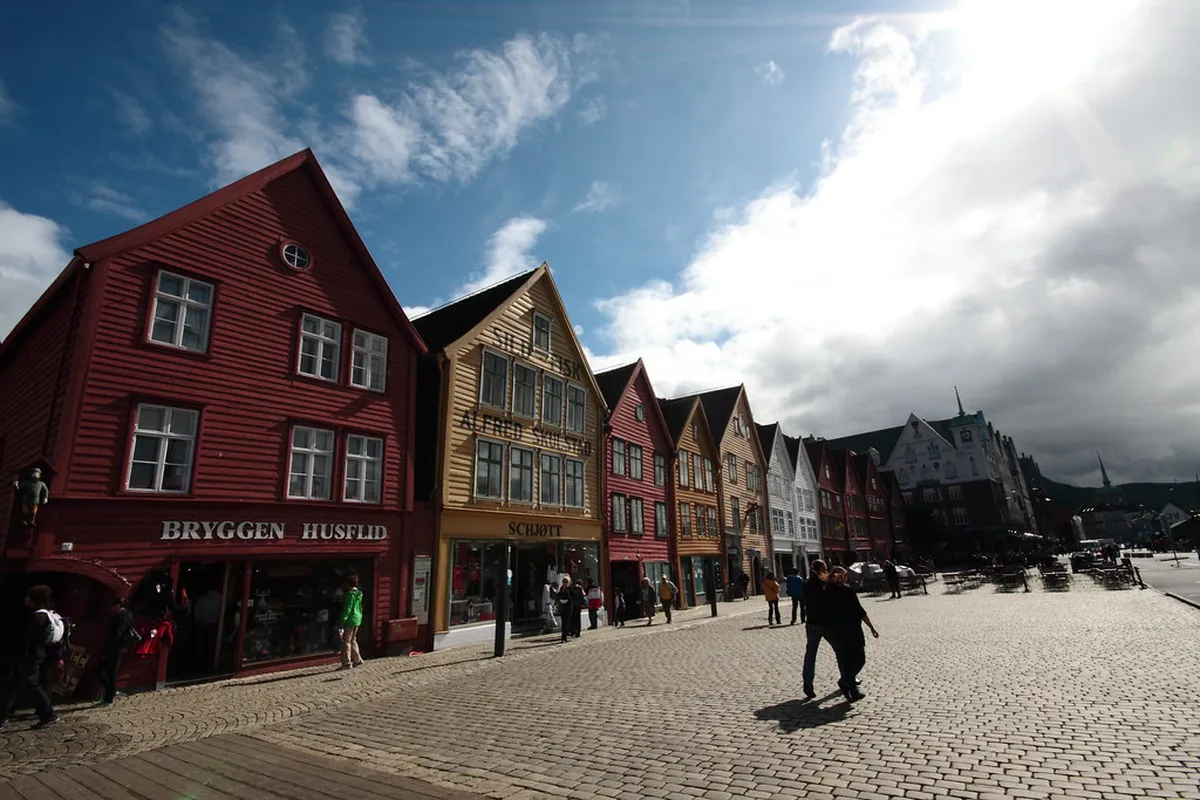
Skip it if your Bergen time is under six hours and you only want to walk Bryggen. The UNESCO wharves are free to wander and photographing the colorful facades costs nothing. The only paid sites on the wharf itself are the Hanseatic Museum (discounted, not free, in summer) and Bryggens Museum. Two discounted entries do not clear the 380 NOK card threshold.
The card does not cover the Flybussen airport express or Vy regional trains (e.g., to Flåm, Voss, or Odda by rail). If you are arriving by plane or planning rail-based day trips, budget those journeys separately — the card covers Skyss buses but not the train network outside the city.
Bergen Cruise Port Guide: Tips for Cruisers
Bergen is one of Norway's most-visited cruise ports, and the Bergen Card question comes up constantly for passengers with 8 to 10 hours in port. The short answer: the 24-hour card is worth it for cruisers, but only if you plan to visit at least two paid sites and use the bus or light rail.
The main cruise terminal at Skolten is a 15-minute walk to Bryggen. You do not need a bus for that stretch. Where the card pays off for cruisers is the Fløibanen funicular (50% summer discount), Bryggens Museum (free), and the Bergen Aquarium at Nordnes (either free or discounted depending on the month). Three of those in one morning easily covers the 380 NOK adult price.
One cruiser-specific trap: the funicular line is longest between 09:00 and 11:00, right when ships dock. If your ship arrives early, go to Bryggens Museum first, then head to the funicular after 11:00 when the initial rush subsides. Check the Fløibanen Bergen Card info page for the exact seasonal discount rates before your port day.
The card does not help with the airport bus since cruisers arrive by ship, not plane. And the city is walkable enough that unlimited bus access is less valuable for a one-day port stop than it is for multi-day visitors. For most cruisers the 24-hour card is the right tier — do not upgrade to 48 hours unless you are staying overnight post-cruise.
The Verdict: Is it Worth Buying?
The Bergen Card is excellent value for museum-going, transport-using visitors and delivers strong ROI for anyone doing a fjord day trip. It is a mediocre deal for hikers and a borderline call for cruisers with fewer than two paid site visits planned.
| Traveler type | Best card | Verdict |
|---|---|---|
| Museum hopper (2+ museums/day) | 48h or 72h | Buy it — saves 300–500 NOK easily |
| Fjord day-tripper | 48h or 72h | Buy it — bus alone covers the price |
| Cruise passenger (8–10h in port) | 24h | Worth it with 2+ paid sites planned |
| Hiker (trails only) | Skip | Trails are free; card rarely breaks even |
| Short walker (Bryggen only) | Skip | Not enough paid activities to recoup cost |
I believe the 48-hour card is the sweet spot for most first-time visitors. The extra 80 NOK over the 24-hour price buys you a full second day of unlimited transport and museum access. That is outstanding value in one of Europe's more expensive cities.
If you want dinner recommendations to round out your visit, the 9 best restaurants in Bergen guide covers where to eat near the main sights. And if you are still deciding where to base yourself, the Bergen neighborhoods to stay in neighbourhood guide matches accommodation zones to the attractions covered by the card.
Frequently Asked Questions
Does the Bergen Card include the airport bus?
No, the Bergen Card does not cover the Flybussen airport express. It does include the Bergen Light Rail, which is a cheaper alternative. The light rail takes longer but is completely free with your card.
Is the Fløibanen funicular free with the Bergen Card?
The funicular is not free during the peak summer season from May to September. Cardholders receive a 50 percent discount during the winter months. In summer, you get a smaller discount on round-trip tickets.
Where do I pick up a physical Bergen Card?
You can collect a physical card at the Tourist Information office by the Fish Market. Most travelers prefer the digital version available through the official app. This allows you to start using the pass immediately.
The Bergen Card is a clear win for visitors planning two or more museum visits, a light-rail journey, and especially any Skyss regional bus day trip. For a two-day visit doing the full city circuit, the 48-hour card saves you roughly 400 NOK compared to paying individually. Buy it online before you arrive, activate it at your first attraction, and the rest of the day takes care of itself.
Plan around the 10:00 museum opening times and build your fjord bus day on Day 2 when the card is well into its value zone. For a complete rundown of activities beyond transport and discounts, explore the complete guide to attractions and experiences in Bergen. Bergen rewards visitors who plan slightly ahead — and the card is the easiest planning shortcut you can make.
You might also like


Continue reading
More guides you'll find useful