15 Best Free Things to Do in Bergen (2026)
Explore Bergen on a budget with our guide to 15 free things to do, including hidden alleys, mountain hikes, and local secrets to save money in Norway.
On this page
15 Best Free Things to Do and Tips for Bergen (2026)
I have visited Bergen three times over the last decade, and I still find new ways to enjoy the city without spending a single krone. While Norway is famously expensive, this coastal gem offers an incredible array of natural and historical experiences that cost nothing at all. Many travelers assume they need a massive budget to see the fjords or the mountains, but that simply isn't true if you know where to look.
Last refreshed June 2026, this guide highlights the best ways to navigate the city's steep hills and rainy streets on a budget. Whether you are interested in Hanseatic history or looking for the best sunset viewpoint, there is a free option waiting for you. You can easily spend several days here exploring the UNESCO-listed wharf and the surrounding wilderness for the price of a few supermarket snacks.
Before you book expensive tours, it is worth asking whether Bergen is worth it for the budget-conscious traveler? The answer is a resounding yes, provided you are willing to walk and enjoy the great outdoors. This list will help you prioritize your time and keep your wallet closed while soaking in the best of the Norwegian coast.
1. Experience Gamle Bergen (Old Bergen)
Gamle Bergen is an open-air museum in the Sandviken district featuring over 55 wooden houses from the 18th, 19th, and early 20th centuries. Bergen was the largest wooden city in Europe in the 1900s, and this reconstructed village captures that era better than any exhibit. To reach it, take bus 3 or 4 from the city center to Sandviken — it's about a 15-minute ride.
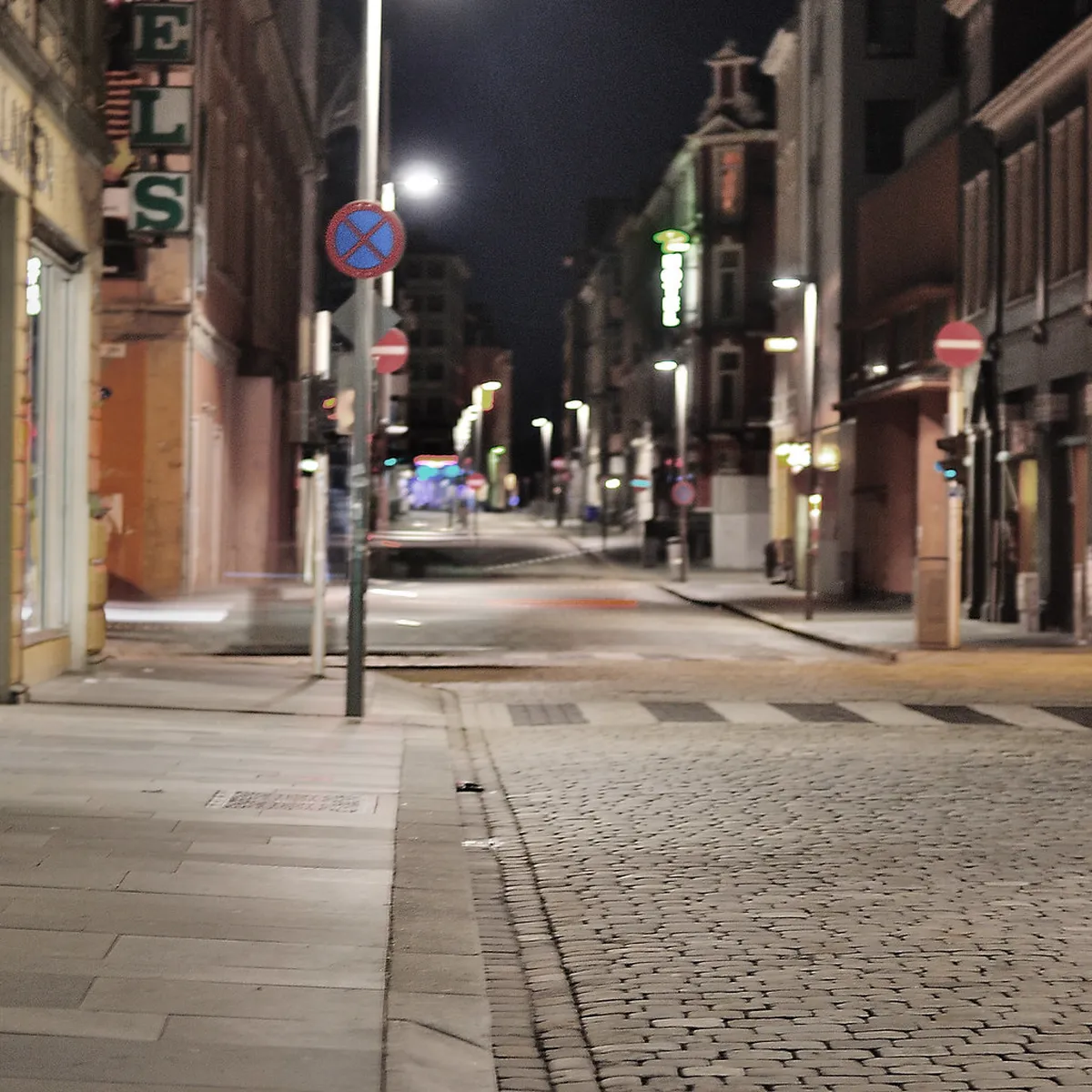
Here is the money-saving detail most guides skip: the museum interiors charge a ticket (around 170 NOK for adults in 2026), but the Old Bergen Museum grounds are open 24 hours a day and free to walk at any time. After 18:00 when the staff have left, you can wander the cobblestone lanes, peer through the shop windows, and photograph the painted wooden facades in the golden evening light with virtually no other visitors around. This after-hours window is one of the best free experiences in the entire city.
Even in the off-season from October through April, when the interior buildings are closed, the grounds remain accessible and peaceful. The surrounding park is genuinely beautiful and overlooks the Sandviken waterway, making it a worthwhile 30-minute detour even if you only stay outside.
2. Hike the Seven Mountains (Mt. Fløyen & Beyond)
Bergen is encircled by seven mountains, and hiking any of them is entirely free. The three most popular peaks each suit a different type of visitor, and choosing the wrong one is one of the most common first-timer mistakes. Here is a plain comparison to help you decide.
Mount Fløyen (320 m) is the easiest and most accessible option. The main trail from the Fløibanen station takes 45 to 60 minutes on a wide gravel path, with great harbor views en route. It suits families, casual walkers, and anyone short on time. If you want to skip the crowds on the city-center trail, use the Skredderdalen approach instead — start near Nygård park, follow the marked path through quiet forest, and emerge at the summit from the south. Locals use this route precisely because it feels like backcountry hiking despite starting five minutes from the city center. Both routes are free; neither requires a funicular ticket. For detailed trail conditions and seasonal updates, check Visit Bergen's official outdoor guide.
Mount Ulriken (643 m) is the tallest of the seven and offers panoramic views extending to the Hardangerfjord. The most popular free route follows the Sherpa steps — take bus 12 to Montana and follow the signs. Allow 1.5 to 2 hours each way. The summit rewards you with a wider, more expansive view than Fløyen, particularly toward the open sea to the west. You can also link the two peaks via the Vidden plateau walk — a 9.3 km traverse from Fløyen to Ulriken that takes five to eight hours depending on pace. This is one of the best free urban hikes in Scandinavia and is well-marked with red T signs.
Stoltzekleiven (340 m) is a pure fitness challenge: roughly 900 stone steps cut straight up the Sandviksfjellet. The ascent takes 30 to 45 minutes but it is steep and unrelenting. It is Bergen's most popular local workout trail and gives you arguably the best view over the northern suburbs and the Byfjorden. Note that the steps become dangerously slippery in ice and should be avoided between December and early March unless you have crampons. Always carry a waterproof layer regardless of the season — the weather shifts fast here.
3. Explore the Alleys of Bryggen
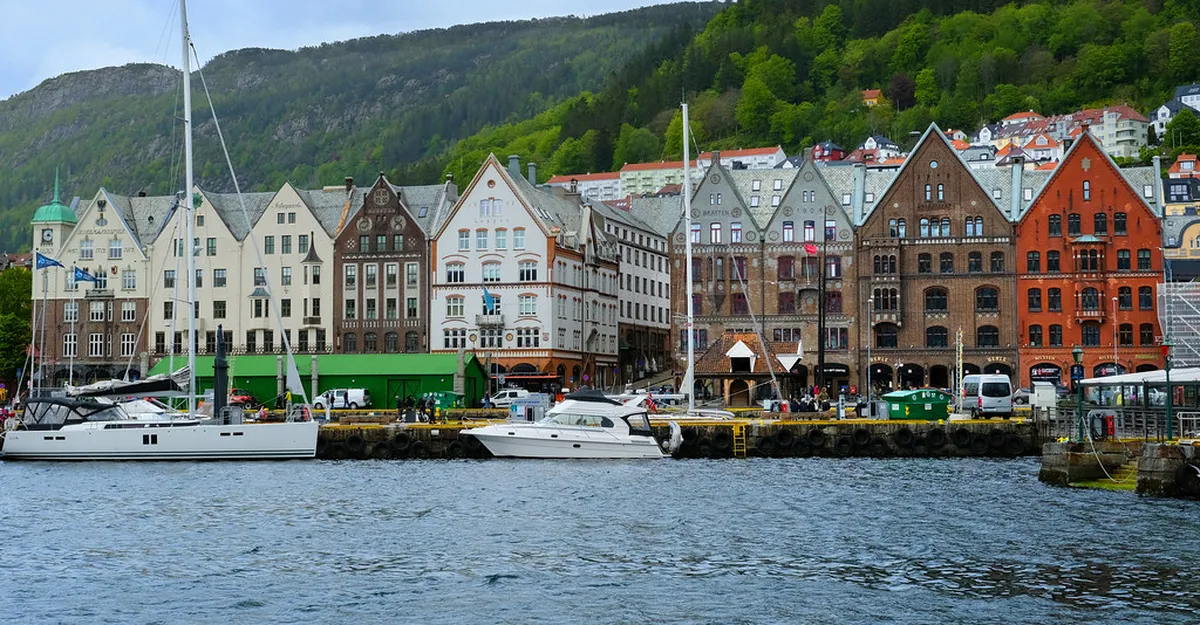
Bryggen is the iconic row of Hanseatic wooden buildings lining Bergen's eastern harbor and a UNESCO World Heritage Site. It is free to walk through at any hour of the day, and the narrow passages behind the colorful facades are worth at least an hour of slow exploration. The buildings visible from the waterfront are a reconstruction — several fires swept through the area over the centuries — but the foundations and rear alleys date back to the 12th century and give an authentic sense of the medieval layout.
The most rewarding part of Bryggen is not the front row facing the harbor but the layered wooden corridors behind it. Each passage opens onto a series of small galleries, artisan studios, and jewelers that you can browse for free. I recommend arriving before 09:00 in summer to beat the cruise ship crowds, which typically disembark from 09:30 onward and fill the front promenade quickly. For a deeper look at the history, follow our dedicated Bryggen Wharf guide to find the best hidden corners.
Just behind Bryggen stands Mariakirken (St. Mary's Church), the oldest surviving building in Bergen with parts dating to the 12th century. Viewing the twin Romanesque towers from the outside costs nothing. There is a small entry fee for the interior, but the exterior is striking enough that most visitors are satisfied without going in.
4. Discover the Bergenhus Fortress Grounds
Bergenhus Festning is one of the oldest and best-preserved stone fortifications in Norway, with origins dating to the 1240s. The grounds and surrounding park are free to enter and open daily from approximately 06:00 to 23:00, though this can vary in summer when the area hosts concerts. Walking the perimeter gives you a direct harbor view and a close look at the medieval stonework that survived centuries of war and occupation.
For the best free walking route through the complex, enter from the Bryggen side and follow the path along the inner walls toward the water. The ramparts offer a clear sightline to the cruise terminal on one side and the Byfjorden on the other. The Rosenkrantz Tower and Haakon's Hall are ticketed attractions within the fortress, but the gardens, open lawns, and outer fortifications are all free. The fortress grounds saw heavy use by German forces during the World War II occupation, and interpretation boards throughout the park explain this history at no cost.
5. Visit Kunsthall 3,14
Kunsthall 3,14 is a contemporary art gallery in central Bergen that focuses on international exhibitions addressing social and political themes. Admission is always free, making it one of the best rainy-day options in a city that averages over 230 wet days per year. The building is a beautifully converted former bank with high ceilings and strong natural light.
Hours are generally Tuesday to Sunday, 12:00 to 17:00, but check the gallery website for installation breaks between shows. Exhibitions rotate several times per year and tend to be thought-provoking and often provocative. This is not a mainstream tourist attraction, which is part of its appeal — you are more likely to be sharing the space with local art students than with fellow tourists.
6. Wander the University Museum's Garden
The Muséhagen botanical garden at the University Museum on Muséplassen contains over 3,000 plant species arranged across a mix of formal beds, a lily pond, and mature arboretum sections. Entry is free and the garden is open from early morning to dusk every day. It is a genuinely calm retreat from the busier areas of the city center and takes about 20 minutes on foot from Bryggen.
Late spring — roughly mid-May through early June — is the best time to visit when the rhododendron collection is at peak bloom. The greenhouse structures at the edge of the garden are also free to enter and provide a warm, dry option on wet days. Bring a lunch from a nearby Kiwi or Rema 1000 supermarket and use the garden benches for an affordable midday break.
7. Walk the Nordnes Peninsula
The Nordnes Peninsula juts westward from the city center and contains some of the most authentic residential streets in Bergen. The area was established as a monastery garden in the 12th century and today features white-painted wooden houses, steep cobblestone alleys, and neighborhood bakeries that serve locals, not tourists. The entire walk from the Bryggen area to the tip of the peninsula and back takes about 90 minutes at a relaxed pace.
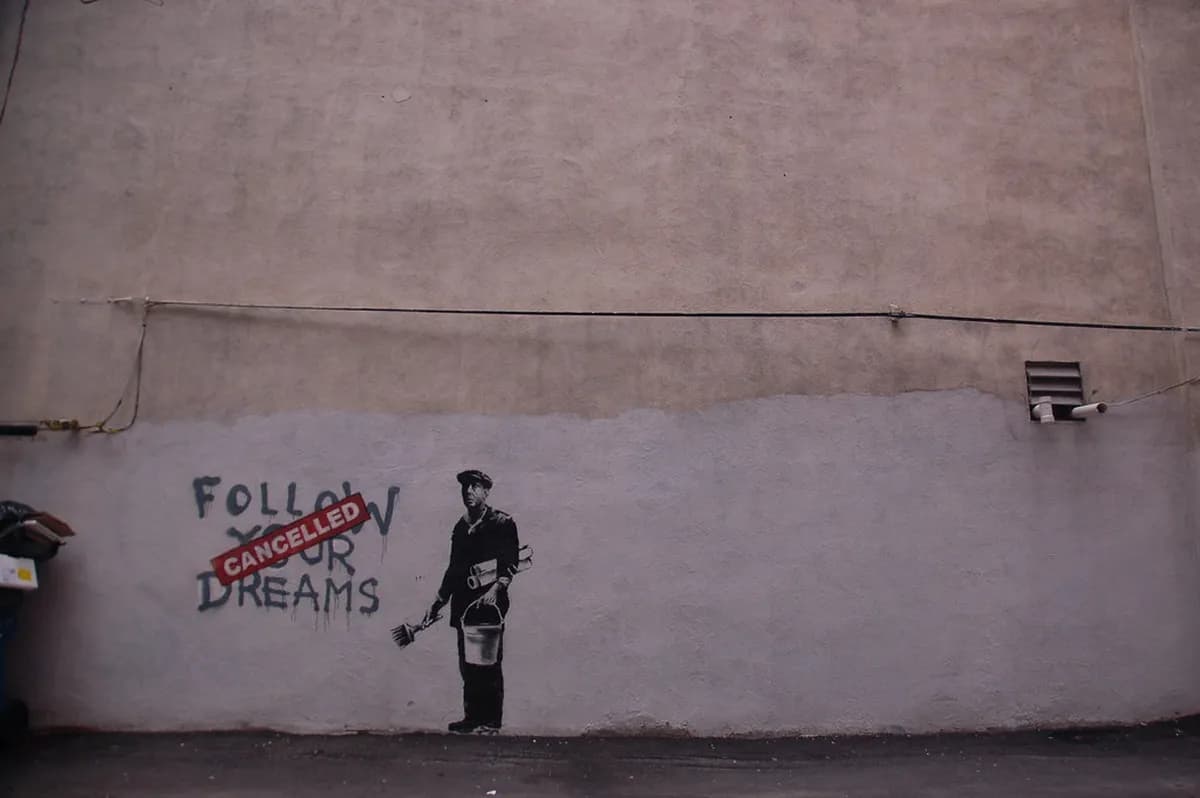
The highlight at the peninsula's tip is Nordnesparken, a public park with benches overlooking the surrounding islands and the open sea. Look for colorful street art on the side alleys off Ytre Markeveien as you walk south. The area is completely free to explore and accessible at all hours. If you want to combine it with a swim, Nordnes Sjøbad is a classic outdoor sea-swimming facility at the tip of the peninsula — it charges a modest entry fee but the park surrounding it is free.
8. Attend Free Festivals and Seasonal Events
Bergen International Festival (Festspillene) runs each year in late May and early June and is one of the largest performing arts festivals in Scandinavia. While many events are ticketed, the festival consistently offers free outdoor performances at Festplassen, the large open plaza behind Byparken. In 2026, look for the free program listings on the official festival website from early April — genres typically include jazz, folk, and contemporary classical music.
Bergen also hosts a Christmas market at Festplassen from late November through December 22 each year. The market entrance is free, though the food and gift stalls obviously have prices. If you are visiting in May, keep an eye out for the Buekorps — Bergen's youth marching drum corps — who practice and parade through the streets in the weeks leading up to Constitution Day on May 17. Watching a Buekorps procession is a uniquely Bergensk experience that costs nothing and is genuinely moving.
9. Stroll Byparken and Lille Lungegårdsvannet
Byparken is the main public park in Bergen, centered on the circular lake Lille Lungegårdsvannet and flanked by the KODE art museum buildings. The park itself is free and open at all hours. In warm weather it fills with locals having picnics; in winter the surrounding trees are lit and the lake makes a beautiful backdrop for the city's festive decorations.
The lake is perfect for a lap of people-watching — the path around the perimeter takes about 15 minutes. Marken Street, which runs off the eastern side of the park, is a good place to find local bakeries and affordable lunch spots without paying tourist prices.
10. Window Shop at the Fish Market (Fisketorget)
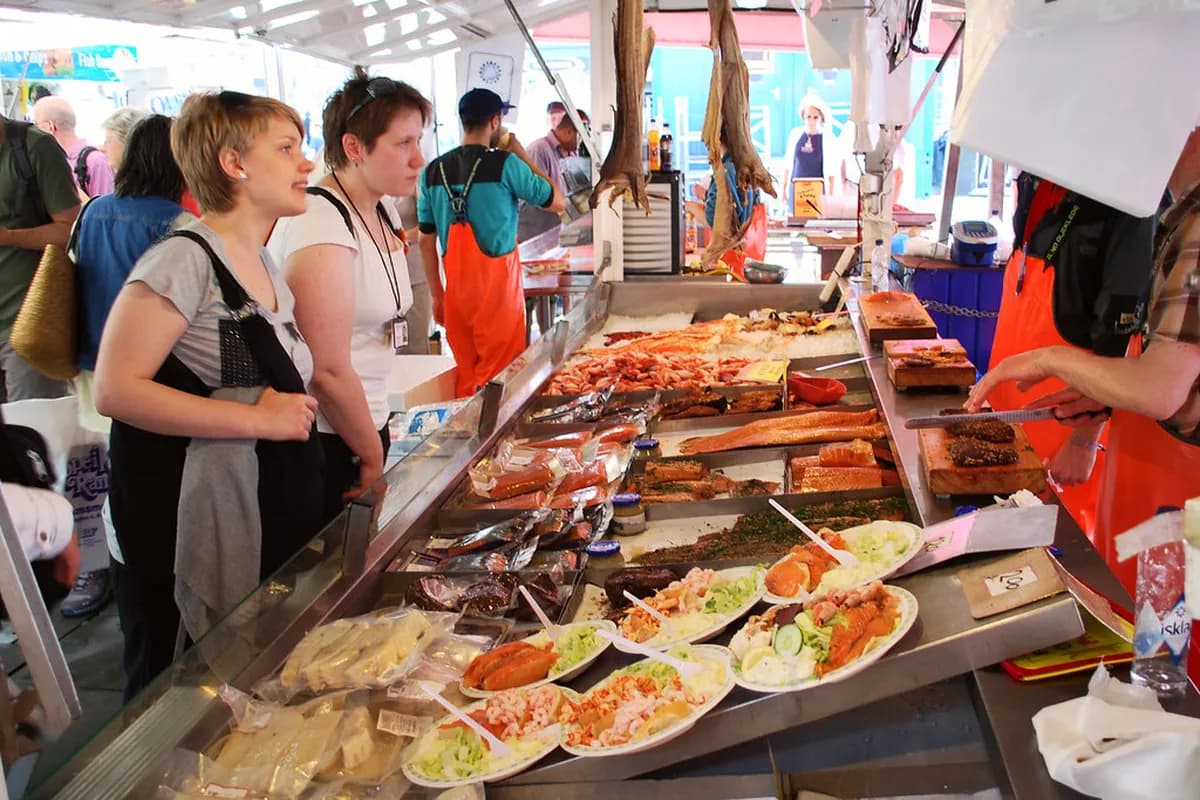
The fish market has operated near Bergen's harbor since the 1200s and remains the most atmospheric free stop on the waterfront. Walking through the outdoor stalls to see the king crab, whole salmon, and dried stockfish is completely free. The market runs daily from May through September, typically 08:00 to 23:00, and a condensed indoor version called Mathallen operates year-round inside the adjacent building.
Be honest with yourself about eating here: the prices are steep and aimed at cruise passengers. A cup of Bergensk fiskesuppe (Bergen fish soup) from the nearby kiosk Søstrene Hagelin on Strandgaten is a much better value and is a dish locals genuinely eat. But the market itself is worth 15 minutes as a free cultural experience.
11. Visit the Buekorps Museum
Bergen's Buekorps tradition is one of the most unusual civic customs in Norway. These youth drum-and-bugle organizations have existed since the 1850s and are deeply tied to neighborhood identity in the city. The small museum dedicated to their history is housed in a historic tower and admission is free, though opening hours are limited — typically Saturdays in summer from around 12:00 to 15:00.
The museum is worth a brief visit for the drums, uniforms, and photographs that trace 160 years of the tradition. If you arrive when the museum is closed, the exterior of the tower and the surrounding alley near Ole Bulls plass are still worth seeing.
12. Explore Local Churches (St. Mary's & More)
Bergen has several historic churches that can be viewed from the outside at no cost and sometimes entered for free during open hours. Mariakirken (St. Mary's Church), just behind Bryggen, is the oldest surviving building in the city with Romanesque towers dating to the 12th century. A small entry fee applies for the interior. Bergen Cathedral (Domkirken) on Kong Oscars gate is free to enter during non-service hours and features an unusual exterior cannon ball lodged in its wall from an 18th-century sea battle.
For a rainy day, stepping into Domkirken costs nothing and gives you 15 to 20 minutes of quiet shelter alongside some well-preserved medieval stonework. Both churches are within easy walking distance of the central harbor area.
13. See the Ruins of Lysekloster Monastery
Lysekloster is a Cistercian monastery founded in 1146, located about 30 minutes south of Bergen by car in Os Municipality. The ruins are completely free to visit, accessible at any time, and almost entirely unknown to international tourists. You need a rental car or a willing taxi to get here — there is no direct public transit connection from Bergen center.
The site sits on a small promontory above the fjord with a haunting beauty that rewards those willing to make the trip. If you are renting a car for a day trip, combining Lysekloster with a stop at Gamlehaugen Royal Estate on the way back adds another free site without significantly extending your route.
14. The Locals' Free Viewpoints Most Visitors Miss
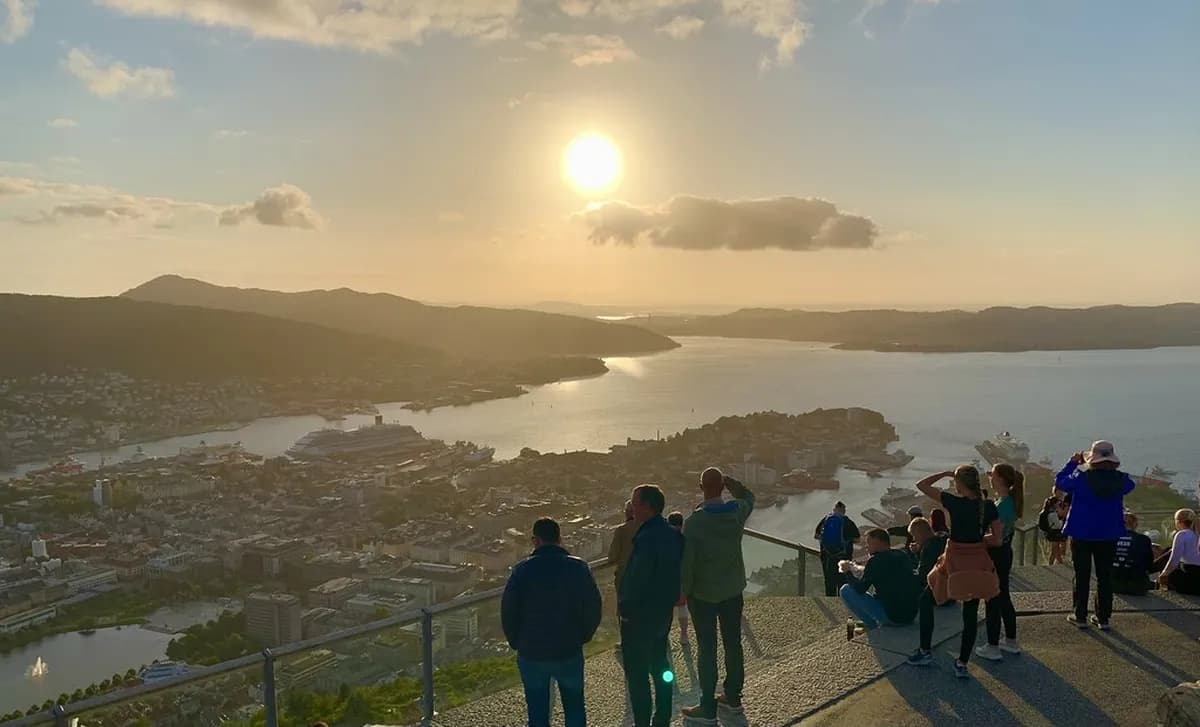
The Fløibanen funicular gets all the attention, but Bergen has several equally good free viewpoints that see almost no tourist traffic. Skansen, the old fire station just above the funicular lower station, offers a direct harbor view on a ten-minute walk from Bryggen. The platform is open at all hours and is my preferred spot at sunset because virtually no one else is there.
Gamlehaugen Royal Estate in Fana is another overlooked option. The main villa is the Norwegian Royal Family's Bergen summer residence and is closed to visitors, but the extensive grounds and lakeside gardens surrounding it are free to walk through when the Royal Family is not in residence — typically most of the year outside of July. Take Bybanen Line 1 to Paradis and walk 15 minutes through the suburb. The park sits above Nordåsvannet lake and offers calm woodland walks with occasional harbor glimpses that you will have almost entirely to yourself.
Stoltzekleiven's summit viewpoint, mentioned in the hiking section, is also in this category. The panorama from the top toward the northern suburbs and the Byfjorden is wider and less photographed than the classic Fløyen shot. If you want an original image of Bergen rather than the standard postcard view, climb here.
15. Getting Around Bergen on a Budget
Bergen's city center is compact enough that almost every attraction on this list is within a 20-minute walk of the harbor. Walking is free and the most practical way to move between sites. The main exception is if you are heading to the airport, Gamlehaugen, Fantoft, or the outer neighborhoods — for those journeys the Bybanen light rail makes sense. A single journey costs around 40 NOK in 2026; buy your ticket on the Skyss app before boarding, because on-board purchases are not possible and traveling without a valid ticket brings an instant fine of around 950 NOK.
From Bergen Airport at Flesland, the Bybanen Line 1 runs directly to the city center in 45 minutes for roughly 40 NOK. The alternative Flybussen airport bus stops outside Bryggen and costs 189 NOK but is faster at about 25 to 30 minutes and better if you are staying near Bryggen with heavy luggage. For late arrivals, a taxi from the airport costs around 400 to 500 NOK depending on traffic.
For the Bergen Card question: if you are following this list of free activities, you almost certainly do not need it. The card starts at 349 NOK per 24 hours and makes financial sense only if you plan to enter at least three paid museums in a single day. Run the math against the Bergen Card before you buy. Most budget travelers visiting for two to three days will find they never need to break even on the card.
If your stay extends beyond Bergen's core, check out our guide to day excursions from Bergen for nearby Hardangerfjord and Sognefjord options.
Budget-Friendly Places to Eat and Drink
The most effective budget strategy for food in Bergen is the supermarket picnic. Both Kiwi and Rema 1000 have central locations and carry fresh bread, local brown cheese (brunost), smoked salmon, and prepared salads at a fraction of restaurant prices. A full picnic lunch for one person runs around 60 to 80 NOK. Tap water in Bergen is excellent — fill a reusable bottle anywhere for free.
For hot food without restaurant prices, Trekroneren is a classic harbor-side kiosk near the Fløibanen station that serves some of the best hot dogs in the country for around 50 to 70 NOK. Søstrene Hagelin on Strandgaten 3 is a local institution for affordable Bergensk fiskesuppe (around 100 NOK for a cup). Both are beloved by locals and priced for people who actually live here, not cruise passengers.
For coffee, avoid the waterfront cafes and head to Kaffeemisjonen or Bergen Kaffebrenneri — both serve excellent filter coffee with free refills (called a påfyll) for a flat price, which is how Norwegian cafe culture typically works. Baker Brun has multiple central locations for cheap pastries. If you need a sit-down meal, Pingvinen on Vaskerelven serves traditional Norwegian food at relatively moderate prices compared to the tourist belt.
Where to Stay in Bergen
Bergen's accommodation market is tight. The city genuinely does not have enough hotel rooms to meet summer demand, which means prices spike quickly and fully-booked dates are common from mid-June through August. Book at least two to three months in advance for any summer visit. For shoulder season (May, September) you have more flexibility, but early booking still gets meaningfully lower rates.
For budget travelers, City Hostel Bergen on Nedre Korskirkealmenning is the most central hostel option with dorm beds typically starting around 300 to 400 NOK per night. It is a ten-minute walk from Bryggen. Bergen Citybox is a reliable mid-range pick downtown with compact but clean private rooms. Both are walking distance from every site on this list.
For a splurge without leaving the free-activity mindset, Det Hanseatiske Hotel sits inside a 16th-century Bryggen building and the location alone means you walk out the door directly into the UNESCO heritage site. Rates start around 1,500 to 2,000 NOK per night in high season — expensive, but the location eliminates all transport costs. Bergen Børs Hotel (housed in the 1862 stock exchange building on the harbor) is the other luxury benchmark and is consistently rated as offering one of the best hotel breakfasts in Norway. For Bergen day trips, staying centrally near the bus station on Strømsgate gives you the fastest access to fjord departure points.
Rainy Day Free Strategy
Bergen receives rain on more than 230 days per year. Every visitor should have a wet-weather backup plan before they arrive. The free indoor options on this list are: Kunsthall 3,14 (open Tue–Sun 12:00–17:00), Bergen Cathedral interior (free during non-service hours), the Botanical Garden greenhouses at Muséhagen, the covered walkways and interior corridors of Bryggen, and the free sections of Bergenhus Fortress (the outer grounds have some covered areas near the walls).
The Buekorps Museum is also indoors but has limited Saturday-only hours. If you want a warm sit-down option that costs next to nothing, stepping into one of the local bakeries or church interiors gives you a dry 20 to 30 minutes at no charge. Bergen's rain is typically intermittent — the standard local advice is to wait 20 minutes and check again, because a clearing often follows quickly. Having a waterproof jacket and a short list of free indoor spots means you are never stuck waiting for the weather.
Frequently Asked Questions
Can you walk up Mount Fløyen for free?
Yes, walking up Mount Fløyen is completely free and takes about 45 to 60 minutes. The gravel paths are well-maintained and offer several beautiful viewpoints of the city along the way.
Are museums in Bergen free on certain days?
Most major museums in Bergen require a ticket, but some offer free entry during special events like Culture Night. Always check the specific museum websites for occasional free hours or community days.
What is the best free thing to do in Bergen when it rains?
Visiting Kunsthall 3,14 is an excellent free indoor option during a rainstorm. You can also explore the covered walkways of the Bergenhus Fortress or the University Museum's Botanical Garden greenhouses.
Bergen proves that you don't need to spend a fortune to experience the best of Norway's culture and nature. By focusing on free hiking trails, historic neighborhoods, and public parks, you can enjoy a world-class destination on a modest budget. I hope this list helps you plan a memorable trip that leaves you with plenty of kroner left for your next adventure.
Remember that the best experiences in this city are often found in the quiet moments between the rain showers. Whether you are standing atop a mountain or wandering a medieval alley, the magic of Bergen is accessible to everyone.
You might also like
Continue reading
More guides you'll find useful