Arctic Cathedral Tromso: 6 Essential Visitor Tips
Plan your visit to the Arctic Cathedral (Ishavskatedralen) in Tromsø. Our guide covers its iconic architecture, the massive glass mosaic, concert schedules, and practical travel tips.
On this page
Arctic Cathedral Tromso: 6 Essential Visitor Tips
The Arctic Cathedral stands as the most recognizable landmark in northern Norway. Its bold white peaks rise sharply above the Tromsdalen valley and stop every visitor in their tracks. The popular name is actually a misnomer — the building is officially called Tromsdalen Church and serves as a working parish for the mainland community. Locals embraced the grander title almost immediately after the doors opened in 1965, and it stuck.
You will find this architectural gem on the mainland side of the city, directly across the Tromsø Bridge from the island center. It sits perfectly framed by the 1,238-metre Tromsdalstind peak rising behind it. Exploring this site is one of the top Tromsø attractions for every kind of traveler, whether you come for the art, the concerts, or simply the view from the bridge.
Planning a visit requires some knowledge of its history and unique design. From a massive glass mosaic added almost a decade after the church opened, to world-class midnight sun concerts, there is more to discover than the facade suggests. This guide gives you the practical and cultural details you need for a rewarding stop.
History and Origins of the Arctic Cathedral
The story begins in the early 1960s when Tromsø was expanding rapidly into the Tromsdalen valley on the mainland. City planners needed a new parish church to serve this growing population. Architect Jan Inge Hovig received the commission and set out to design something that would speak to the landscape rather than import a conventional European form. Details of the original construction timeline and building specifications are available on the official Arctic Cathedral website.
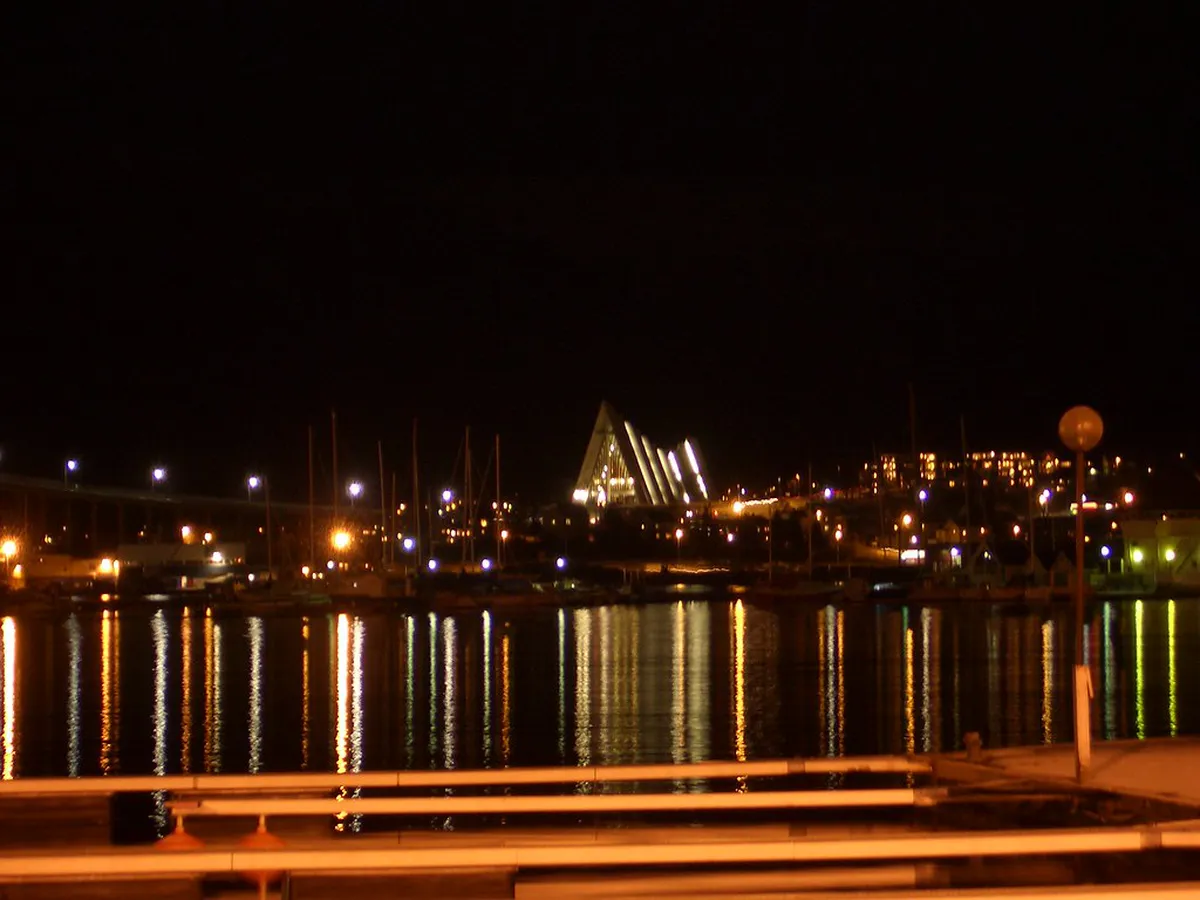
Construction started in 1964 and finished in 1965. The building opened as Tromsdalen Church, a name it still carries officially. Within months of opening, people began calling it Ishavskatedralen — the Arctic Cathedral — because of its scale and daring silhouette. That informal name has now outlasted almost every other description of the building.
What many visitors do not realize is that the church as it stands today is not entirely what Hovig designed. His original plan called for standard glazing in the eastern wall. The monumental glass mosaic that now defines the interior was added in 1972 — seven years after the church opened — and was the work of a separate artist. The building you see is, in a real sense, the collaboration of two visions that never met at the same drawing board.
The site choice was deliberate: the building needed to be visible from the harbor and from the bridge. It serves as a visual gateway for those arriving by sea or crossing from the island. Many travelers include this stop when planning things to do in Tromsø, and the church remains central to the community's identity today.
Architectural Design: Inspired by Ice and Snow
Eleven aluminum-coated concrete lamella panels lean against each other to form the church's soaring triangular body. Hovig himself gave different accounts of what inspired the shape: an iceberg, a Sami tent, a boathouse, a fish-drying rack, even the rocky island of Håja visible from Tromsø. The uncertainty is part of the building's mythology. What is clear is that the form feels completely at home against the Arctic landscape. Architectural historians note the influence of modernist design movements in Hovig's approach.
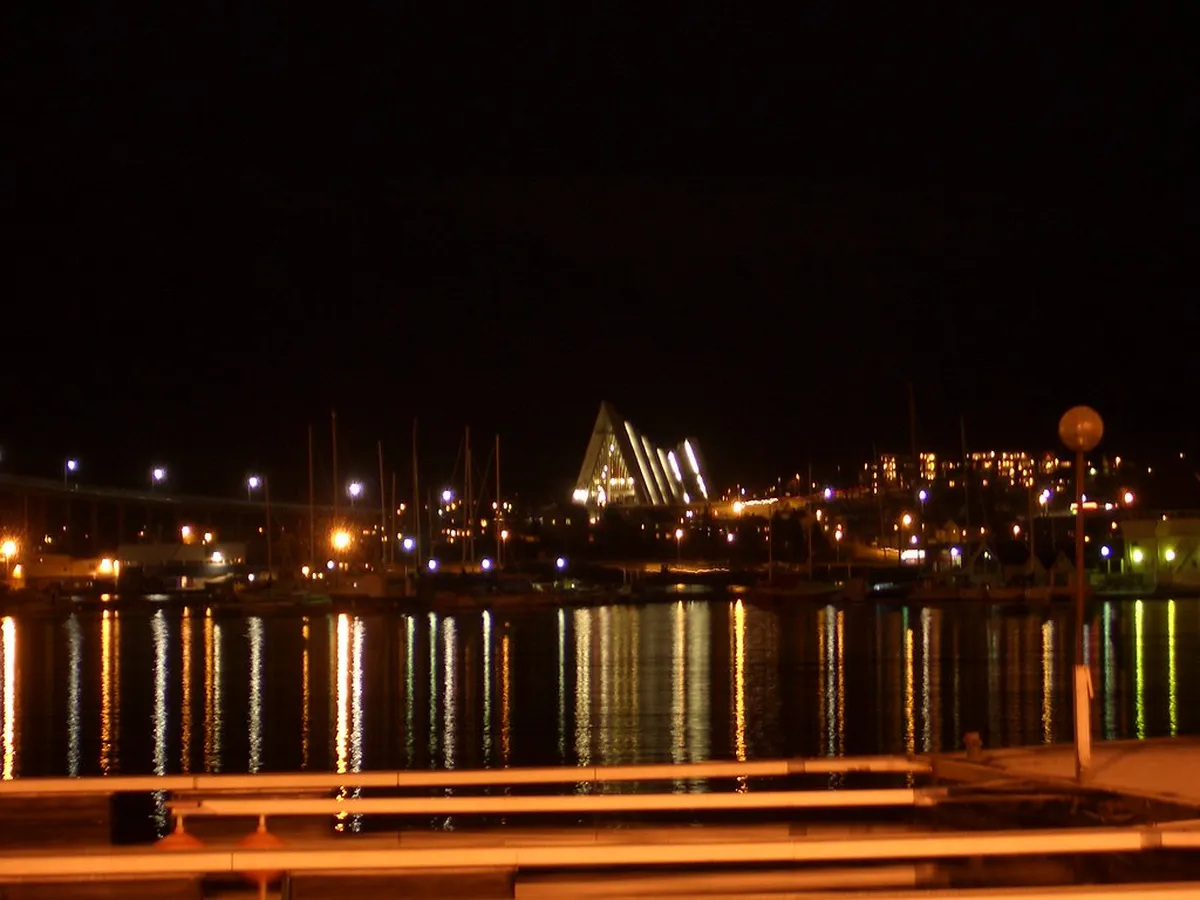
Strip lights are placed between each of the eleven panels. When darkness falls during the Polar Night, the illuminated outline cuts a sharp white shape against the sky from every part of the city. This is not an accident of design — the church functions as a genuine visual lighthouse for ships entering the harbor. Sailors use the glowing white peak to orient themselves just as they would a navigation beacon.
Inside, Czech crystal chandeliers hang above the pews. Their sharp, jagged forms are modeled on icicles, reinforcing the Arctic motif that runs through every element of the design. They cast a cool, clear light that contrasts with the warmth generated by the congregation below. The simplicity of the wooden pews and bare concrete walls keeps all attention on the altar and the eastern wall beyond it.
The interior intentionally avoids heavy ornamentation. Every surface either serves the acoustics or frames the view toward the mosaic. That discipline is part of what makes the space feel powerful rather than merely large.
The Monumental East-Facing Glass Mosaic
Victor Sparre's mosaic covers the entire eastern wall behind the altar. It was installed in 1972 and depicts the second coming of Christ, flooding the sanctuary with color from thousands of glass pieces. The scale alone is enough to stop you mid-aisle. It is considered one of the largest and most monumental glass mosaics in Europe.
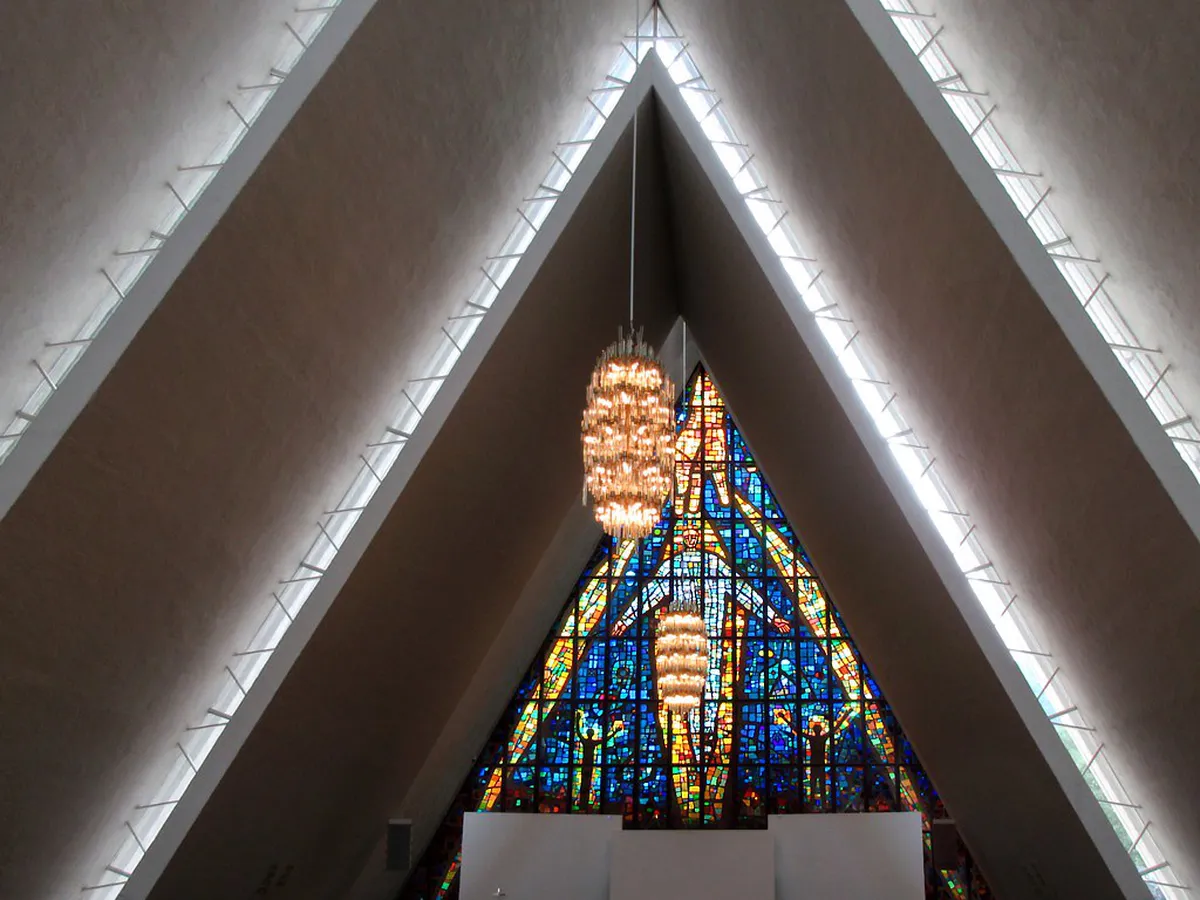
The glass pieces are three centimeters thick — significantly thicker than standard stained glass. That extra depth changes how light travels through each piece. On a clear morning, when sunlight strikes the east-facing wall directly, the mosaic becomes almost completely transparent. The colors dissolve and the wall appears to glow from within rather than display a picture.
The behavior reverses as the day progresses. When the midnight sun shines from the west during summer — as it does from around late May through mid-July — the light hits the mosaic from behind and the colors deepen dramatically into rich blues, golds, and reds. This is the opposite of what most people expect, and it is one of the most striking effects in any building in Norway.
During the Polar Night in December and January, the mosaic is blacked out from the inside because there is no ambient light to penetrate it. However, the internal lighting of the church projects the colors outward, and from across the bridge you can see the glowing wall as a patch of warm color against the dark winter sky. The mosaic rewards visitors in every season but never looks the same twice.
Musical Heritage: Concerts and the Organ
A modern organ with nearly 3,000 pipes was installed in the church in 2005. Its design echoes the triangular geometry of the building itself, and it was built specifically for the acoustic properties of the hall. Organists from across Norway and abroad travel to Tromsø to perform on it.
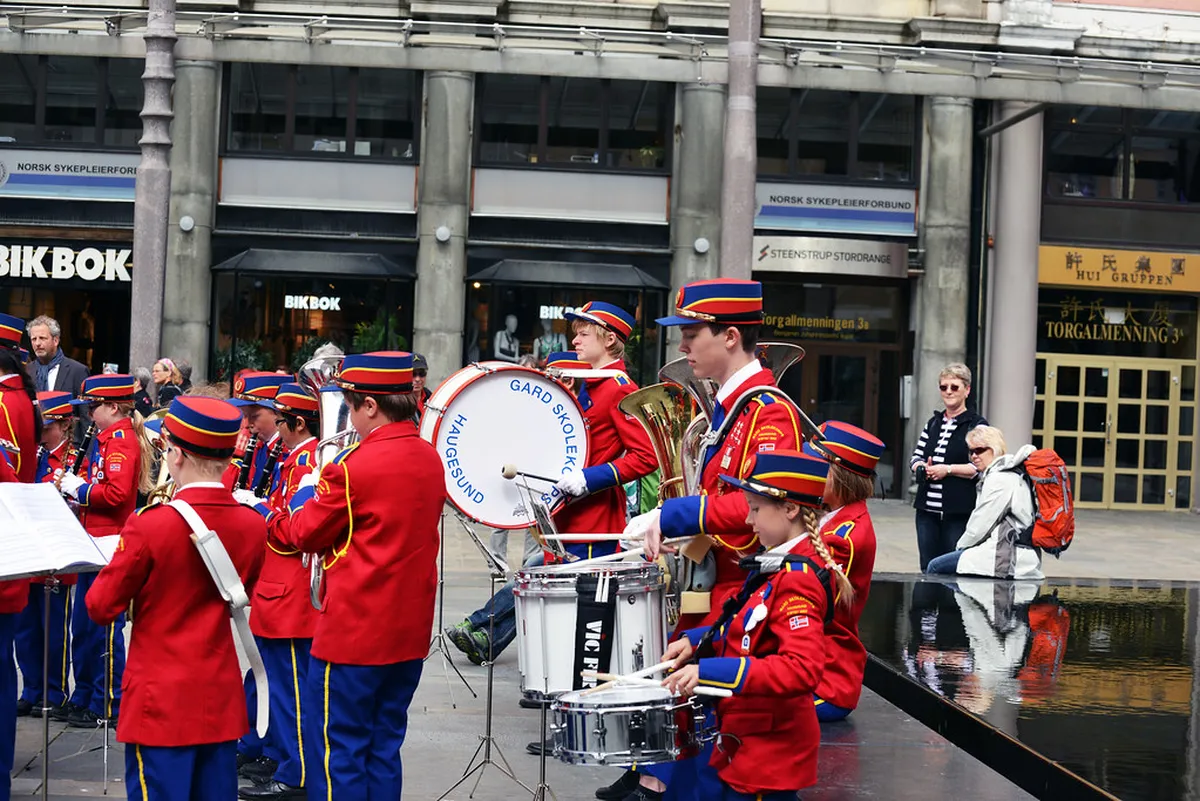
The most sought-after events are the midnight sun concerts held in summer. Performances begin just before midnight, while the sun is still above the horizon outside. After the final note, the audience steps out into full daylight — one of those only-in-Norway moments that is genuinely difficult to explain to someone who has not experienced it. You can find current schedules through the midnight sun in Tromsø guide.
Winter brings Northern Lights concerts on clear evenings. The church's five resident choirs perform regularly throughout the year alongside visiting professional musicians. Tickets for popular concerts sell out weeks in advance, particularly during the summer season. Booking early is essential if a concert is a priority for your visit.
The acoustics benefit every kind of music that plays here. The hard concrete shell and the shape of the ceiling create a natural reverb that flatters choral and chamber works especially. Even if you catch only a rehearsal in progress, the sound carries a quality rarely heard outside purpose-built concert halls.
Spiritual Significance and the Symbolic Triangle Churches
The Arctic Cathedral belongs to the Church of Norway, the Lutheran national church. It is an active parish church first and a tourist destination second. Regular Sunday services, weddings, and baptisms take place throughout the year for the Tromsdalen congregation. Visitors are welcome outside service times, and the church staff is accustomed to a mix of tourists and worshippers sharing the space.
The triangular form carries deliberate spiritual meaning. In Christian architecture the triangle represents the Holy Trinity, and Hovig used this geometry at every scale — from the overall silhouette down to the detailing of individual panels. This makes the Arctic Cathedral part of a broader mid-twentieth century movement of triangle churches in Norway, buildings that used modern geometry to express traditional theological ideas.
Inside, the minimalism creates a quieter atmosphere than most ornate European cathedrals. There is little to distract the eye from the altar and the mosaic. Many visitors who enter with no particular religious intent find themselves staying longer than they expected. Check Tromsø travel tips for service times so you can plan around them rather than accidentally interrupting a ceremony.
The church also honors the connection between faith and the sea. Elements of its design — the sail-like panels, the lighthouse function, the harbor orientation — reflect the maritime culture that shaped this part of Norway. It is a building that belongs to its specific place in a way few modern churches manage.
Practical Visitor Guide: Planning Your Visit in 2026
The cathedral sits at the eastern end of the Tromsø Bridge, directly across from the city center island. Entry for adults is approximately 80 NOK in 2026. Concert tickets are priced separately, typically between 200 and 350 NOK depending on the event. The church is generally open to visitors in the afternoon and evening; hours shift between seasons, so check the official website before you go.
Concert tickets are sold weeks in advance during summer. If midnight sun concerts or Northern Lights concerts are a priority, book early — the most sought-after events sell out quickly, particularly the midnight sun performances in June and early July.
Walking across the bridge is the most scenic option and takes 15 to 20 minutes from the center. The views from the bridge — the harbor to the south, the mountain backdrop, and the cathedral growing larger as you approach — are worth the walk on their own. The one genuine caveat is wind. The bridge sits fully exposed and a strong Arctic gust in winter or early spring can make the crossing uncomfortable. Wear a windproof layer even on days that look calm from the island.
The Tromsø Bridge is fully exposed to Arctic wind. Strong gusts in winter and early spring can make crossing difficult or uncomfortable, even on days that appear calm from the city center. Always wear a windproof jacket for the bridge crossing.
If conditions are poor, buses 20, 24, and 28 stop directly outside the entrance. The ride takes around five minutes and runs frequently throughout the day. For more detail on routes and fares see the getting around Tromsø guide. The bus is the practical default for anyone with limited mobility, heavy luggage, or young children who struggle with the wind.
Photography is permitted inside when no service is in progress. The best single position for exterior shots is from the midpoint of the bridge at dusk in summer, when the sky behind Tromsdalstind takes on color and the church's white panels glow. Arrive early if you want the interior to yourself — tour groups begin arriving mid-morning and the church can feel crowded by early afternoon during peak season.
Use our guide to things to do in Tromsø for the wider city overview.
Frequently Asked Questions
Why is the Arctic Cathedral famous?
The Arctic Cathedral is famous for its unique triangular architecture and its massive glass mosaic. It serves as a major landmark in Tromsø and is a popular venue for midnight sun concerts. Many visitors are drawn to its striking white design that resembles Arctic ice and snow.
What religion is the Arctic Cathedral?
The Arctic Cathedral belongs to the Church of Norway, which is a Lutheran denomination. While it is a popular tourist site, it remains an active parish church for the Tromsdalen community. It hosts regular Sunday services, weddings, and baptisms for local residents throughout the year.
How much does it cost to enter the Arctic Cathedral?
General admission for adults is approximately 80 NOK in 2026. Children and students may receive discounted rates for entry. Concert tickets are priced separately and typically cost between 200 and 350 NOK depending on the event. Always check the official website for the latest pricing updates.
Can you walk to the Arctic Cathedral from Tromsø center?
Yes, you can easily walk across the Tromsø Bridge to reach the cathedral. The walk takes about 15 to 20 minutes and offers beautiful views of the harbor. Be prepared for windy conditions on the bridge, especially during the winter months when the northern lights might appear.
The Arctic Cathedral rewards visitors who go in knowing what to look for. The mosaic changes character with every hour and every season. The building glows against winter darkness and blazes in the midnight sun. No single visit captures all of it.
Whether you come for a concert, a quiet moment in the pews, or simply to photograph the bridge approach, the experience is unlike anything else in northern Norway. Remember to check the best time to visit Tromsø against the concert schedule so the two line up. The cathedral is at its most alive when the music is playing and the light is doing something unusual with the glass.
Take your time crossing the bridge both ways. The view back toward the island, with the mountains framing the city and the cathedral at your back, is one of the finest free panoramas in the Arctic. Bring a windproof jacket and a fully charged camera.
You might also like
Continue reading
More guides you'll find useful