10 Ways to Maximize Chances of Seeing Northern Lights in Tromso
Learn how to maximize your chances of seeing the Northern Lights in Tromso. Covers the 2024-2026 Solar Maximum, best months, peak hours, and local weather secrets.
On this page
10 Ways to Maximize Your Chances of Seeing Northern Lights in Tromso
Tromsø is widely regarded as the aurora capital of the world, and for good reason. It sits directly inside the auroral oval, the band around Earth's magnetic poles where geomagnetic activity is most concentrated. But location alone is not a guarantee. Weather, timing, solar activity, and a few local tricks determine whether you go home with a life-changing memory or a cloudy sky.
The 15 Essential Guides to the Northern Lights in Tromso season runs from mid-September through early April. Right now — through late 2026 — the sun is at the peak of its 11-year solar cycle, making displays more frequent and more vivid than they have been in over a decade. These ten strategies will help you make the most of that window.
Position Yourself in the Auroral Oval
The single most important factor in seeing the aurora is geography. Tromsø sits at 69.6°N, well inside the auroral oval — the ring around Earth's magnetic north pole where charged solar particles funnel into the atmosphere and produce the lights. Most aurora guides written for a general audience describe places on the edge of this oval, where you need a strong solar storm to see anything. In Tromsø, you are inside it.
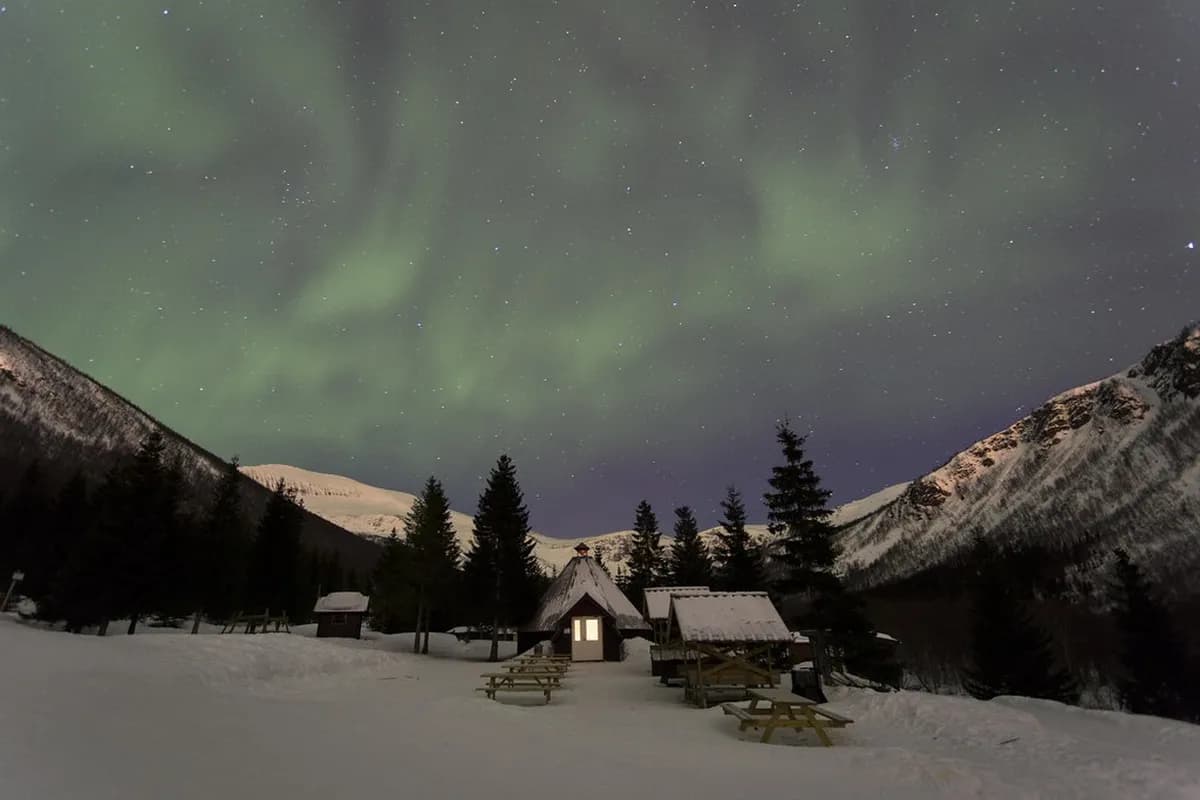
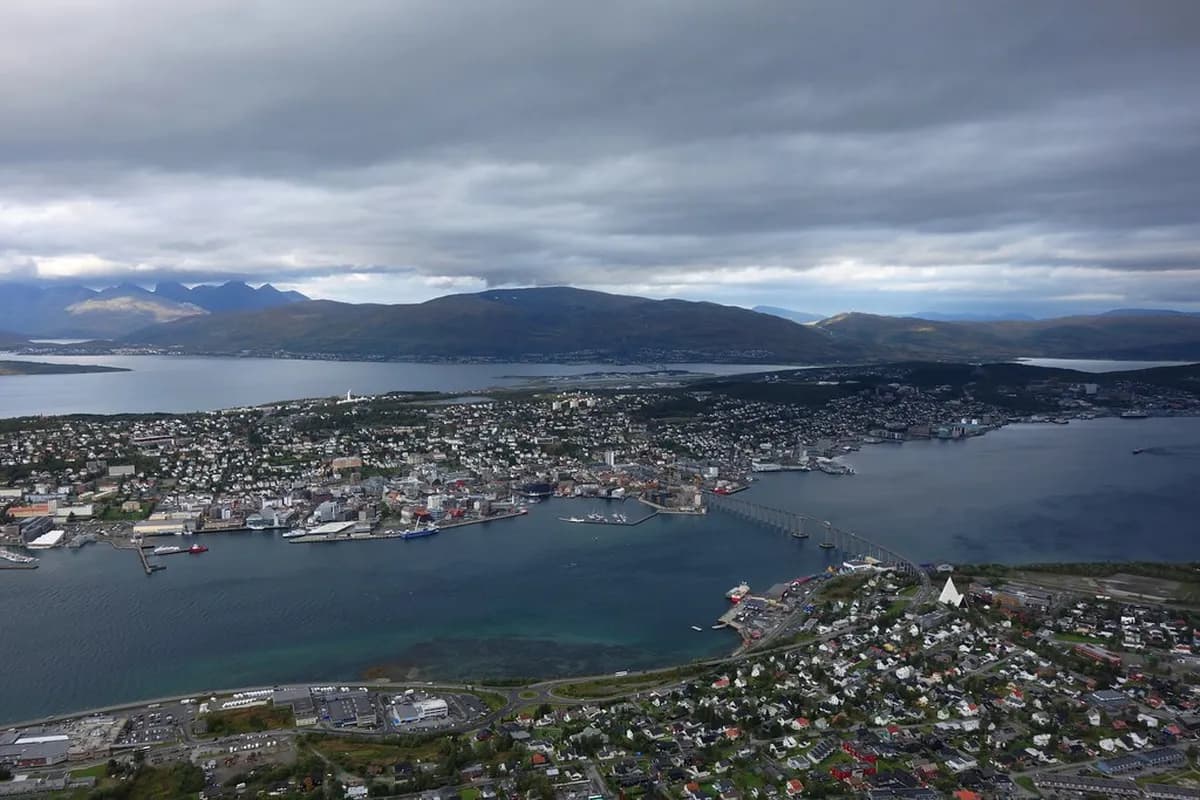
That distinction changes everything. When you stand on Kvaløya island west of the city on a clear night, the aurora often appears directly overhead rather than as a smear on the horizon. Even during geomagnetically quiet nights the oval itself glows. Simply arriving in Tromsø puts you in the best possible position on the planet for a sighting.
Time Your Visit Between September and April
Darkness is a prerequisite. From late April to mid-August the midnight sun means the sky never gets dark enough for the aurora to be visible, even when solar activity is high. The prime season opens in mid-September when astronomical twilight returns to the Arctic and closes again in late April. Within that window, some months perform better than others.
| Period | Avg Temp | Sky Clarity | Aurora Frequency | Best For |
|---|---|---|---|---|
| Early season (Sept–Oct) | 2°C to 10°C | Variable | High — equinox boost | Autumn colors, mild cold |
| Deep winter (Nov–Feb) | -5°C to 0°C | Most cloudy | Very high — long nights | Polar night, snow activities |
| Late season (Mar–Apr) | -4°C to 2°C | Better inland | High — equinox boost | Snow + longer days |
September and March stand out because of the equinox effect. Around the spring and autumn equinoxes, Earth's magnetic field is oriented in a way that makes it easier for solar wind to couple into the magnetosphere. This reliably produces more geomagnetic storms, which means more auroral activity. The lights also appear at lower KP levels during these weeks.
October through February offers the longest periods of darkness — over 18 hours of night in mid-winter — but coastal Tromsø also receives its heaviest cloud cover during this period. March is often the best compromise: good solar activity, improving weather, and enough snow on the ground to create dramatic reflections in your photographs.
Capitalize on the 2024–2026 Solar Maximum
The sun follows an 11-year cycle of activity, oscillating between solar minimum (few sunspots, quiet) and solar maximum (many sunspots, frequent flares and coronal mass ejections). Solar Cycle 25 reached its maximum in late 2024 and forecasters at NOAA expect elevated activity to persist through 2026. This is the most active solar period since the early 2000s.
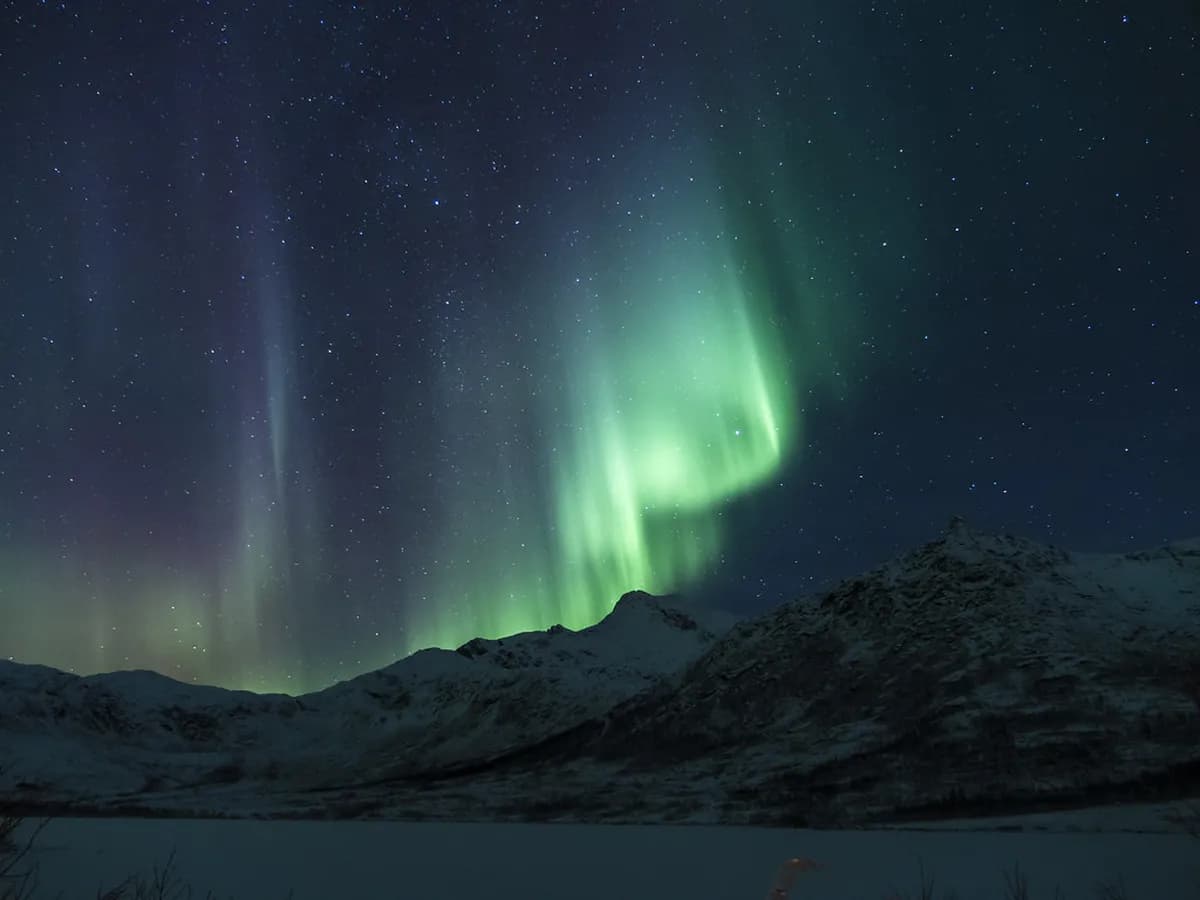
In practice that means stronger aurora displays, more nights with visible activity, and — crucially — the appearance of colors beyond green. Pure green is produced at altitudes of around 100 km and is the default aurora color. During strong solar events, red and purple bands appear above 200 km, and blue-violet arcs appear at lower altitudes. Visitors during the current solar maximum are reporting these multi-colored storms regularly. The next solar maximum will not arrive until approximately 2035.
Do not wait. The window of elevated activity is open now through late 2026. Even if you can only manage a short trip, the odds of seeing something memorable are substantially higher than they will be in two or three years.
Hunt During the Peak Window (18:00–02:00)
The aurora can appear at any hour of darkness, but activity is not evenly distributed through the night. Magnetic midnight — when the auroral oval is positioned directly overhead at Tromsø's longitude — falls at approximately 23:00 local time. The two hours on either side of magnetic midnight are statistically the most productive, which translates to roughly 21:00 to 01:00 as your prime window.
That said, waiting only for magnetic midnight is a mistake. Many of the most intense storms erupt earlier, between 18:00 and 20:00, as Earth rotates into the incoming solar wind stream. The best strategy is to be outside and watching from dusk until at least 02:00 on nights with good forecasts. The lights can appear suddenly and vanish within minutes, or they can build slowly over several hours. Keep your eyes on the northern sky even during lulls.
Patience matters more than strategy on any individual night. I have seen people give up at 23:30 and walk back to their hotel, only to hear from others that a curtain exploded across the sky at 00:15. Plan to stay out for the full window on every clear night.
Interpret the KP Index for Tromsø's Latitude
The KP index is the most widely cited aurora forecast metric. It runs from 0 (quiet) to 9 (extreme storm). Most aurora apps and websites show it prominently, and most general travel guides suggest you need KP 5 or higher. That advice is written for locations at mid-latitudes, like Scotland or southern Scandinavia. In Tromsø, the rules are different.
Because Tromsø sits inside the auroral oval, the aurora is present at ground level even when KP is 0. A KP 0 night in Tromsø can produce a faint but clearly visible green glow overhead. KP 2–3 typically delivers a good display with visible movement and structure. KP 5 and above produces the dramatic storms that fill the whole sky. This is the "KP 0 reality" that almost no generic guide explains: the oval itself is always active, and Tromsø's position means you sit under it regardless of solar storm strength.
What this means practically: do not cancel your plans or stay in because the forecast shows KP 1 or KP 2. Those numbers are not small. At this latitude they represent a genuine viewing opportunity. Reserve your energy for clear nights, not high-KP nights alone. Clear sky at KP 1 beats cloudy sky at KP 5 every time.
At Tromsø's latitude inside the auroral oval, KP 0–2 is enough for a visible display. Most generic guides recommend KP 5+, but they're written for mid-latitudes. You can see the aurora even on quiet geomagnetic nights here.
Monitor Local Micro-climates and Cloud Cover
Cloud cover is the single biggest obstacle to a successful sighting, and Tromsø's coastal position makes it vulnerable. Warm, moist Atlantic air flows inland and hits the mountain ranges around the city, producing persistent cloud layers that can sit for days. The good news is that the weather changes fast and the mountains create a patchwork of micro-climates within driving distance.
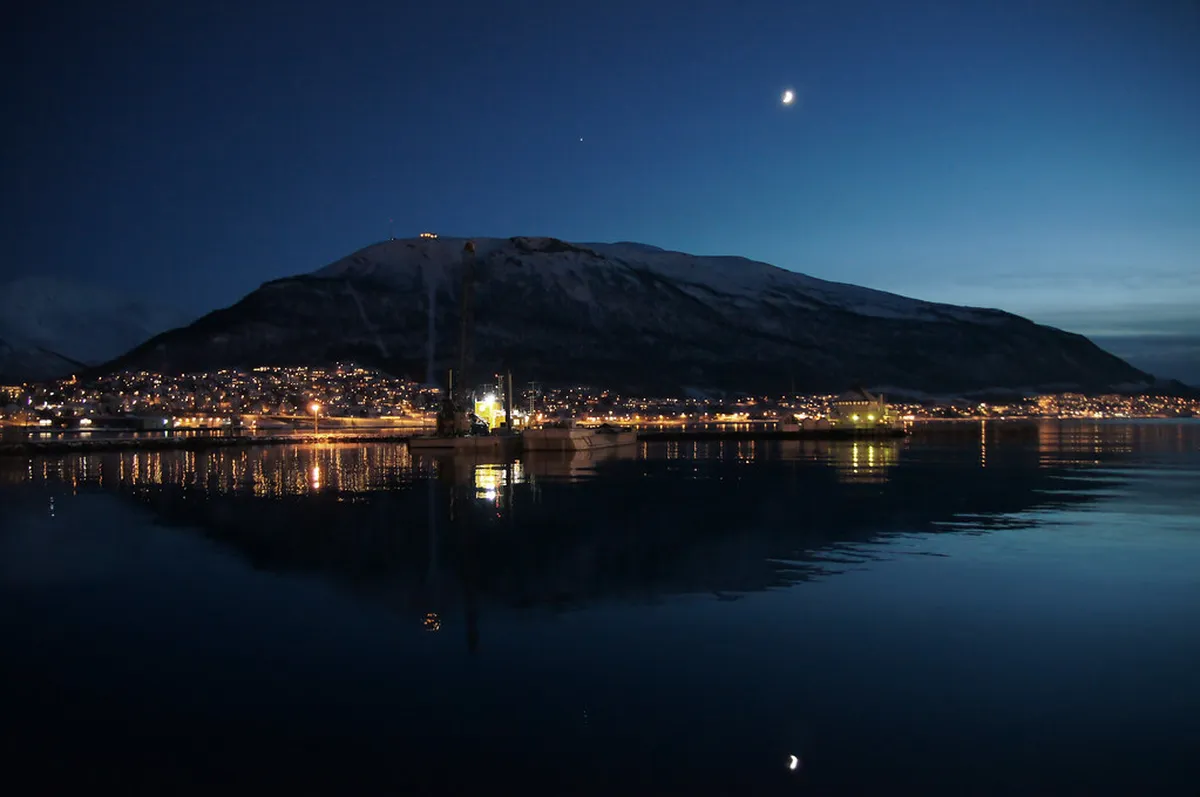
Skibotn, roughly 90 km southeast of Tromsø at the end of Lyngenfjord, sits in the rain shadow of the Lyngen Alps and is statistically the clearest location within easy reach of the city. Professional aurora guides head there first on cloudy nights. The Tamok Valley and the corridor toward the Finnish border near Kilpisjärvi are also reliable escape routes. A 45-minute drive east can move you from solid overcast in Tromsø to a clear sky above the treeline.
The Foehn wind is another weather phenomenon worth knowing. This warm, dry downslope wind occasionally sweeps in from the south and dissolves coastal cloud layers within an hour or two. When it arrives, the harbor clears and the sky turns remarkable. Locals recognize the Foehn by a distinctive warm smell and a sudden rise in temperature. If you feel it, get outside immediately.
Coastal Tromsø sees heavy cloud cover November–February. The rain shadow valleys (Skibotn, Tamok, Kilpisjärvi) are 45–90 minutes away but dramatically clearer. Plan for mobility: either join a guided tour or rent a car and have the Yr.no app ready to spot clear sky gaps.
Use the Right Apps to Track Conditions
Generic weather apps are not enough for aurora chasing. You need at least two data sources: one for cloud cover and one for geomagnetic activity. The combination tells you whether the sky is clear and whether the aurora is active — both must align for a sighting.
For geomagnetic forecasts, Hello Aurora (iOS and Android) is the most popular app among Tromsø guides. It provides short-term KP forecasts, sends push alerts when activity rises, and shows cloud cover maps alongside aurora probability. SpaceWeatherLive provides more granular real-time solar wind data from the DSCOVR satellite, which gives about 15–45 minutes of warning before a solar wind stream hits Earth's magnetosphere. For cloud cover specifically, the Norwegian Meteorological Institute's Yr.no app (free) provides high-resolution satellite cloud imagery updated hourly — far more accurate for the Tromsø micro-climate than international weather apps.
The professional guides in Tromsø use all three in combination. They watch Yr.no for the location of cloud gaps, Hello Aurora for when activity is building, and SpaceWeatherLive for the real-time Bz component of the solar wind — a negative Bz (southward) is the clearest signal that a strong auroral display is imminent. This is the technical detail that separates a productive night from a wasted one, and it is the kind of information no competitor guide spells out clearly.
Escape City Light Pollution
Strong aurora displays are visible from Tromsø city center — the bridge, the harbor, and even the main street on a very active night. But city lights suppress the fainter green glow that constitutes most of what you will see during a typical KP 1–3 event. To see the full color range and the subtle rippling motion of the corona, you need darkness.
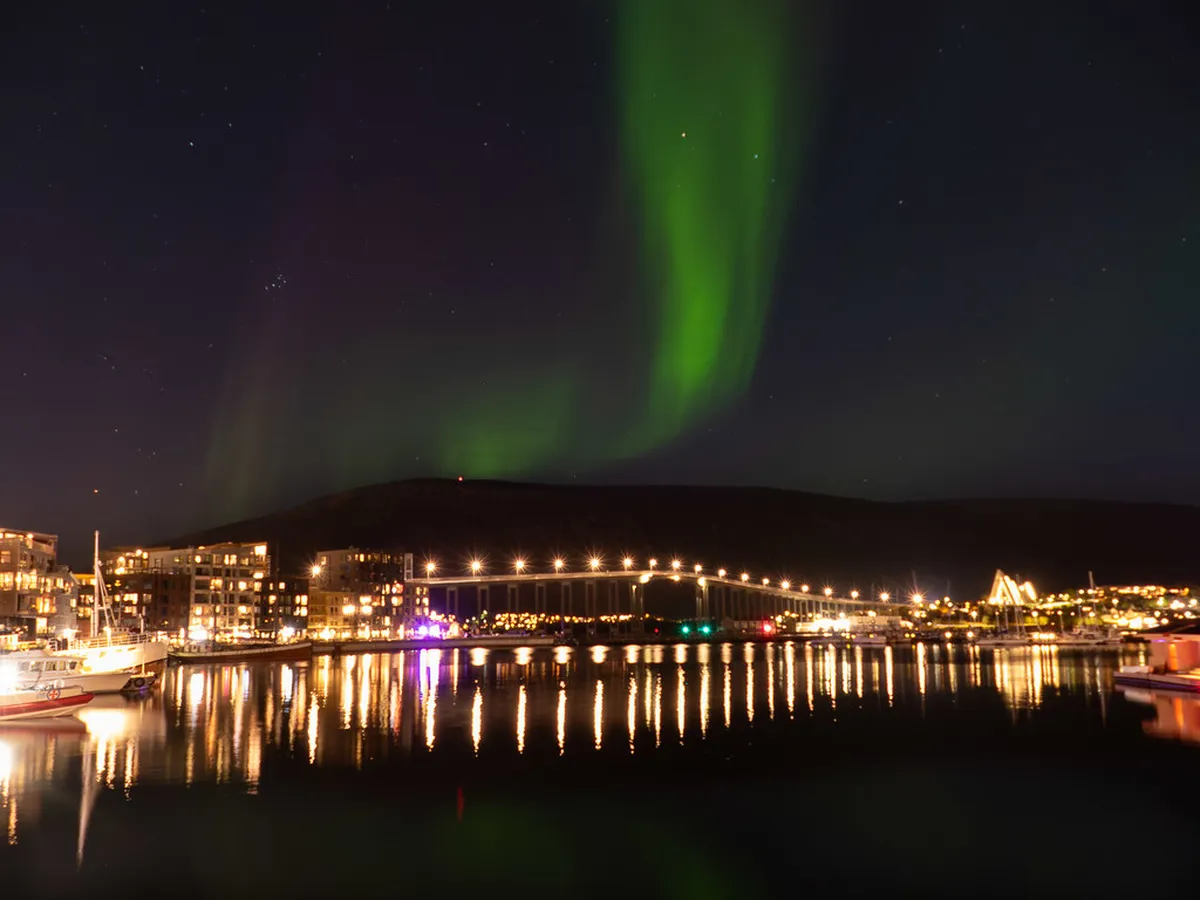
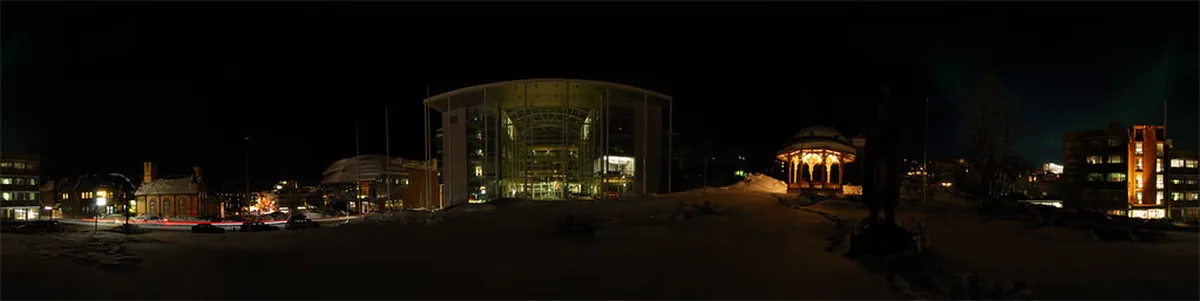
Knowing 14 Best Spots for Northern Lights Near Tromso is the difference between a good sighting and a great one. Kvaløya island, accessible via the bridge from central Tromsø, has numerous dark parking bays along its western shore where you can pull off and face a completely unobstructed northern sky. Tromsdalstinden mountain provides a dark eastern viewpoint within 15 minutes of the city. The Fjellheisen cable car station at the top of Storsteinen also offers dark sky access above the city glow.
Allow at least 20 minutes for your eyes to dark-adapt before judging what you can see. Avoid your phone screen during this time — the blue light resets your night vision in seconds. The difference between unadapted and fully adapted eyes is the difference between seeing a faint smudge and seeing a vivid curtain.
Plan for a Minimum 3–5 Night Stay
A single night in Tromsø gives you roughly one chance. If that night is cloudy — which is common in coastal Arctic Norway — your trip ends without a sighting. A three-night stay pushes your statistical odds to approximately 75–80%. Five nights gets you close to 90% in peak season, assuming you actively chase clear skies rather than waiting at the hotel.
Use the How Many Days in Tromso: 10 Essential Planning Factors question as your planning baseline. Five nights is the standard recommendation from experienced local guides. It covers the typical weather cycle, allows for one or two travel days for inland chasing, and gives you time to recover rest while still being out every clear night. If your schedule only allows three nights, be ready to move fast and have the apps set up before you land.
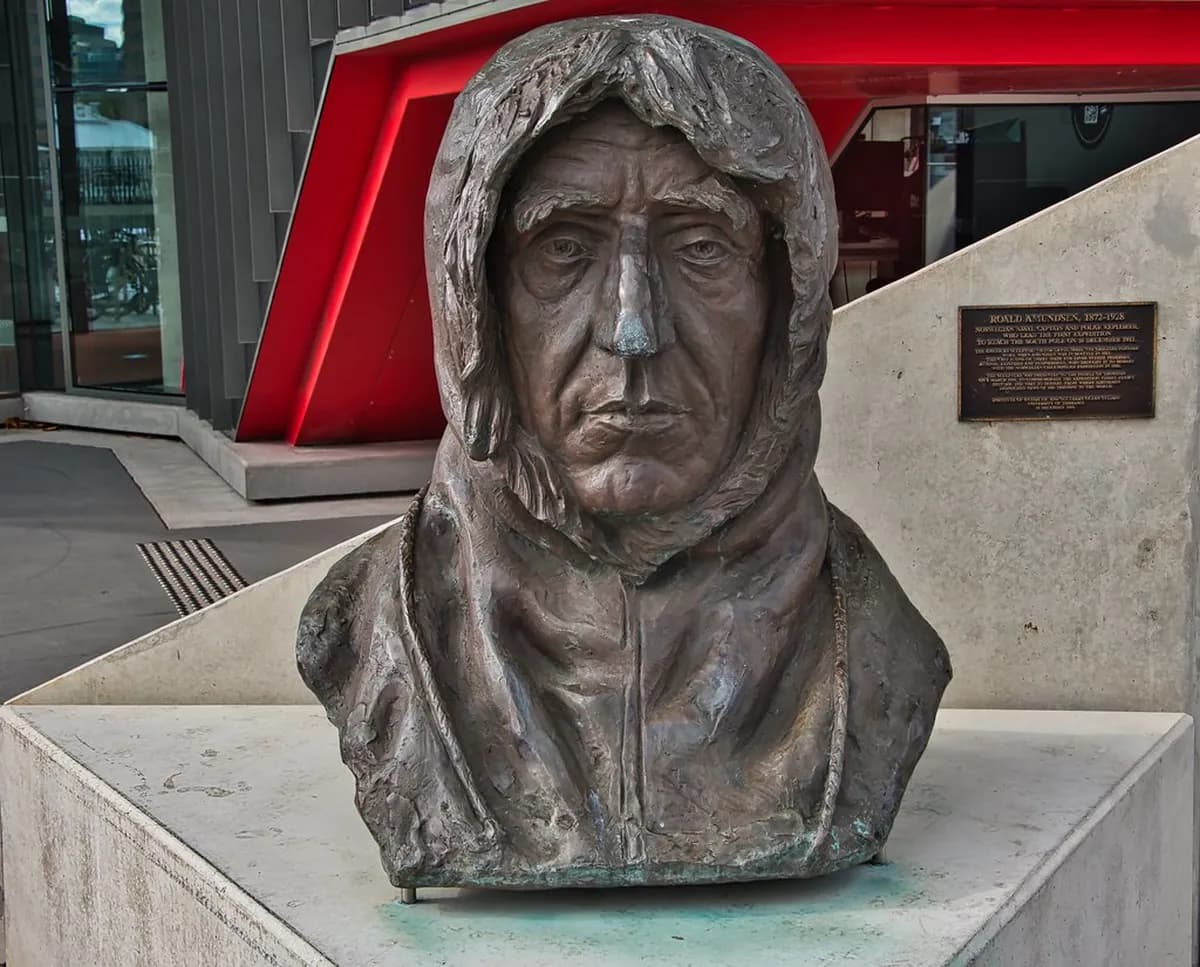
Daytime in Tromsø is worth your attention too. The Polar Museum covers the history of Arctic exploration with exhibits on Amundsen and Nansen. The Arctic Cathedral hosts concerts during winter evenings. Whale watching tours depart from the harbor between November and January, when orca pods follow herring into the fjords. A rich daytime itinerary keeps you energized for the nights that matter.
Join a Professional Aurora Chase
The clearest argument for joining a guided tour is mobility. A professional aurora guide is not standing in one location waiting. They are driving, monitoring multiple forecast apps simultaneously, and making real-time decisions about whether to head toward Skibotn, stay near Tromsø, or push toward the Finnish border. Their vehicles cover 200–300 km in a single night when the weather demands it.
Local 17 Best Northern Lights Tours in Tromso also include equipment support — thermal suits, boot warmers, and tripod guidance — that makes a multi-hour wait outside comfortable rather than miserable. Most tours carry a photographer who can help you set up manual camera settings, which removes one of the biggest frustrations for first-timers. You can Explore our Northern Lights tours to compare options including minibus chases, snowmobile excursions, and RIB boat tours that take you out on the fjord under open sky.
Independent chasing is absolutely viable if you have a rental car, the right apps, and confidence driving on icy roads. But for a first visit during a short stay, a tour dramatically reduces the risk of a wasted clear night. The guide's local knowledge of micro-climates alone is worth the fee.
Gear Up and Photograph the Lights
Staying warm is the prerequisite for staying outside long enough to see anything. Temperatures in Tromsø drop to -10°C or lower on clear winter nights — the same conditions that produce the best sightings. Merino wool base layers wick moisture and insulate even when damp. A windproof outer shell stops the coastal breeze from cutting through. Hand warmers in your pockets protect your fingers between shots. Cold drains camera and phone batteries fast; carry a spare battery kept warm inside your jacket.
For photography, a full-frame or crop-sensor mirrorless camera gives the best results, but even a modern smartphone with a night mode or manual pro mode can capture the aurora. The non-negotiable piece of kit is a sturdy tripod — long exposures with a handheld camera produce nothing but blur. Set your aperture to the widest available (f/2.8 or wider), ISO to 800–3200 depending on brightness, and start with a 5–10 second exposure. The moon phase matters here too: a new moon gives the darkest sky for faint displays, while a full moon illuminates the landscape for dramatic foreground composition. Both have their uses — plan your shoot accordingly.
- Merino wool base layers — top and leggings
- Windproof, insulated outer jacket and trousers
- Insulated waterproof boots with grip soles
- Sturdy tripod with ball head
- Spare camera battery, kept warm in your jacket pocket
- Hand warmers (chemical, reusable, or electric gloves)
Frequently Asked Questions
What are the odds of seeing the Northern Lights in Tromso?
The odds are very high if you stay for at least three nights. Statistically, you have an 85% chance of success. This depends on having clear skies and dark nights.
Can you see the Northern Lights in Tromso city center?
Yes, you can see them when they are very strong. However, city lights make them look much fainter. It is better to drive to a darker location nearby.
Is KP 2 enough to see the Northern Lights in Tromso?
Yes, KP 2 is more than enough for a great show. Tromsø sits directly under the auroral oval. You can even see the lights at KP 0 here.
Tromsø remains the most accessible and reliable aurora destination on Earth. By timing your visit during the current solar maximum, staying at least five nights, using the right apps to track cloud gaps, and knowing when to drive inland to Skibotn, you shift the odds dramatically in your favor. The lights are not guaranteed — nothing in nature is — but they are closer to guaranteed here than anywhere else.
Whether you chase independently or join a guided tour, prepare for cold and prepare for patience. The Arctic sky rewards both. Start planning your trip north for the 2025–2026 season while solar activity remains at its peak.
You might also like
Continue reading
More guides you'll find useful