12 Best Things to Do in Bergen with Kids (2026)
Discover the best things to do in Bergen with kids, from the Fløibanen funicular to hidden gems. Includes rainy day tips and the Bergen Card guide.
On this page
12 Best Things to Do in Bergen with Kids (2026)
Bergen is one of the most rewarding cities in Norway to visit with children, but it demands a bit of tactical planning. The rain is real — locals average over 200 days of precipitation a year — yet the city is genuinely built for families. Stroller-friendly light rail, penguin shows, troll forests on a mountain, and a waterworld inside a mall: the mix of outdoor drama and indoor backup options is hard to beat.
We have structured this guide around how families actually move through Bergen: mountain mornings, science-and-history afternoons, and a few hidden corners that the cruise-ship crowds never reach. Every attraction below includes honest notes on suitability by age, the current 2026 price in NOK (roughly 10:1 against USD), and the specific transport you need. Keep a rain jacket within arm's reach at all times.
Mt. Fløyen and the Fløibanen Funicular
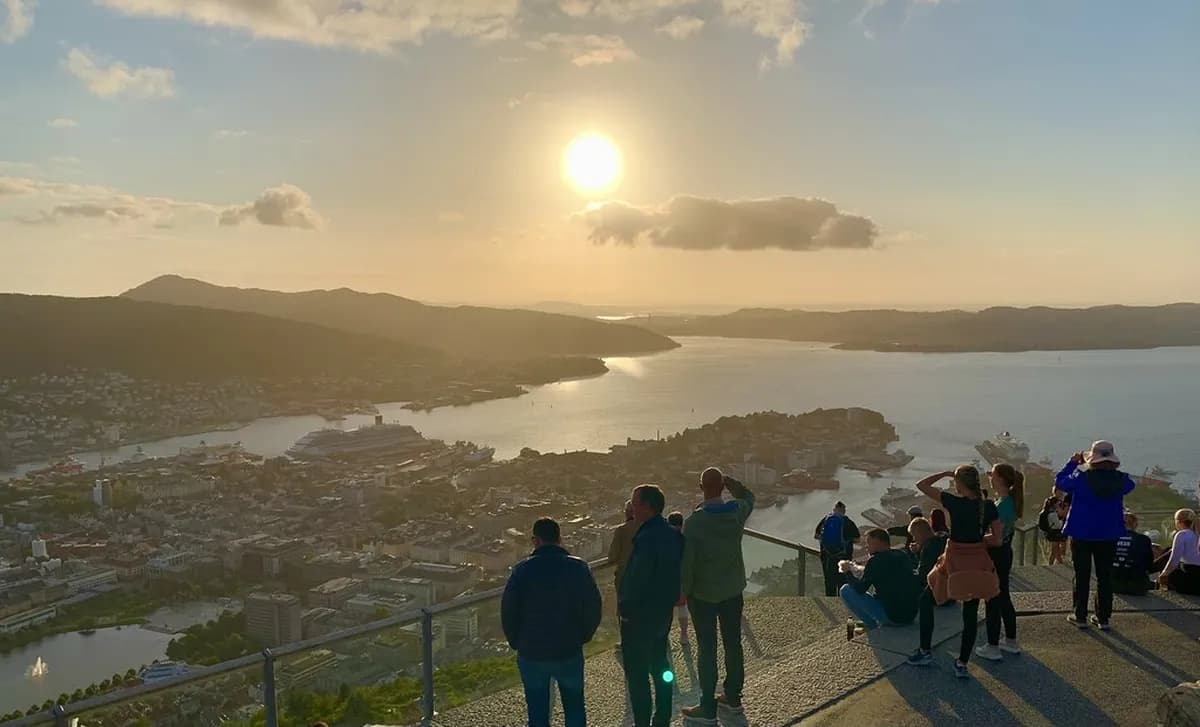
The Fløibanen is Bergen's most iconic family experience. The red funicular car climbs 320 metres in six minutes from a station that is a five-minute walk from the Fish Market. At the top you get panoramic fjord views, a large adventure playground with zip lines and rope bridges, friendly resident goats, and a Troll Forest trail through the woods where carved wooden trolls hide behind every second tree. Best for ages 3 and up, though toddlers in carriers do the Troll Forest easily.
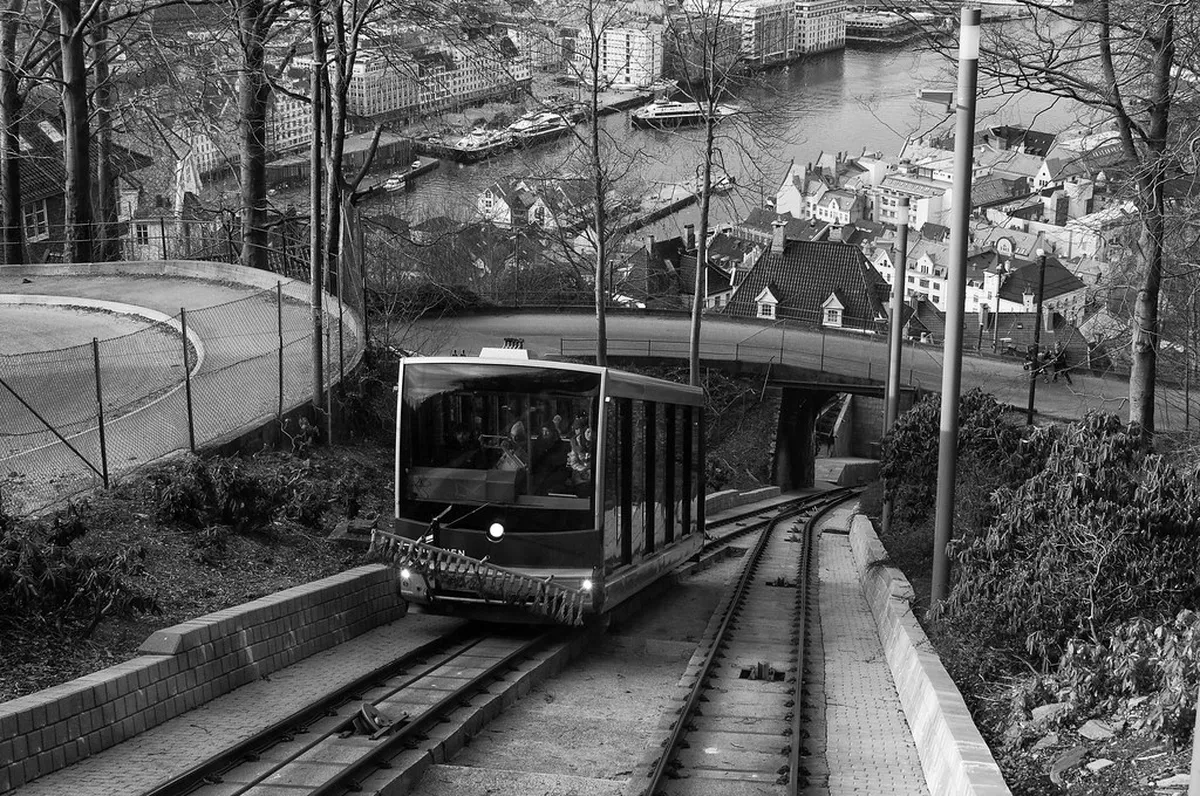
In 2026, a return adult ticket costs approximately 200 NOK (roughly €18) and 100 NOK for children aged 4–15. Under-4s travel free. Cars run every 15 minutes from 07:30 to 23:00. A Bergen Card covers the full return fare. Go on a weekday before 10:00 to beat the cruise ship crowds that queue from mid-morning onwards.
The key practical question for families with pushchairs is which Mt. Fløyen paths are actually stroller-friendly. The main paved road from the upper terminal down to Fløysvingene (the scenic switchbacks) handles a standard buggy without trouble — it is tarmac the whole way. The Troll Forest loop is packed gravel and manageable with a sturdy all-terrain stroller. The rocky ridgeline paths toward Skomakerdiket lake are for carriers or walking children only; the terrain becomes uneven within a few hundred metres. The Mt. Fløyen trail map on AllTrails marks the paved vs. gravel sections clearly before you go.
Walking back down to the city is a real option even for young children. The signed path via Fløysvingene takes about 40 minutes at toddler pace and stays on smooth tarmac most of the way. Bring a spare dry top — the summit is reliably 4–5 degrees cooler than the harbour, even in July.
Akvariet i Bergen (Bergen Aquarium)
Located at the tip of the Nordnes peninsula, a pleasant 20-minute walk from Bryggen, the Bergen Aquarium is the single best rainy-day choice for families with very young children. The layout is stroller-friendly throughout, with wide ramps between levels. Nursing rooms and a microwave for baby bottles are available near the entrance — a detail that matters more than any exhibit when you have an infant. Every fish tank has a low bench so small children can stand and look without being lifted.
Highlights include the outdoor penguin colony, the sea lion pool (feeding shows at 11:00 and 14:00 daily), and the indoor shark tunnel in the basement. A touchpool on the upper level lets children handle starfish and sea urchins with staff guidance. Plan at least two and a half to three hours. Adult admission in 2026 runs around 290 NOK; children aged 3–15 pay around 200 NOK; under-3s are free. Bergen Card holders receive a 25% discount. Read the Bergen Aquarium reviews on TripAdvisor to get a realistic sense of peak crowd times before booking.
After the aquarium, walk through Nordnes Park on the return trip. It has a public outdoor heated swimming pool (Nordnes Sjøbad, open May–September) where local families swim regardless of cloud cover, and the wooden houses along the park edge give children a chance to spot painted boat sheds and fishing equipment.
VilVite Bergen Science Center
VilVite is Bergen's answer to the inevitable torrential afternoon. Over 100 hands-on exhibits cover energy, the ocean, weather, and physics using the kind of exhibits children can break without consequences. The G-force bicycle, the water robot lab, and the virtual tornado simulator are the crowd favourites for ages 6 and up. Younger children gravitate to the large soft-play water table on the ground floor. There is a good cafe with high chairs and reasonably priced hot food by Norwegian standards.
Admission is around 195 NOK per person (children and adults the same price). Children under 2 are free. Opening hours are typically 10:00–17:00 daily in summer, with Monday closures in the low season — check the website before you go. The centre sits beside the Bybanen light rail; take it to the Kronstad stop, a nine-minute ride from the city centre. Plan a full half-day. The centre is entirely indoors and fully accessible for strollers.
A practical tip: VilVite sells afternoon time slots that are noticeably less crowded than morning sessions during July and August. If your day starts dry, use the morning for Mt. Fløyen and pivot to VilVite the moment the forecast turns. That sequence — mountain in the morning, science centre if it rains — works reliably for Bergen family days.
Bryggen Waterfront and the Old City
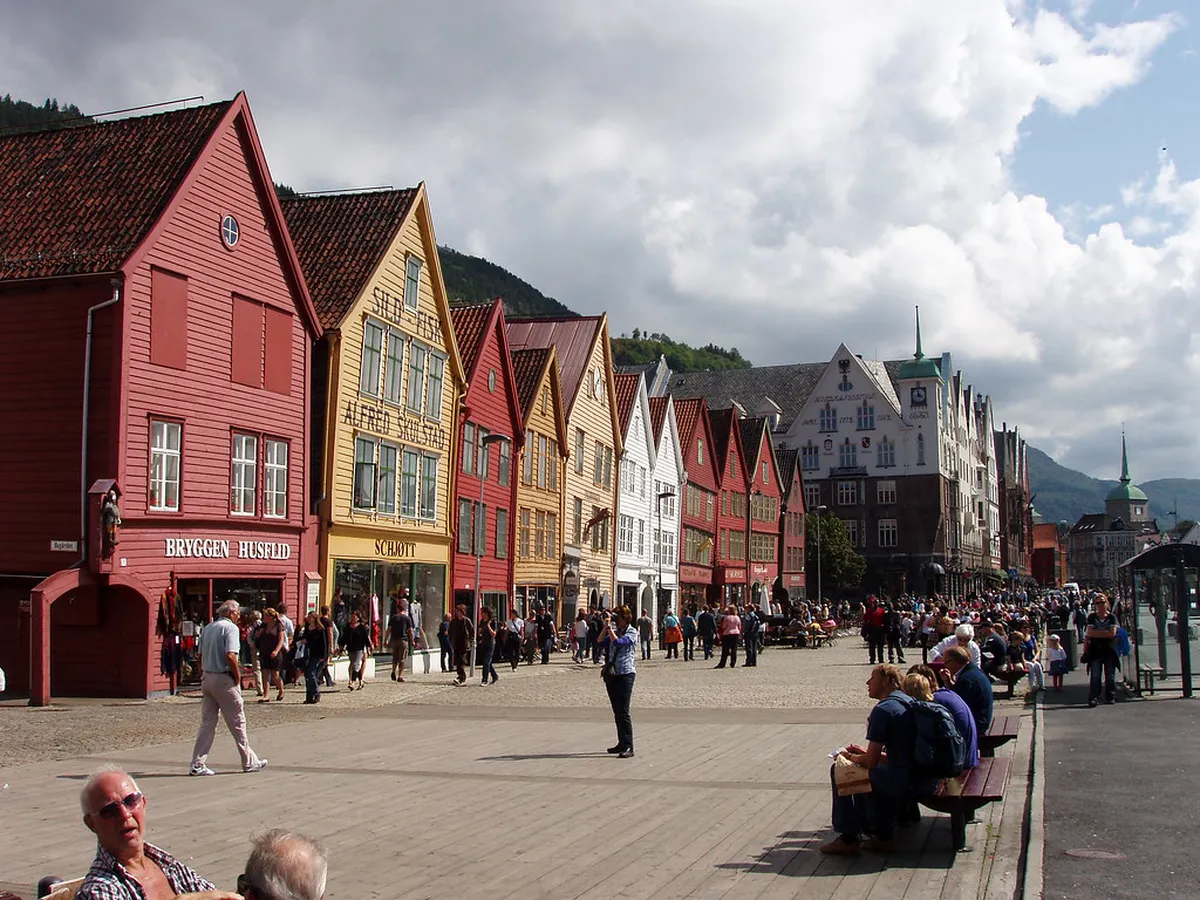
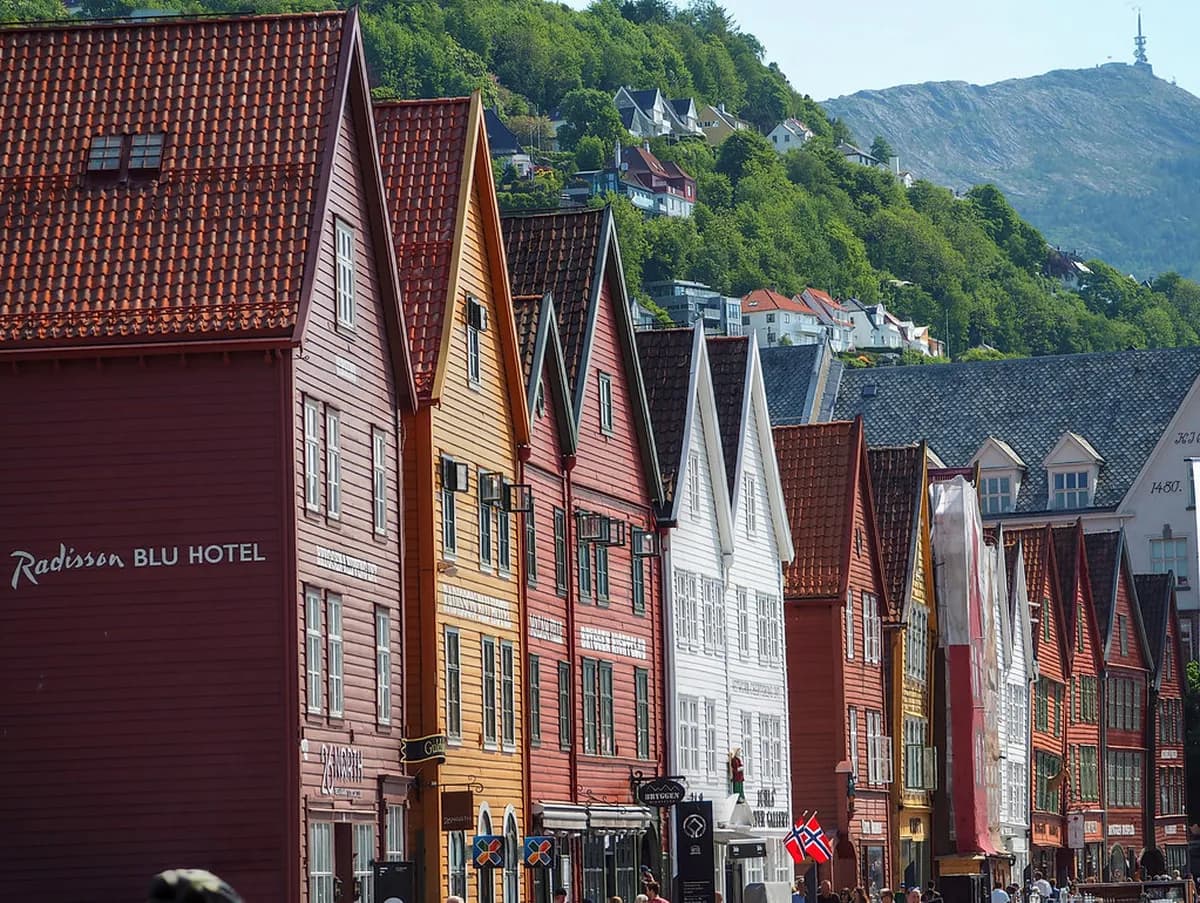
The UNESCO-listed Bryggen is a row of tightly packed Hanseatic merchant houses from the 14th century, rebuilt after a fire in 1702 in the same crooked wooden style. The colourful facades on the harbour side are the famous photograph. Behind them run a series of narrow, dark wooden alleyways — effectively a maze — where children love to sprint ahead and disappear around corners while parents follow. Small craft studios, bakeries and galleries are tucked into the back passages.
The alleyways are free to explore at any hour. Learn more about the Hanseatic Museum and waterfront history if your older children are interested in the trading history. For younger ones, the alley exploration is the main event. Look for the dried codfish hanging above the passage entrances and the tilting buildings that lean visibly against each other for structural support — both are excellent conversation starters for curious kids. Allow 45 minutes to an hour of unhurried wandering.
Immediately next to Bryggen sits the Bergen Fish Market (Fisketorget), which is free to browse. The live tanks of king crabs and lobsters reliably stop children in their tracks. A fish cake snack costs around 50 NOK and is a better budget choice than a full market meal. For a proper cheap lunch, walk two minutes to Trekroneren, a small kiosk near the harbour that sells reindeer sausages and traditional Norwegian hot dogs. Kids find the reindeer option genuinely exciting; it costs around 60–80 NOK per sausage.
Bergen Fortress and Rosenkrantz Tower
Bergenhus Fortress is one of the oldest castles in Norway, sitting directly at the harbour entrance a five-minute walk from Bryggen. The wide grassy ramparts are a genuine child magnet — flat, open, and surrounded by harbour views, they are the easiest place in central Bergen for toddlers to run free while parents sit down. Entry to the grounds is free and the gates are open 06:00–23:00 daily.
The Rosenkrantz Tower is the medieval stone keep inside the fortress. A guided tour takes you up steep spiral staircases through the former sleeping quarters of King Eric Magnus, a dungeon basement, and a rooftop platform. The tight stairs feel like an authentic knight's adventure to children aged 5 and up. Tower admission costs around 130 NOK for adults; under-16s enter free. Check the seasonal schedule for summer battle reenactments on the main lawn — they run on selected weekends in July and August and are free to watch.
Mt. Ulriken Cable Car
Mt. Ulriken is the highest of Bergen's seven mountains at 643 metres. The cable car — called Ulriksbanen — is the fastest way to altitude in the Bergen area and suitable for all ages including infants. The gondola runs from the base station near the Haukeland hospital area; bus route 2 from the central Fish Market stop covers the journey in about 15 minutes. Return tickets cost approximately 360 NOK for adults and 180 NOK for children in 2026. For detailed transport logistics and dining options, see the complete summit guide.
The plateau at the top suits older children who can walk confidently on rocky terrain. A via ferrata climbing route is available for adventurous families with children aged 10 and above. The classic hiking connection from Ulriken across to Fløyen (the "seven mountains hike") takes 4–6 hours total and is best attempted with children who are confident walkers, not toddlers. Bring an extra layer: the temperature at 643 metres is consistently cooler than the city, and wind is common even on clear days.
Gamle Bergen (Old Bergen Museum)
This open-air museum recreates a working 18th and 19th century Norwegian town using more than 50 original wooden buildings. Actors in period costume walk the streets and demonstrate traditional crafts — candle-making, baking, coopering — and engage children directly in period games. It is the most tactile history experience available in Bergen for young children, and the pace is unhurried in a way that indoor museums rarely manage.
Admission is around 150 NOK for adults; the park grounds outside the guided tour zone are free year-round. Take bus 3, 4, or 12 from the city centre for a ten-minute ride to the museum entrance. The museum is open May through September. The toy shop inside the main exhibition building sells reproductions of 19th-century wooden toys that make practical and compact souvenirs.
Vannkanten Waterworld
Vannkanten is an indoor water park inside the Vestkanten shopping mall in the Loddefjord area, about 6 kilometres west of the city centre. It contains Norway's longest indoor waterslide, a wave pool, a toddler zone with shallow pools and small slides, and a climbing wall beside the main pool. It functions as Bergen's most reliable full-day bad-weather option when VilVite is too cognitive and the aquarium has been done. The warm water and enclosed space make it suitable for children from around 18 months upwards.
A three-hour session costs around 245 NOK for adults and 195 NOK for children under 12. Take bus route 4 or 17 from the central bus terminal; the journey is about 15 minutes. The mall itself has a large Rema 1000 supermarket on the ground level — useful for picking up picnic supplies or stocking up on affordable snacks before an afternoon sightseeing session.
Hidden Gem: Lone Camping and Lake Haukelandsvatnet
Lone Camping sits beside Lake Haukelandsvatnet, roughly 12 kilometres south of Bergen city centre. It is one of the few places in the Bergen area where families can rent canoes and kayaks, swim in calm freshwater, and have an unhurried outdoor afternoon without any paid attractions at all. The campsite has a small grocery store for picnic provisions and a grassy bank where children can feed ducks along the shoreline. Canoe hire runs around 150 NOK per hour.
To get there without a car, take the Bybanen light rail to Nesttun station (about 20 minutes from city centre), then transfer to bus 90 toward Søfteland. The total journey is around 40–45 minutes. This combination works well as a half-day trip on a day when the weather is genuinely fine, leaving the city-centre museums for rain days. Families staying four or more nights in Bergen consistently rate this excursion as one of their most memorable afternoons precisely because it feels nothing like a tourist attraction.
Fjord Cruise to Mostraumen
The Mostraumen fjord cruise is the standard recommendation for families because its three-hour duration is manageable for children who would struggle on a five-hour Flåm alternative. The route passes through the narrow Osterfjord, where cliffs close in on both sides, and the boat pulls up beside a waterfall at the turnaround point. Tickets cost approximately 699 NOK for adults and 349 NOK for children; boats depart from the Zachariasbryggen pier, right in front of Bryggen. For schedules and booking details, check the current departure information.
The boat is fully stroller-friendly — some families wheel pushchairs directly onto the upper deck. There is a change table in one of the below-deck restrooms. A small snack bar sells hot drinks and packaged food; bringing your own lunch is cheaper and the boats have no rules against it. Sit on the starboard (right) side when leaving Bergen to face Bryggen's coloured facades as the boat pulls away — the first view of the waterfront from the water is genuinely impressive for children who have spent days walking in front of it.
For toddlers under 18 months, the three-hour duration can still push tolerance limits. The indoor lower deck is heated and has wide windows, which gives parents a retreat without missing the scenery. If the forecast is poor, go anyway — mist on the fjord walls is atmospheric rather than disappointing, and the boat stays fully operational in rain.
Pepperkakebyen (The Gingerbread Town)
If your Bergen visit falls in December, Pepperkakebyen is non-negotiable. Every year from mid-November to late December, local schools, businesses, and families build an edible replica of Bergen using thousands of gingerbread structures — houses, trains, airports, boats, entire neighbourhoods. It is officially recognised as the world's largest gingerbread town and is held in the Xhibition shopping centre near the central bus station.
Adult tickets cost around 160 NOK; children who contribute a gingerbread house to the exhibit enter free. Weekday mornings are substantially quieter than weekends. Even if your children are too young to appreciate the scale of the project, the sugar smell alone is worth five minutes of their attention. Buy tickets online in advance for December visits, as weekend sessions sell out.
Getting from Bergen Airport to the City with a Stroller
Bergen Airport Flesland sits 17 kilometres south of the city. The Bybanen light rail — Line 1 — runs from a platform directly connected to the terminal building, takes 45 minutes to reach the centre (Byparken stop), and runs every 6–15 minutes depending on the hour. The low-floor carriages have a dedicated stroller space beside each door; no folding is required on most services, though rush-hour carriages can fill quickly. A single adult fare costs around 40 NOK; Bergen Card holders travel free. This is the fastest, cheapest, and most stroller-friendly airport connection in Norway.
The airport Flybussen express bus is an alternative but costs more (around 130 NOK per adult) and has limited stroller storage in the undercarriage hold. With young children and loaded travel bags, the light rail is almost always the better choice. The station entrance inside the terminal is signed clearly and step-free from the baggage reclaim hall. From Byparken, the main waterfront hotels, Bryggen, and the Fish Market are all within a 10-minute walk on flat ground.
Is the Bergen Card Worth it for Families?
The Bergen Card covers unlimited rides on the Bybanen light rail and city buses, free entry to several museums, and discounts at the Aquarium (25%) and the Fløibanen funicular (free). Children under 16 already enter most museums free regardless of the card, which means the card's value for a family depends almost entirely on adult transport use and the funicular.
For a family of two adults staying two nights and doing the funicular, the Aquarium, VilVite, and using buses daily, the 48-hour card at around 430 NOK per adult pays off comfortably. If you stay within walking distance of the main attractions and plan to skip the Aquarium, pay for single tickets instead. The card is sold digitally through the Visit Bergen app or at the tourist information centre beside the Fish Market. Activate it only when you plan to use it that day — it is time-stamped on first scan.
One practical point: the Bergen Card does not cover the Ulriksbanen cable car or the Mostraumen fjord cruise. Both require separate tickets. Factor this in before buying; many families who focus on Fløyen plus indoor museums and public transport will find the card clearly worthwhile, while those whose itinerary centres on paid boat trips may find the savings marginal.
Rainy Day Strategies and Gear for Kids
Bergen averages over 200 days of precipitation a year. The local expression — "there is no bad weather, only bad clothing" — is not a reassurance; it is a practical instruction. Children here wear full waterproof suits from age one upward. If you have not packed equivalent gear, stop at Sport 1 on Torgallmenningen or the Polarn O. Pyret children's outfitter before your first full day. Waterproof trousers, a hooded outer jacket, and neoprene-lined boots are the minimum functional kit. Umbrellas invert in the harbour wind.
When it rains in Bergen, the smartest pivot sequence for families is: VilVite Science Centre in the morning (full day viable), Vannkanten Waterworld in the afternoon if children still have energy, or the Bergen Aquarium if you have not been yet. All three are fully indoors, stroller-accessible, and spread across the city so you are not doubling back. Keep a dry set of socks and a spare top in your day bag and identify the nearest supermarket on arrival — Rema 1000 and Kiwi are the affordable options and are open daily except Sundays.
The Bergen light rail is itself a weather-proof activity for small children who enjoy vehicles. A full Line 1 ride from Byparken to the airport and back costs 80 NOK for two adults and takes 90 minutes round trip. Children find trams endlessly watchable. On a truly grey afternoon with tired legs, this beats the stress of an indoor cafe where children cannot move.
Family-Friendly Logistics and Where to Stay
For families with strollers, the flattest and most practical neighbourhood is the City Park area (around Lille Lungårdsvannet), roughly 10 minutes on foot from Bryggen. The terrain from the park to the Fish Market is level. The cobblestone sections of Bryggen itself are short and manageable but are genuinely bumpy — carry infants through the narrowest passages. Choosing where to stay in Bergen with a location near the park also puts you on direct bus routes to VilVite and Vannkanten.
Family apartments with kitchenettes are the most cost-effective base for stays of three or more nights. Norway is expensive; even a packed lunch from a Kiwi supermarket saves NOK 300–500 per day over restaurant meals for a family of four. For hotel stays, look for properties that specify family rooms with bunk beds — Thon Hotel Rosenkrantz and Augustin Hotel are both centrally located and have been reliably family-friendly. For a quick and kid-approved street meal, Trekroneren near Bryggen serves reindeer sausages for around 70 NOK each. Children find ordering reindeer sausage inherently more exciting than any restaurant menu.
Four to five days is the right length for Bergen with young children, allowing for one mountain day (Fløyen), one fjord cruise, one indoor science or aquarium day, one wander-and-market day, and a half-day buffer for the hidden gem at Lone Camping if the weather cooperates. Any shorter and the rhythm feels rushed; much longer and the rain will test everyone's patience without additional day-trip destinations like Voss or Flåm.
Frequently Asked Questions
Is the Bergen Card worth it for families?
Yes, the Bergen Card is worth it if you plan to visit at least two major attractions like the Aquarium and VilVite. It also includes free public transport, which is helpful for families staying outside the city center. Children under 16 often get free entry to museums, so check individual prices first.
What is the best time of year to visit Bergen with kids?
The best time to visit is between May and September when the weather is milder and the days are long. July and August offer the best chance for sunshine, though these months are also the busiest. December is also popular for the famous Gingerbread Town exhibit.
Are there indoor playgrounds in Bergen for rainy days?
Bergen has several excellent indoor options including the VilVite Science Center and the Vannkanten Waterworld. Many shopping malls also feature small play areas for younger children. The Bergen Aquarium is another great choice as many of its exhibits are located undercover.
Bergen rewards families who come prepared. The combination of mountain playgrounds, penguin shows, Hanseatic alleyways, and fjord cruises within a compact, walkable city makes it genuinely one of Europe's best destinations for children. The rain is manageable once you accept it as part of the texture rather than an obstacle.
Use this guide as a sequence: Fløyen on your first clear morning, the Aquarium or VilVite on your first rainy afternoon, Bryggen and the Fish Market at your own pace, and Lone Camping as a quiet reward on a fine day. Grab the Bergen Card if you plan to use the funicular and the buses daily. Safe travels on your family adventure in Norway's most beautiful coastal city.
You might also like


Continue reading
More guides you'll find useful