Tromso Aurora Forecast Apps and KP Index: The Complete Guide
Discover the best aurora tracking apps for Tromso. Learn how to read the KP index, solar wind data, and cloud forecasts to maximize your Northern Lights chances.
On this page
Tromso Aurora Forecast Apps and KP Index
Chasing the Northern Lights in Tromsø requires more than just looking up at the night sky. Digital tools help you predict when the colors will dance over the Arctic landscape, and they let you avoid standing in minus-fifteen-degree cold on a hopeless evening.
Using Tromso aurora forecast apps and KP index data allows travelers to plan their outings with scientific precision. The key is knowing which numbers to watch, which apps to trust, and how to combine solar data with local weather in real time.
This guide covers the essential technology for a successful hunt in Northern Norway during the 2026 aurora season. We explain what each metric means, how to set alerts without burning out, and which local tools the guides here actually rely on.
A negative Bz value is the single most critical real-time number for aurora hunting. When Bz flips from positive to strongly negative within minutes, a substorm is often imminent and can produce dramatic overhead coronas lasting 20 to 40 minutes.
Cold kills battery life within 30 minutes of exposure in Arctic temperatures. Charge all batteries fully and keep spares in an inner pocket to stay powered through the night hunt.
Why You Need Aurora Tracking Apps in Tromso
The Northern Lights are driven by solar activity and Earth's magnetic field, and predictions can shift within minutes due to changes in solar wind speed. Relying on luck leads to missed opportunities, especially when a storm peaks at 02:00 and you have no alert set. Apps give you a window into the invisible forces shaping the sky above Tromsø.
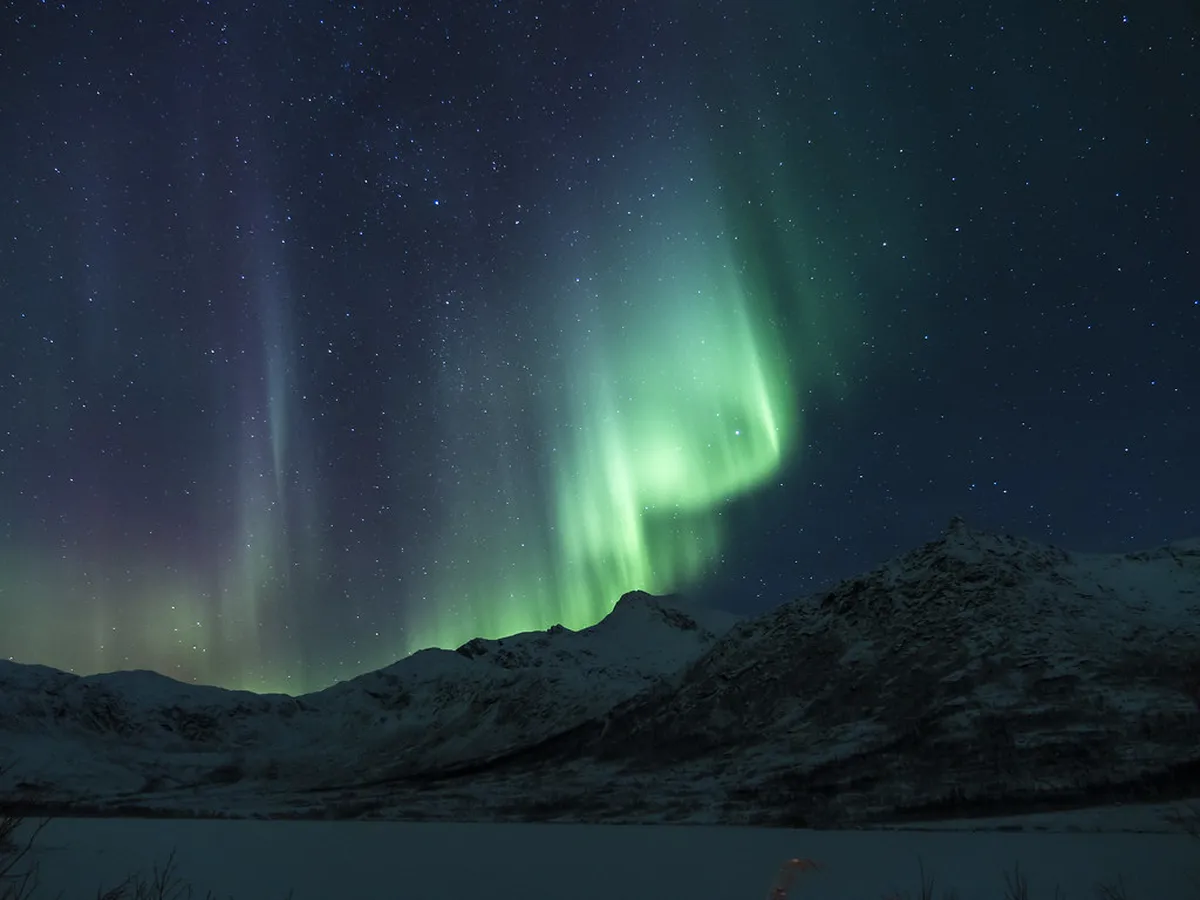
Modern tracking tools offer real-time data that was once only available to space weather researchers. From your phone you can monitor geomagnetic storm strength, solar particle density, and local cloud cover simultaneously. That combination of data lets you decide whether to stay in the city or drive an hour inland to find a clear gap in the clouds.
Planning your visit during the best time for Northern Lights in Tromso improves your baseline odds, but even peak season requires nightly decisions. Apps bridge the gap between seasonal averages and the reality of each individual night. They turn a hopeful search into a calculated adventure that respects both your time and the Arctic cold.
Best Aurora Tracking Apps for Northern Lights in Norway
The most effective approach is to combine two or three apps that serve different purposes: one for solar data, one for cloud cover, and one for community reports. All apps pull their space weather numbers from the same satellite sources, so the real difference lies in how they present data and how often they update.
Norlys (iOS and Android, free) has become the local favorite in Tromsø over the past two years. It sends push notifications tied to the aurora nowcast and integrates live webcam feeds from locations around Troms county. Because it is developed specifically for Northern Norway, its cloud layer resolution is better than global competitors for this region. Setting the notification threshold to 30% nowcast is enough to catch active evenings without waking you up on borderline nights.
Aurora Alerts Northern Lights (iOS and Android, free with paid upgrade) is the preferred choice for photographers and serious hunters. It pulls real-time data directly from the DSCOVR satellite and displays Bz, Bt, solar wind speed, and density on a single dashboard. The custom threshold alerts are worth the upgrade if you plan to spend more than a week chasing. The interface is technical, so expect a short learning curve before it clicks.
Hello Aurora (iOS and Android, free) balances simplicity and usefulness well for first-time visitors. Its map overlays aurora probability with cloud cover data, making it easy to spot which direction to drive. Community photo uploads give you a near-real-time confirmation that the lights are actually out. Its scientific data depth is limited compared to Aurora Alerts, but for a four-day trip it does the job comfortably.
My Aurora Forecast & Alerts (iOS and Android, free) is widely used and reliable for a global solar overview. It surfaces Kp predictions for the next 24 hours in an easy-to-read format. One caveat: its map shows small pockets of aurora probability that experienced guides describe as frequently misleading. Treat it as a planning tool for which nights look promising, not a minute-by-minute trigger.
SpaceWeatherLive (web and app, free) is the power-user option. It aggregates data from multiple satellites and presents raw solar wind readings, geomagnetic indices, and sunspot counts. Casual tourists often find it overwhelming. For anyone wanting to understand what is actually happening at the L1 Lagrange point before it arrives at Earth, it is unmatched.
| App | Platform | Cost | Best For | Key Feature |
|---|---|---|---|---|
| Norlys | iOS, Android | Free | Local Tromsø hunters | Live webcam feeds + community sightings, high cloud resolution |
| Aurora Alerts Northern Lights | iOS, Android | Free + paid upgrade | Photographers & serious chasers | Real-time DSCOVR satellite data (Bz, Bt, wind speed, density) |
| Hello Aurora | iOS, Android | Free | First-time visitors | Aurora probability + cloud cover map overlay, community photos |
| My Aurora Forecast & Alerts | iOS, Android | Free | Quick KP planning | 24-hour Kp predictions, easy-to-read format (map less reliable) |
| SpaceWeatherLive | Web, App | Free | Power users & researchers | Raw solar wind, geomagnetic indices, sunspot counts |
Understanding the KP Index and Geomagnetic Latitude
The KP Index measures geomagnetic activity on a scale from 0 to 9. Higher numbers indicate more intense solar storms and a wider band of aurora visibility reaching further south. Most first-timers assume they need a high number to see anything. Tromsø changes that assumption entirely.
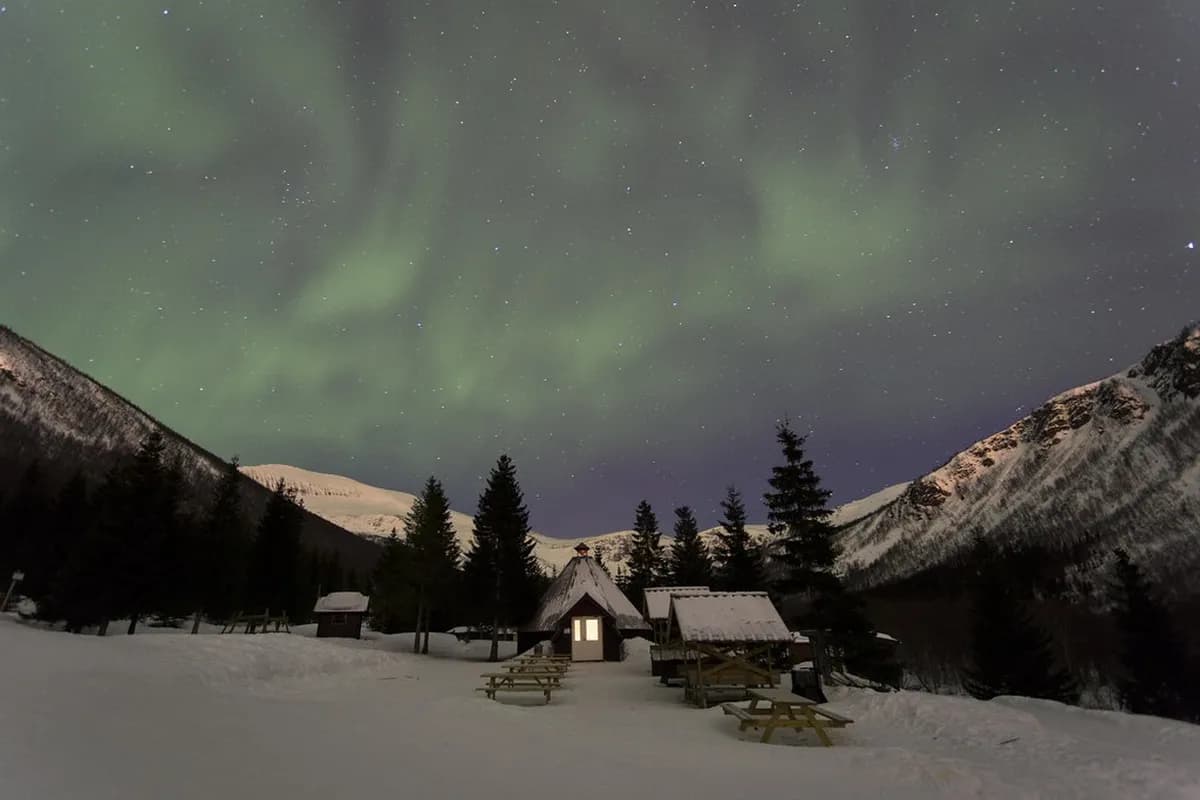
The city sits at roughly 69.6 degrees north, directly under the auroral oval — the ring-shaped zone where solar particles funnel into the atmosphere most efficiently. At this geomagnetic latitude, a KP threshold of 0 to 1 is all that is required for a visible display on a clear night. When the index climbs to KP 3, the lights frequently dance directly overhead in a full corona. Do not cancel your plans because the forecast shows a low number.
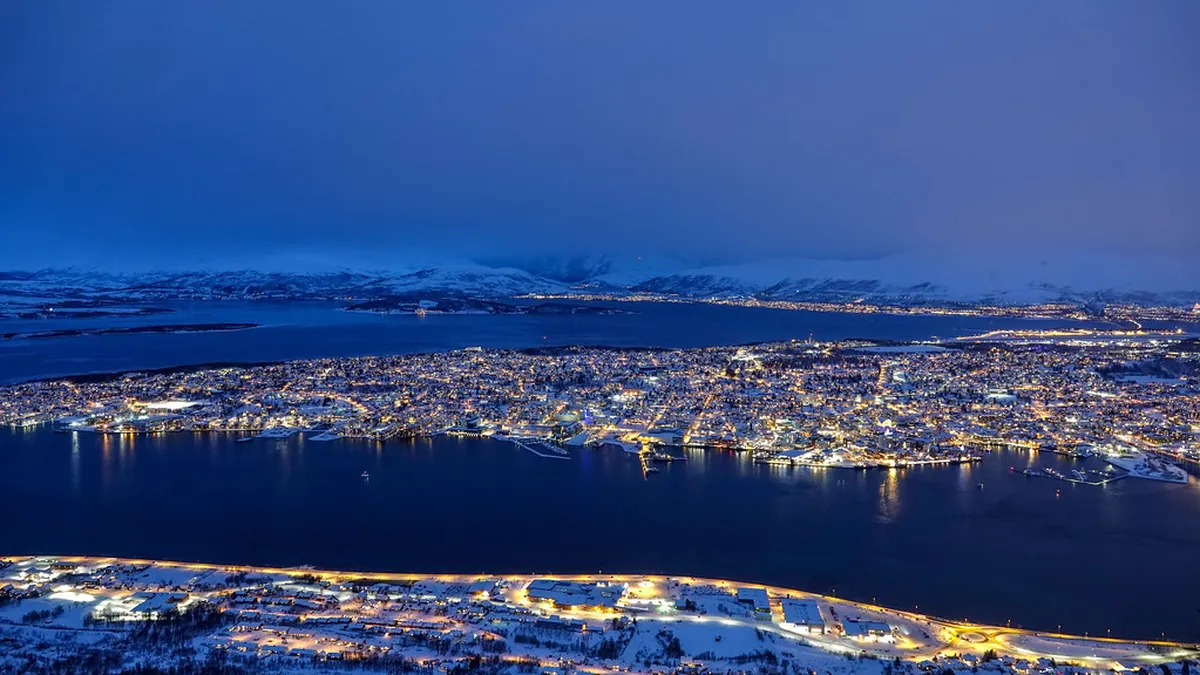
The KP index is published as a three-hour average, which means it smooths over short bursts of activity. A quiet index reading can be followed by a sudden substorm within minutes. Checking real-time magnetometer data inside your app — not just the KP value — gives a much faster signal when something is building over Tromsø.
Keep this in mind when reading app percentages. A 15% aurora probability in an app calibrated for global latitudes may translate to a 50% practical chance at your specific dark spot outside the city. Local latitude adjustments matter more than the headline number, which is one reason Norlys and Yr.no are better calibrated for northern Norwegian conditions than globally-tuned apps.
Deciphering Solar Wind: What are IMF, Bz, and Bt?
Solar wind is a continuous stream of charged particles flowing outward from the sun. Two values matter most for aurora hunting: speed (measured in km/s) and density (measured in protons per cubic centimeter). A solar wind speed above 400 km/s produces noticeable activity in Tromsø. Above 600 km/s the aurora becomes fast-moving and often spectacular. Density above 5 protons per cubic centimeter amplifies the display further.
The Interplanetary Magnetic Field (IMF) is the sun's magnetic influence carried outward by the solar wind. Inside the IMF, the Bz value tells you the north-south orientation of the field at that moment. A negative (southward) Bz is the critical trigger: it acts like an open door, allowing solar particles to couple with Earth's magnetosphere and flow into the auroral oval. A positive Bz acts like a closed valve, repelling the solar wind even during strong storms. This is the single most important real-time number to watch.
The Bt value — total magnetic field strength — is the companion metric that experienced hunters also monitor. Think of Bt as the pressure behind the door. A high Bt combined with a southward Bz produces the most intense aurora events. When apps show Bt above 10 nanoTesla and Bz dipping to minus 10 or lower, start moving to your viewing spot. You can track all three values in real time through the NOAA 30-Minute Aurora Forecast.
Most tracking apps color-code Bz — red for negative, green for positive — so you do not need to memorize the numbers. What you do need to act on is the speed of the change. When Bz flips from positive to strongly negative within a few minutes, a substorm is often imminent. These sudden shifts produce the most dramatic overhead coronas and typically last 20 to 40 minutes before the field rotates again.
The Critical Role of Cloud Cover and Weather Forecasts
Clear skies are the single most important factor for a successful aurora hunt in Norway. The strongest solar storm in a decade cannot penetrate a thick layer of stratus clouds. The key is understanding that not all cloud types are equal, and knowing the difference can save you a two-hour drive.
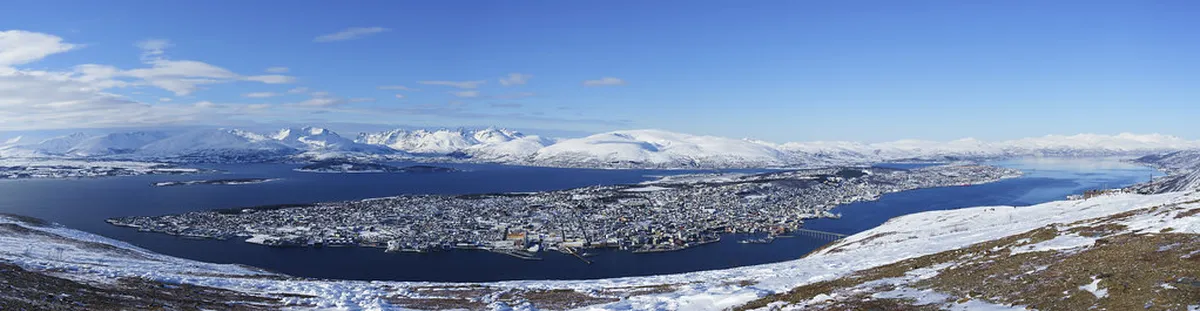
Thin, high-altitude cirrus cloud is often semi-transparent. A bright KP 3 display can shine through it clearly enough to photograph and enjoy. Dense, low stratus cloud — the grey ceiling common on coastal Tromsø nights — is an impenetrable barrier. When the Yr app or Senorge.no shows low-level cloud over the coast, driving 60 kilometres inland toward the Målselv valley or up to Fjellheisen is usually the right call. The relief terrain creates a rain-shadow effect that keeps the interior significantly clearer than the fjord coastline.
Microclimates around Tromsø mean conditions can change every few kilometres. If the city is socked in, Kvaløya island to the west and Ramfjorden to the south often have different cover. Use the satellite cloud imagery in Yr.no or Windy to spot gaps in real time. A 20-kilometre repositioning frequently makes the difference between nothing and a full-sky display.
Light pollution from the city is a secondary factor but still relevant for dim displays. Strong auroras — KP 2 or above — are visible from the harbor area. For KP 0 to 1, you need true dark skies. The Tromsø area has several established dark-sky spots: the Telegrafbukta beach south of the city, the road up toward Tromsdalstinden, and the plateau above Kvaløya. Apps that include a light pollution overlay help you confirm these locations before you commit to the drive. Ensure your camera gear is ready before leaving — cold weather degrades battery life fast, and northern lights photography Tromso demands quick setup when the window opens.
How to Use the Yr.no Aurora Nowcast and Notifications
Yr.no is the Norwegian Meteorological Institute's public app and the most trusted weather source in Scandinavia. It provides hyper-local weather data for remote Arctic locations that global apps frequently misread. Within the app, a dedicated aurora section appears under the "Nearby" tab for any location in Norway and gives a forecast up to three days ahead.
The Nowcast feature is where Yr becomes most useful. It displays a value from 0 to 100 percent representing predicted aurora intensity 30 to 90 minutes ahead — the approximate travel time for solar wind from the L1 observation point to Earth. Cross-reference this nowcast percentage against the KP index and Bz value from a solar app for a triangulated decision. If the nowcast is above 40%, Bz is negative, and the cloud map shows clear sky over your target location, you go.
Notification setup is straightforward: go to Settings within the app, select your Tromsø location, and enable aurora alerts at the 30% nowcast threshold. The 30% setting is deliberate — lower thresholds generate too many false alarms and disrupt sleep, while waiting for 60% means you often miss the build-up phase of a storm. The Yr.no Aurora Help Guide explains the full notification logic and the latitude-adjusted threshold table that shows Tromsø's KP threshold of 0 to 1.
Also use Yr's minute-by-minute Nowcast precipitation graph when you are already in the field. If it shows a clearing arriving within 20 minutes over your position, it is worth waiting rather than driving on. Yr's local calibration for coastal Norwegian terrain consistently outperforms global weather apps for this specific use case.
Tromso Threshold Values: When is the Aurora Visible?
Understanding local thresholds removes the anxiety that comes with reading global aurora apps calibrated for mid-latitude users. At Tromsø's latitude of 69.6 degrees north, the auroral oval sits almost overhead on quiet nights. A KP of 0 or 1 is sufficient for a faint green arc on the horizon. By KP 3, the arc breaks into active curtains and can fill the sky. At KP 5 or above — which occurs several times each season during solar maximum conditions like those in 2025 and 2026 — the display is typically vivid enough to photograph from the city center.
Solar wind numbers give you a finer read than KP alone. A wind speed above 400 km/s is a useful baseline for expecting movement in the lights. Speed above 600 km/s usually produces fast, rippling curtains that even casual observers notice. Density above 5 protons per cubic centimeter intensifies the colors and brightness. When speed and density are both elevated alongside a negative Bz, you are looking at a high-probability evening regardless of the KP headline figure.
The chances of seeing northern lights Tromso drop sharply in any month with long daylight hours. Astronomical darkness — defined as the sun being more than 18 degrees below the horizon — is required for a proper display. In Tromsø, this window runs from late September to late March. Within that window, the statistical peak for geomagnetic storms correlates with equinox months: September and March typically show higher activity than midwinter December and January.
The UiT All-Sky Camera Network
The University of Tromsø (UiT) operates a network of all-sky cameras distributed across Troms county, and this is one tool that separates local guides from tourist apps. The cameras stream live fisheye images of the sky from multiple fixed positions — including remote inland sites away from the coastal cloud belt. When Tromsø city is overcast, guides check the camera feeds to locate which valley is clear before they commit to a direction.
The UiT aurora and magnetometer data page is publicly accessible. The interface is not polished for tourists, but the all-sky camera thumbnails update every few minutes and are immediately readable: green smear on the image means the lights are out at that camera location right now. Combined with the Norlys or Yr app for solar data, the camera feeds turn cloud-navigation from guesswork into ground-truth verification.
No commercial app integrates this feed directly. You bookmark the UiT page on your phone browser and check it alongside your main tracking app. This two-step verification — app says conditions are favorable, camera confirms the sky is actually clear at a reachable location — is the workflow that professional arctic guides in Tromsø use on the most difficult cloudy nights. For independent aurora hunters willing to do the extra step, it is a genuine edge that none of the five most popular apps replicate.
Weather and Aurora Forecast: A Practical Checklist
Establishing a pre-hunt routine saves time and prevents the most common mistakes. Start three days out with the long-range Yr forecast to identify which nights look most promising for clear skies. On the afternoon of a target night, shift to hourly checks of solar wind data and the nowcast. Within two hours of sunset, run through the following:
- Check the Yr.no nowcast for your target location and confirm it is above 30%.
- Verify the Bz is negative and has been for at least 30 minutes — sustained southward Bz produces longer-lasting displays than momentary dips.
- Confirm solar wind speed is above 400 km/s and density above 5 protons per cubic centimeter.
- Open the UiT all-sky camera feed to identify which areas are cloud-free right now, not just forecast to be clear.
- Check the Norlys community feed for any user sightings reported in the last hour near Tromsø.
- Scout your parking location on a daylight map beforehand — icy Arctic roads are significantly harder to navigate in the dark.
- Charge all batteries and keep spares in an inner pocket; cold kills battery life within 30 minutes of exposure.
Once you are in the field, re-check the satellite cloud imagery every 20 to 30 minutes. Cloud cover moves quickly around the fjords, and a brief clearing is often enough for several usable photographs. Stay flexible and be ready to reposition by 10 to 15 kilometres based on what the cameras show. For a managed, no-stress version of this process, consider a northern lights tours Tromso package where the guide runs all these checks for you.
Guided Aurora Chasing vs. DIY App Tracking in Tromsø
Choosing between a guided tour and a DIY chase depends on how much friction you are willing to manage yourself. Professional guides run all the app checks described above continuously, drive toward confirmed clear-sky windows, and often travel as far as the Finnish border to escape coastal weather. Their local knowledge shortens the gap between data and decision considerably on difficult nights.
DIY tracking is very achievable if you have a rental car and a stable data connection. You will monitor the Tromso aurora forecast apps and KP index throughout the evening and make real-time driving decisions based on cloud breaks. This approach gives you full freedom of schedule but demands alertness at hours when most people prefer to be asleep. The Tromso travel tips on winter driving safety are essential reading before you attempt it solo.
Guides also provide hands-on help with camera settings in the dark and can position you at angles that maximize the composition. For beginners, this educational aspect alone often justifies the tour cost. If you decide to go solo, tell someone your planned route and expected return time, download offline maps before leaving the city, and always carry the basics: warm layers, a full fuel tank, and high-energy snacks.
For seasonal context, see Visit Norway’s official Tromsø guide.
Frequently Asked Questions
What KP index is needed to see aurora in Tromso?
In Tromsø, you can see the aurora with a KP index as low as 0 or 1. Because the city sits directly under the auroral oval, even minimal solar activity creates visible lights. Clear skies are far more important than a high KP number for success in this region.
Which app is most accurate for Northern Lights in Norway?
The Norlys app and Yr.no are highly accurate for local conditions in Norway. Norlys offers real-time community sightings, while Yr.no provides the best cloud cover data. Using both together gives you a comprehensive view of solar activity and weather. Check out our northern lights Tromso guide for more tips.
How do I read the Bz index for aurora hunting?
Look for a negative Bz value, which is often shown in red on tracking apps. A negative Bz indicates that the solar wind's magnetic field is pointing south, allowing it to enter Earth's atmosphere. This "open door" effect is the primary trigger for bright and active displays.
Does the Yr app show Northern Lights forecasts?
Yes, the Yr app includes a dedicated aurora forecast section for specific locations in Norway. It combines geomagnetic data with its highly accurate local weather models. This makes it an essential tool for predicting both solar activity and the necessary clear skies.
Why can't I see the aurora even with a high KP index?
A high KP index does not guarantee a sighting if the sky is covered by thick clouds. Additionally, a positive Bz value can repel solar particles even during strong solar storms. Light pollution from nearby buildings can also wash out the colors of a high-activity display.
Mastering the use of Tromso aurora forecast apps and KP index data transforms your Arctic trip from a gamble into a calculated hunt. These tools remove the guesswork and focus your energy on the highest-probability windows each night.
Remember that clear skies and a negative Bz matter more than a headline KP number in Tromsø. Combining digital alerts with the UiT all-sky camera network and local weather tools like Yr.no is the approach that guides actually use here.
Whether you choose a guided tour or a solo adventure, prepare methodically, stay flexible, and keep your eyes on the horizon. The Northern Lights reward those who plan.
You might also like
Continue reading
More guides you'll find useful