How To Get To Tromso: 8 Essential Travel Routes & Tips
Discover the best ways to get to Tromso by air, land, or sea. Our guide covers flights, the Arctic Route train-bus combo, Hurtigruten cruises, and car-free tips.
On this page
How To Get To Tromso: 8 Essential Travel Routes & Tips
Quick Answer: Flying to Tromsø Airport is the fastest option, costing about 900 NOK / ~$85 and taking two hours. Alternatively, the scenic Arctic Route combines a train to Narvik with a four-hour bus ride for budget travelers.
Reaching the Arctic capital is an adventure that requires careful planning due to the remote northern location. Whether you seek the Northern Lights or summer hiking, choosing the right route impacts your entire trip experience. This guide breaks down every logistical detail — including the realistic limits of car-free travel — to ensure your arrival in Northern Norway is smooth.
Many travelers assume they can take a train directly into the city center from Oslo or Bergen. The Norwegian rail network ends much further south, making a bus or plane transfer absolutely necessary. Understanding these geographic constraints helps you avoid common booking mistakes that can waste precious vacation time.
Flying to Tromsø Airport (TOS)
Flying is the most efficient way to reach the Arctic capital from major hubs like Oslo or Bergen. Flights take roughly two hours and prices start around 800 NOK / ~$75 for a one-way ticket booked in advance. Most international travelers arrive via Oslo Gardermoen (OSL), which offers several daily departures throughout the year. Airlines like SAS and Norwegian provide regular service even during the darkest winter months.
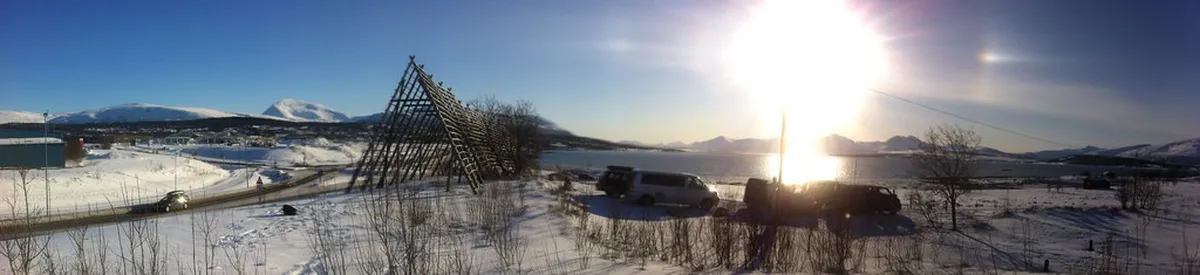
The airport sits just 10 minutes from the city center by car or shuttle bus. The Flybussen airport express runs frequently and drops off near major hotels in the center for about 125 NOK / ~$12 per adult. Local buses 24, 40, and 42 also serve the airport for a much lower fare — under 50 NOK / ~$5 with the Svipper app. Direct flights from London Gatwick, Frankfurt, and Amsterdam have expanded in recent years, making Tromsø increasingly accessible for European visitors.
Booking flights several months in advance is strongly recommended during the peak winter season. Demand spikes sharply in December and January as visitors arrive for the aurora borealis. Always check baggage allowances before you fly, as Arctic gear — insulated boots, ski clothes, tripods — often requires checked luggage rather than carry-ons. Factor in extra time at check-in during winter; de-icing and snow clearance routinely add 20–30 minutes to departure.
The Rail-to-Bus Connection: Arriving by Land
There is no direct train station in Tromsø — this surprises almost every first-time visitor planning a rail trip from Oslo. To arrive by land, you must combine a long-distance train with a regional bus. Two main rail corridors feed into bus connections that reach Tromsø: via Narvik in the north, and via Bodø further south. Both are spectacular journeys through Arctic landscapes that no flight can replicate.
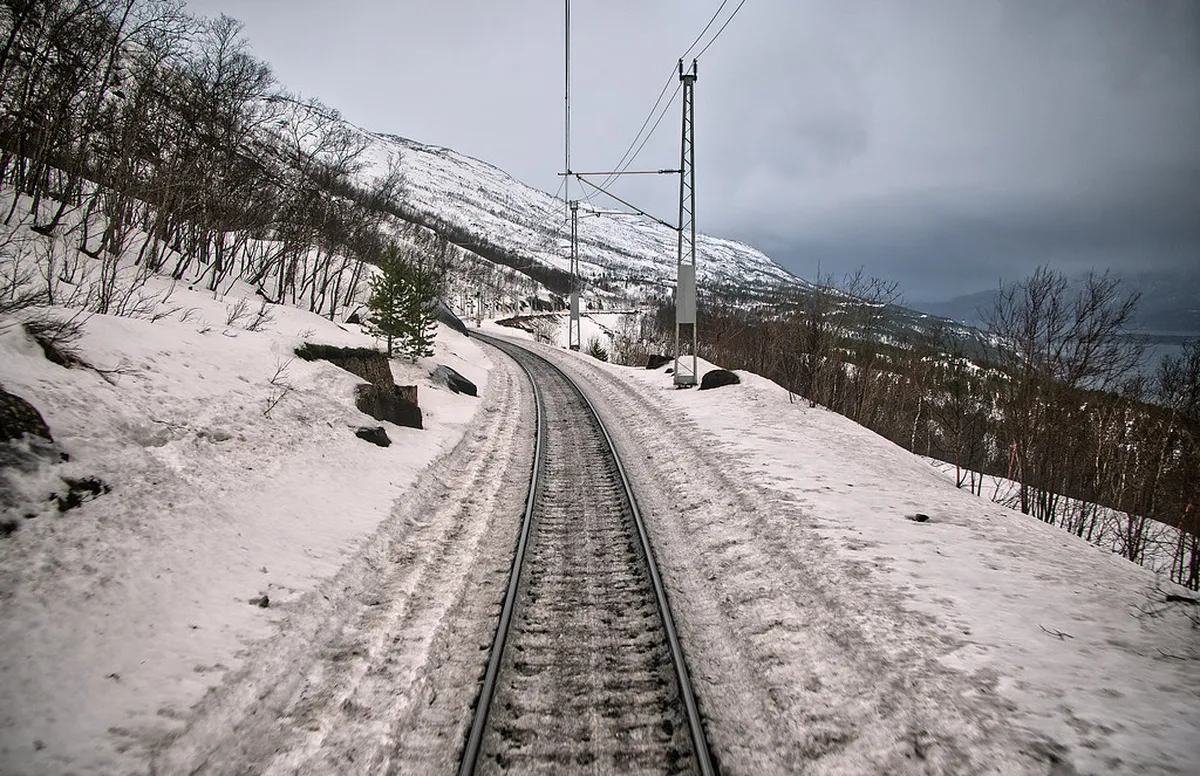
The Narvik route is the more popular choice. Take an overnight train from Stockholm to Narvik on the famous Ofoten Railway — a 20-hour journey that costs around 1,100 NOK / ~$105 with a sleeper cabin booked via SJ Trains. From Narvik station, a 10-minute walk brings you to the bus terminal, where Bus 100 departs several times daily for a four-hour scenic ride to Tromsø. Tickets on Bus 100 cost approximately 450 NOK / ~$42 and can be bought through the driver or via the Svipper Journey Planner. Sit on the left side for the best fjord views.
The Bodø route suits travelers arriving from Oslo by Norwegian rail. Take the Nordlandsbanen train from Oslo to Bodø — roughly 17 hours — and then continue by long-distance bus via Fauske north toward Tromsø. This connection requires an overnight stay in Bodø or Fauske unless your timing aligns perfectly. Total travel time from Oslo by this route exceeds 30 hours, so budget roughly 1,500–1,800 NOK / ~$140–$170 for the rail and bus journey combined. Use Vy Trains and Buses to book the Norwegian rail legs.
- Narvik route step-by-step
- Overnight train Stockholm to Narvik: ~20 hours, ~1,100 NOK / ~$105 with sleeper.
- Walk 10 minutes from Narvik station to the bus terminal.
- Board Bus 100: ~4 hours to Tromsø, ~450 NOK / ~$42.
- Arrive at Prostneset terminal in the heart of the harbor.
- Bodø route step-by-step
- Train Oslo to Bodø: ~17 hours via Vy, ~800–1,000 NOK / ~$75–$95.
- Long-distance bus Bodø/Fauske to Tromsø: ~6–7 hours, ~550 NOK / ~$52.
- Plan for an overnight stop in Bodø unless schedules align.
Always allow at least one hour for the transfer between the train station and the bus terminal in Narvik. Train delays caused by snowfall on the tracks are common in winter. I once missed the last bus from Narvik because my train arrived 55 minutes late — an extra night in Narvik is not the end of the world, but it is not cheap.
Arriving by Sea: Hurtigruten and Express Boats
Arriving by sea offers a perspective of the Norwegian coastline that no other method can match. The famous Hurtigruten Coastal Cruise stops in the city twice daily — one ship arrives from the south in the afternoon, another from the north in the morning. This is typically the most expensive way to travel but includes accommodation and meals as part of a multi-day voyage. It is a bucket-list experience rather than a cost-efficient transfer.
Regional express boats, known locally as Hurtigbåt, are a faster and cheaper maritime alternative for shorter distances. These boats connect Tromsø with nearby towns like Finnsnes (2 hours, ~350 NOK / ~$33) and Harstad (3 hours, ~600 NOK / ~$57). The boats are modern, warm, and feature large windows suited to sightseeing in winter. Hurtigbåt is the route of choice for locals traveling between coastal communities — schedules are built around commuter demand rather than tourist hours.
Both the Hurtigruten and the express boats dock at Prostneset, the central harbor terminal. This is also where Bus 100 from Narvik arrives, making the hub easy to navigate regardless of how you come in. During winter, the sea can be rough on exposed stretches — bring motion sickness tablets if you are susceptible. Check our 10 Essential Tromso Travel Tips: The Ultimate Arctic Guide for more advice on maritime arrivals and what to pack for an open-deck voyage.
Driving to Tromsø: Routes and Winter Safety
Driving to the Arctic gives you complete flexibility for exploring remote areas like the Lyngen Alps and Senja. The E6 highway is the main artery connecting the north of Norway with the rest of the country and with Sweden. Renting a car from the airport is straightforward via services like Discover Cars Tromso, with standard vehicles starting around 700 NOK / ~$65 per day including insurance. The drive from Oslo to Tromsø is approximately 1,800 km and takes 18–22 hours in summer conditions.
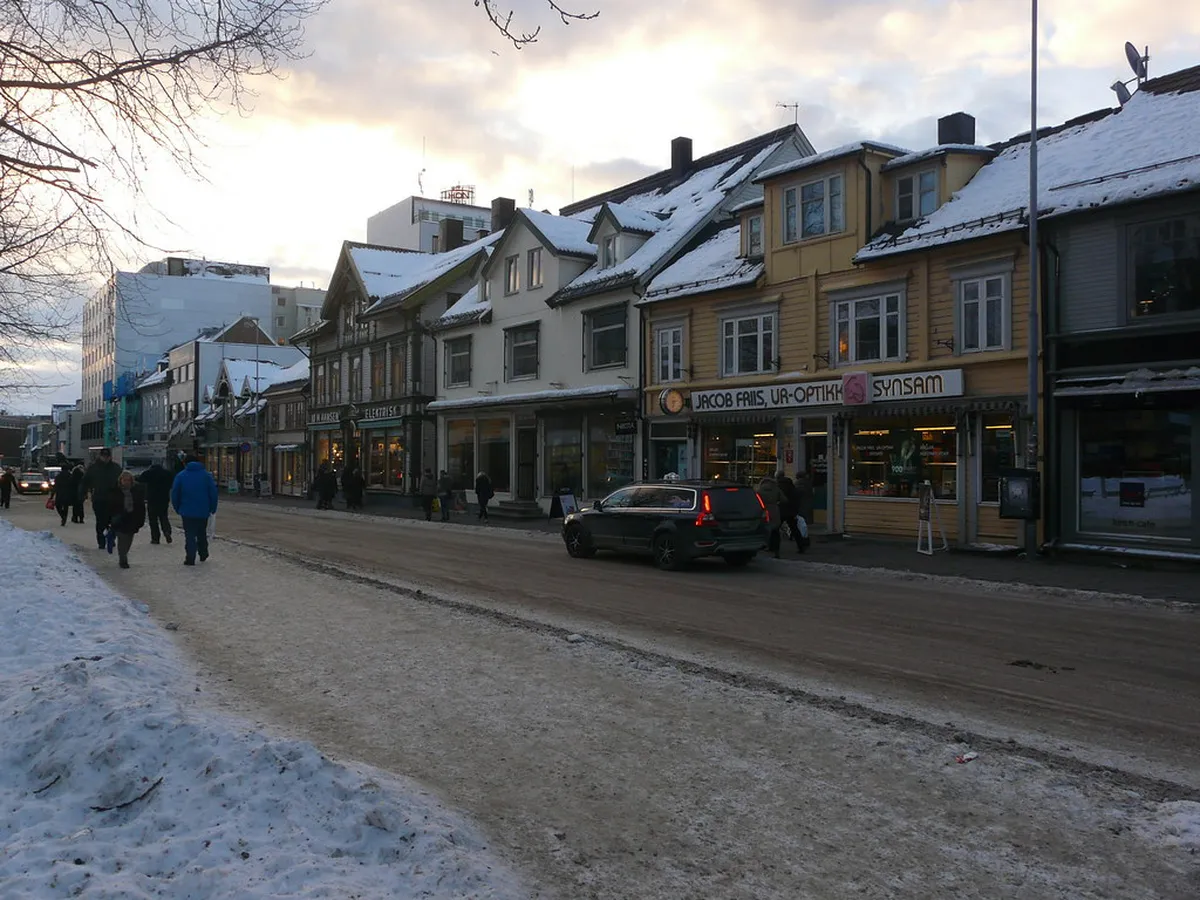
Winter driving in northern Norway is a different discipline from driving in central Europe or North America. Roads are icy, visibility can drop to near zero in blizzard conditions, and mountain passes close without warning. All rental cars in the region come equipped with studded winter tires, which are mandatory from November through April. Speed limits are lower than you may expect, often 60–70 km/h on open stretches, and are enforced with cameras. The Tromsø municipality is actively considering tighter restrictions on winter car rentals following a series of tourist accidents in recent years — check for current requirements before you book.
Studded winter tires are mandatory November–April, and rental cars come equipped. Speed limits are 60–70 km/h on Arctic roads, enforced with cameras. Check municipality winter-rental restrictions before booking.
Parking in the city center is limited and expensive. Many visitors use the Fjellparkering underground tunnel facility to shelter their car from snow and ice during their stay. Always keep your fuel tank above half-full; petrol stations can be scarce on stretches of the E6 and E8 north of Tromsø. Download offline maps before you leave — cell coverage along remote mountain roads is patchy. Consult our guide on Getting Around Tromso Travel Guide for more detail on city parking.
- Winter driving checklist for Arctic conditions
- Confirm rental car has studded tires installed — ask explicitly at the desk.
- Pack an ice scraper, a small snow shovel, and jumper cables.
- Carry warm clothing and a blanket in the boot in case of breakdown.
- Download offline maps (Maps.me or Google Maps offline area) before leaving.
- Check Statens Vegvesen (Norwegian Roads Administration) for pass closures.
- Keep a flashlight and spare batteries in the glovebox.
- Register for AutoPASS to handle electronic toll payments automatically.
- Verify your driving licence is valid in Norway — EU licences accepted; others may need an IDP.
Getting to Tromsø from Oslo, Bergen, and Trondheim
Comparing your options from major cities helps you balance cost, time, and scenic value. From Oslo, the flight is the overwhelming choice for most travelers — the distance is roughly 1,800 km, and the train-bus overland option exceeds 30 hours. A direct flight takes two hours with fares from 800 NOK / ~$75 booked well ahead, rising to 2,000 NOK / ~$190 closer to travel dates. The train-bus combo from Oslo costs around 1,200–1,800 NOK / ~$115–$170 and suits travelers who specifically want the overland Arctic scenery.
| Transport Mode | Journey Time | Cost from Oslo |
|---|---|---|
| Direct flight | ~2 hours | 800–2,000 NOK (~$75–$190) |
| Train (Oslo–Narvik) + Bus 100 | ~24 hours | 1,200–1,500 NOK (~$115–$140) |
| Train (Oslo–Bodø) + bus | ~30+ hours | 1,300–1,800 NOK (~$125–$170) |
| Coastal cruise (from Bergen) | 2–4 days | 4,000–10,000 NOK (~$380–$950) |
| Express boat (from Harstad) | ~3 hours | ~600 NOK (~$57) |
| Rental car from Oslo | 18–22 hours | 700 NOK (~$65/day) + fuel |
From Bergen, flying is again fastest at roughly 2.5 hours with one or two stops. The iconic Bergen-to-Tromsø coastal cruise on Hurtigruten takes 4–5 days but is a very different kind of trip — a slow voyage along the entire western and northern coast rather than a practical transfer. Trondheim serves as a useful intermediate hub: it has daily direct flights and is also the starting point for the Nordlandsbanen train north toward Bodø and the Bodø bus connection. Most Norwegian domestic travelers use the Vy Trains and Buses network for these connections.
Navigating Tromsø and Kvaløya Without a Car
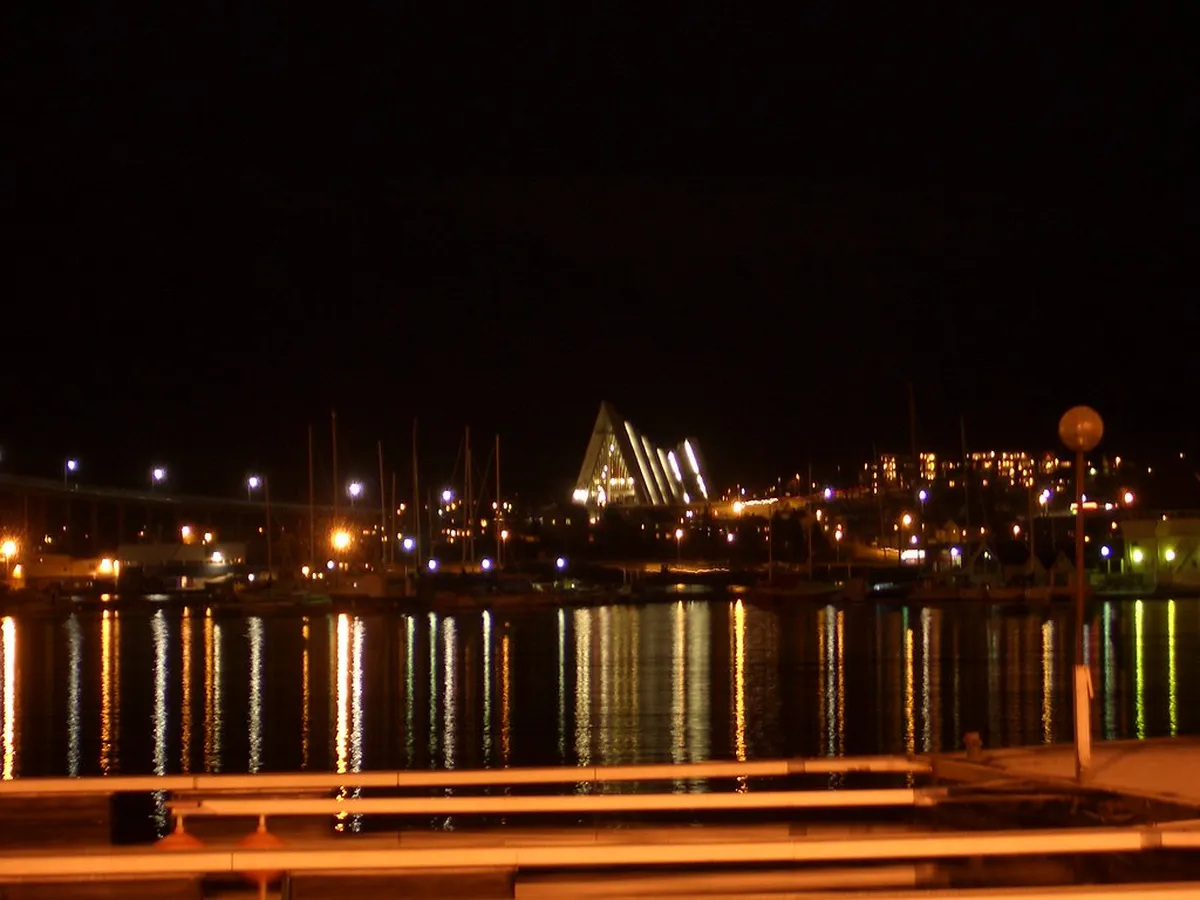
Within Tromsø Island itself, a car is genuinely unnecessary. The city center is compact — the Arctic Cathedral, Polar Museum, Fjellheisen cable car, and Telegrafbukta beach are all within walking distance or a short bus ride of each other. The Svipper app handles all local bus tickets and live tracking, and a 24-hour pass costs about 120 NOK / ~$11. Staying in a central location like the Radisson Blu or Scandic areas puts you within easy reach of every major hub. Our guide on Where to Stay in Tromsø: 10 Best Areas & Hotel Picks covers the neighborhoods worth prioritizing for car-free visitors.
One practical detail many visitors overlook: Tromsø bus fares are zone-based, and most central attractions sit in Zone 1. However, trailheads on the outer edges of the island and destinations toward Kvaløya require Zone 2 or Zone 3 tickets. The Svipper app will calculate the correct zone automatically when you enter your destination — just do not assume a single Zone 1 ticket covers everywhere. A single Zone 1 trip costs approximately 41 NOK / ~$4 on the app, and considerably more if you pay in cash on board.
Getting to Kvaløya by bus works for Ersfjord (buses 420 then 425, about 50 minutes, last return around 20:50) but becomes genuinely difficult for Sommaroy and Tromvik. Bus 420 to Sommaroy runs only three times daily on weekdays and it is not possible to make the return trip in a single winter day — you must stay overnight. Bus 425 to Tromvik and Grotfjord has only one departure each direction, and they do not align for a same-day visit. The honest advice from anyone who knows the network well: book a guided minibus day trip to Sommaroy and Grotfjord rather than attempt it independently by bus. Agencies run small-group excursions for around 1,000–1,500 NOK / ~$95–$140 per person that cover both roads in one day.
Sommarøy and Grotfjord have only 1–3 bus departures daily with no same-day returns in winter. Book a guided minibus tour instead ($95–140) to visit both in one day.
- Key bus numbers for car-free travelers
- Bus 33: City center to Telegrafbukta beach, ~15 minutes.
- Bus 26: City center to Tromsdalen cross-country skiing area.
- Bus 28: City center to Lake Prestvannet, ~10 minutes.
- Buses 420 + 425: City center to Ersfjord, ~50 minutes, hourly.
- Bus 420: City center to Sommaroy, ~1h40, 3 departures/day weekdays only.
- Buses 24, 40, 42: City center to Tromsø Airport.
Seasonal Logistics: Polar Night vs. Midnight Sun
The time of year you visit changes the logistics of getting here and moving around once you arrive. During the Polar Night (late November to mid-January), flights are more prone to delays due to visibility conditions and de-icing procedures. Driving becomes significantly more challenging when the sun never rises above the horizon and temperatures drop well below -10°C. Check the Is Tromso Expensive? 13 Travel Cost Breakdowns & Budget Tips guide to see how prices fluctuate by season — peak winter weeks in January and February can see transport and accommodation costs double compared to spring.
One practical winter tip that no competitor mentions prominently: if you are walking between bus stops or sightseeing on foot during the Polar Night, carry a reflective vest and pack ice cleats known in Norwegian as "brodder." Sidewalks in Tromsø are not reliably cleared or gritted — locals wear brodder as standard equipment from November through March. They cost around 150 NOK / ~$14 at any sports shop in the city and can prevent a painful fall on glazed pavement. It is also worth carrying a small headtorch; even in the city center, some paths are poorly lit during the darkest weeks.
Summer brings the Midnight Sun, which allows for 24-hour sightseeing and eliminates the weather delays common in winter. Ferry schedules expand significantly in summer to accommodate higher visitor volumes. Many mountain passes that close in winter reopen for dramatic scenic drives in July and August. Always verify the status of seasonal bus routes if you are visiting for aurora hunting between December and March — some routes only operate during the tourist season and are suspended in the shoulder months of October and April.
Essential Booking Resources and Apps
Having the right tools on your phone before you land saves significant stress. For all local buses and regional transport in the Tromsø area, the Svipper app is the primary ticketing and journey-planning tool. Download it before your flight and set up payment in advance — the app occasionally rejects foreign cards that do not have 3D Secure enabled, and troubleshooting that at a bus stop in January is not enjoyable. A second planner worth installing is Entur.no, which aggregates public transport across all of Norway and is particularly useful for planning multi-leg journeys involving different operators.
For rail bookings, use SJ Trains for the Stockholm-to-Narvik Ofoten Railway leg and Vy Trains and Buses for Norwegian domestic rail. Book sleeper cabins on overnight trains as early as possible — they sell out weeks ahead during peak season. For the Hurtigruten coastal cruise, book directly at hurtigruten.no to access the best cabin categories and early-booking fares. An aurora forecast app rounds out the toolkit for winter visitors; these apps help you decide when it is worth taking a bus or taxi out of the city lights toward darker viewing spots.
For those planning to see the Northern Lights, keep in mind that guided aurora tours depart from the city center each evening when conditions look promising. Agencies take responsibility for chasing clear skies — they will drive well into Finland or Sweden if needed. Booking a tour is the single most reliable way to guarantee a clear-sky sighting if your trip is short. Prices start around 1,000 NOK / ~$95 per person for a group chase and rise to 3,000 NOK / ~$285 for private small-group experiences.
Frequently Asked Questions
Is there a train from Oslo to Tromsø?
No, there is no direct train station in Tromsø. You must take a train to Narvik or Fauske and then transfer to a bus. This journey takes over 24 hours.
What is the cheapest way to get to Tromsø?
Flying is often the cheapest method if you book in advance. Budget airlines like Norwegian offer fares for around 800 NOK / ~$75. Buses from nearby cities are also affordable.
Can you drive to Tromsø in the winter?
Yes, you can drive, but it requires experience on ice. Rental cars come with studded tires for safety. Always check for mountain pass closures before starting your trip.
Getting to this Arctic destination is simpler than it looks once you understand the regional hubs. Flying remains the best choice for speed, while the train and bus combo offers unmatched scenery. By using the Svipper app and booking early, you can navigate the journey like a local.
Whether you arrive by sea on a cruise or land at the modern airport, the beauty of the north awaits. Prepare for the weather, keep your tickets digital, and enjoy the incredible landscapes of Northern Norway.
You might also like
Continue reading
More guides you'll find useful