Lyngen Alps From Tromso: 9 Essential Planning Tips
Master the journey from Tromsø to the Lyngen Alps with our guide to ferries and buses. Includes 2024 prices, timetables, and local travel tips.
On this page
Lyngen Alps From Tromso: 9 Essential Planning Tips
The Lyngen Alps are one of the most dramatic destinations in the Arctic North, a 90 km mountain spine rising between the Lyngen fjord and the Ullsfjorden. Getting there from Tromsø is manageable, but the logistics — ferry timing, payment systems, speed cameras, and winter road hazards — catch many first-timers off guard. This guide covers everything you need for 2026.
You have three real options: the Breivikeidet–Svensby ferry (fastest and most convenient), the Arctic Route bus (stress-free, all-inclusive), or the E6 road drive via Nordkjosbotn (longer but never dependent on a boat). Read the Best Time to Visit Tromsø: The Ultimate Seasonal Guide guide first to match the trip to your season, then come back here for the transport details.
Overview of the Journey from Tromsø to the Lyngen Alps
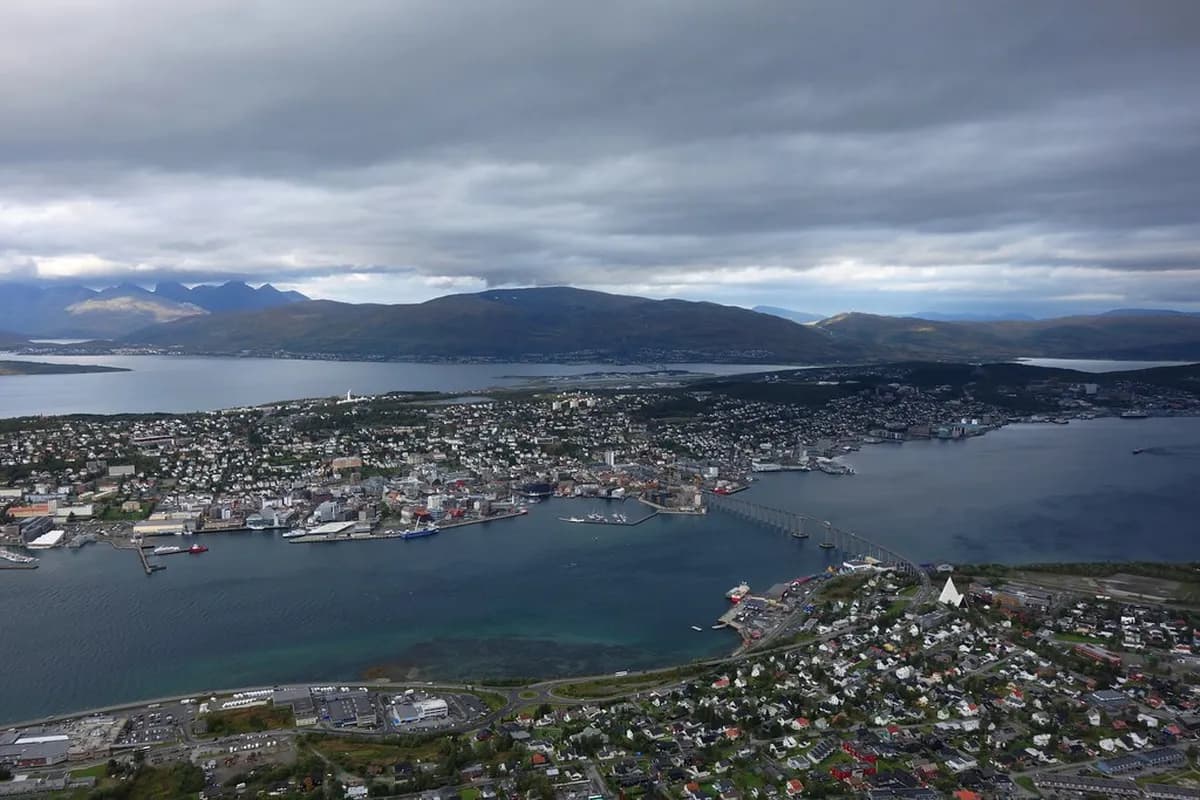
Tromsø to the heart of the Lyngen Alps is roughly 100 km by road and ferry, or about 180 km if you go entirely by road via the E6. The ferry route cuts that dramatically: 40 minutes by car to Breivikeidet, then a 20-minute crossing to Svensby, and you are already standing in front of the peaks. Most 12 Best Day Trips from Tromso and Planning Guide use this route because it maximises time in the mountains.
The E6 alternative circles around the bottom of the Lyngen Peninsula through Nordkjosbotn, Skibotn, and Oteren. It takes about three hours total but gives you access to different valleys — particularly Signaldalen — that you cannot reach from the Svensby side. Choose it when the ferry is canceled due to high winds, or when you want to explore southern Lyngen.
The Arctic Route bus handles everything: it departs from Tromsø city centre, boards the ferry at Breivikeidet, and drops you at activity centres in Lyngen. The fare includes the ferry crossing, which saves you the hassle of the automated payment system. If you are not renting a car, this is your best option.
- Ferry route (car): Tromsø → Breivikeidet (40 min drive) → Svensby (20 min crossing) — total ~60 min, 91 NOK (~€8) per car
- Arctic Route bus: Tromsø city centre → Lyngen Alps — total ~2 hours, 550 NOK (~€50), ferry included
- E6 self-drive: Tromsø → Nordkjosbotn → Skibotn → Oteren — total ~3 hours, no ferry required
- Private transfer: door-to-door from Tromsø — from 3,000 NOK (~€270)
| Route | Duration | Cost per Person | Ferry Included | Best For |
|---|---|---|---|---|
| Ferry + Car | ~60 min | ~€8–€16 | Yes | Quick access with rental car |
| Arctic Route Bus | ~2 hours | ~€50 | Yes | No car rental or parking hassle |
| E6 Self-Drive | ~3 hours | Fuel only | No | Ferry cancellations or southern Lyngen access |
| Private Transfer | ~60 min | ~€270+ | Yes | Door-to-door convenience |
The Breivikeidet to Svensby Ferry Guide
The Breivikeidet ferry terminal sits about 40 minutes south-east of Tromsø on Route 91. The road into the valley is narrow and spectacular — steep mountain walls on both sides, fir trees, and occasional elk. The terminal itself is small: a simple quay with a lane system for cars. Staff direct you onto the deck when it is time to board. Keep your engine off once parked on the boat.
The crossing takes exactly 20 minutes across the Ullsfjorden. Foot passengers and cyclists travel for free. Standard cars pay 91 NOK (around €8.50). Electric vehicles get a 50% discount at 46 NOK. Motorcycles with a rider cost 36 NOK. Vehicles towing a caravan start from 91 NOK depending on total length. These are the 2024 published fares — verify current rates on the Svipper Ferry Timetable before you go.
Payment is almost entirely automated. If you are driving a rental car it will already have an AutoPASS tag registered to it, and the ferry cameras scan your plate automatically — no stopping, no app required. If you have your own Norwegian-registered car, you can register your plate on the AutoPASS Ferje system to get a 10% discount. Visitors without AutoPASS can use the FerryPay website to pre-register their plate online before arriving. In rare cases where none of these work, a crew member boards and takes contactless card payment only — no cash.
The ferry runs all year. During weekdays in 2024 the first departure from Breivikeidet was at 06:35 and the last at 22:30, with roughly 14–15 rotations spread through the day. Weekend schedules are slightly reduced. The return from Svensby starts at 06:00 on weekdays with the last boat at 21:50. Use the Entur app to check live departure times; the Entur Tromsø Stop Information page also covers the ferry stop.
Speed Cameras, Police Ambushes, and Road Hazards on the Breivikeidet Road
This is the detail most guides skip, but it matters. The road to Breivikeidet drops to a 60 km/h zone immediately after you turn off the main highway — and there are three fixed speed cameras along this stretch. Norwegian fines are calculated as a percentage of your income, so a tourist caught doing 80 km/h in a 60 zone can realistically face a fine above 5,000 NOK (~€450). Police also run manual speed checks at the start of the road. Keep your speed steady from the moment you see the first 60 km/h sign.
Moose crossings are a genuine risk, especially at dawn and dusk and during the Polar Night from late November to mid-January. Moose in this region do not stop and look before crossing — they walk out at full pace regardless of oncoming traffic. If you hit one, the animal is large enough to come through the windscreen. Drive at or below the speed limit, use high beams where permitted, and do not attempt to swerve sharply at highway speed. Reindeer are common in the Balsfjord Municipality stretch further south on the E6.
In winter, the road to Breivikeidet can ice over completely overnight. Studded tires are legally required in Norway between 1 November and the first Sunday after Easter. All rental cars should come fitted with them, but confirm this at pickup. Carry a small snow shovel and a traction mat in the boot. If your GPS signal drops in the valley — it does — a downloaded offline map (Maps.me or Google Offline) will keep you oriented.
Speed cameras on the Breivikeidet road enforce a 60 km/h limit strictly—fines are calculated as a percentage of income, and a tourist caught speeding can face penalties above 5,000 NOK (~€450). Keep your speed steady immediately after leaving the highway.
Moose crossings are a genuine risk at dawn, dusk, and during the Polar Night (late November–mid-January). Moose walk out at full pace regardless of traffic. Do not swerve sharply at highway speed; instead, maintain the speed limit and use high beams where permitted.
Arriving at Svensby: What the Lyngen Alps Look Like from the Ferry Landing
Svensby is the primary arrival point for the ferry on the Lyngen Peninsula. When you drive off the ramp you are immediately in front of the mountain range — the peaks rise directly above the village and the fjord stretches south. This is one of the most visually immediate arrivals of any ferry in Norway.
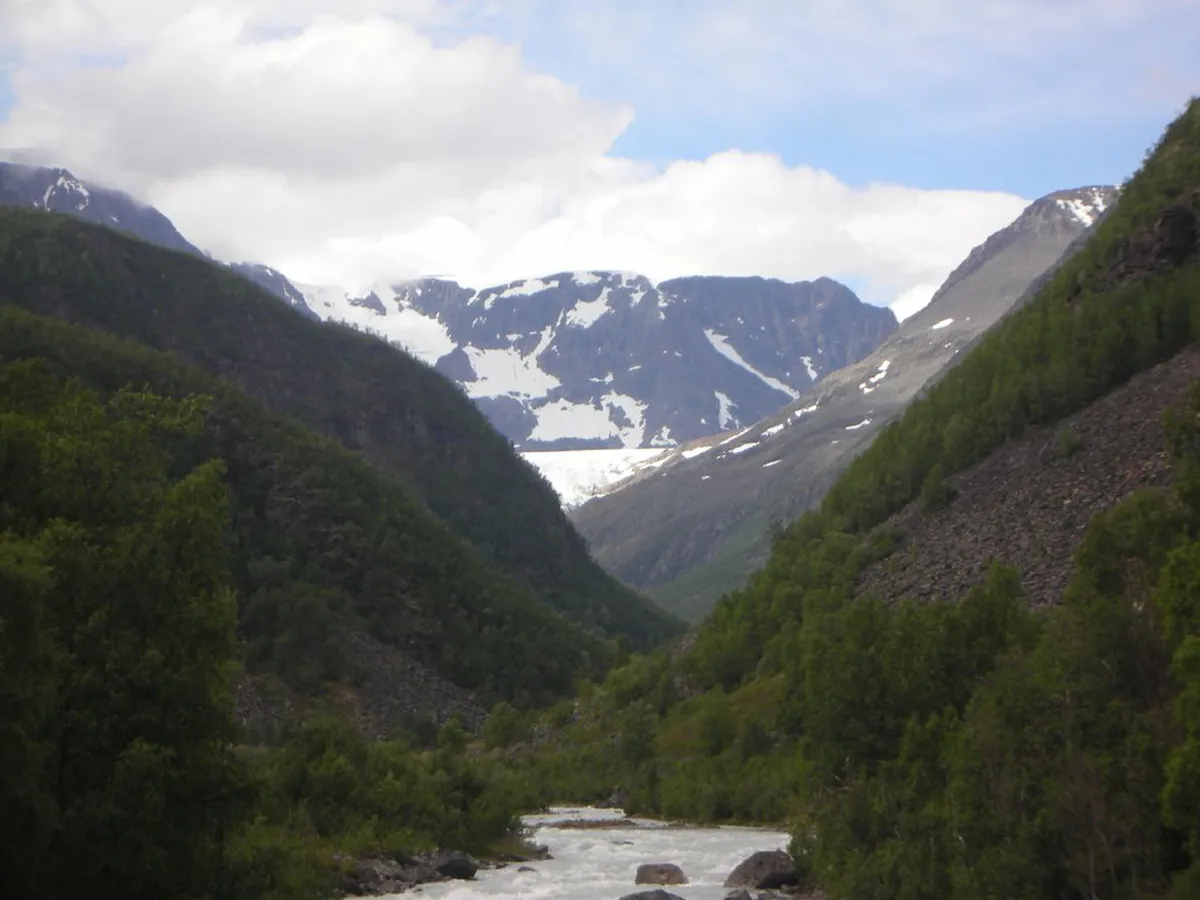
From Svensby you can head north along the western coast of the peninsula toward Lyngseidet, the administrative centre of the Lyngen municipality. The road hugs a stunning fjord for most of the way. Alternatively, head south toward Oteren and the Signaldalen valley, which is a separate glacial valley popular with ski tourers. Note that there is currently a 2 km gap in the road near Lakselvbukt that prevents a full loop of the peninsula — plan your route as a there-and-back if you head south, rather than counting on a circular drive.
The highest summit visible from Svensby reaches 1,833 m. The Alps stretch 90 km along the peninsula and are considered among the finest ski touring destinations in the world, comparable to Chamonix but with fewer people and considerably more moose. If you are there in winter, avalanche forecast checks are essential before leaving the road; the Norwegian Avalanche Warning Service (varsom.no) publishes daily regional risk levels in English.
Traveling by Bus: The Arctic Route
The Arctic Route is a dedicated tourist bus that connects Tromsø city centre with activity centres in the Lyngen Alps. The fare in 2024 was 550 NOK (~€50) per person each way. Crucially, the bus ticket includes the Breivikeidet ferry crossing — you do not pay a separate ferry fare and the driver handles the boarding logistics. This is the clearest advantage over driving for travellers unfamiliar with the AutoPASS system.
The bus departs daily from the Tromsø Prostneset Terminal near the harbour around 09:00 and returns in the late afternoon, giving you roughly five to six hours in Lyngen. Book at least two days ahead during the winter ski season (January–April), when the bus routinely fills up. The onboard heating and charging ports make it comfortable even when temperatures drop below -15°C outside.
The bus stops at several activity hubs — dog sledding bases, snowmobile operators, and ski touring drop-off points. If you have pre-booked a winter activity, check that your operator is on the Arctic Route itinerary before committing. Some smaller operators in southern Lyngen are only accessible by car. You can find more 10 Essential Tromso Travel Tips: The Ultimate Arctic Guide including which activity providers pick up directly from the bus stop.
Self-Drive Guide: The E6 Route
The E6 — nicknamed the Northern Lights Highway in this section — runs south from Tromsø through Balsfjord Municipality, continues through Skibotn at the end of the Lyngen fjord, and then turns north up the eastern side of the Lyngen Peninsula through Olderdalen and Birtavarre to reach Kåfjord Municipality. The total driving distance is around 180 km and takes approximately three hours without stops.
Skibotn is worth a brief stop. It sits at the junction with the E8 into Finland and holds the distinction of being one of the driest places in Norway — the lack of cloud cover is why there is a full astrophysical observatory there. Olderdalen, the main settlement of Kåfjord Municipality with a population of around 300, also has its own small ferry connection across to the western shore of the Lyngen fjord, which can create an alternative loop if timetables work in your favour.
Manndalen, further north on this route, has a historically rich background — it was where Kven, Sami, and Norwegian settlers coexisted, and it remains a centre for Sea Sami cultural revival today. The annual Riddu Riđđu festival of Sami music takes place here. If your schedule allows a half-day of cultural detours, the E6 route offers far more context about Arctic Norway than the ferry shortcut does.
Use the E6 as your primary option if the ferry is canceled (high-wind cancellations happen several times each winter), or if you want to access Signaldalen from the south. It adds time but removes the ferry dependency entirely and gives you a continuous driving experience on one of Norway's great highway corridors.
Booking Advice: Do You Need Advance Reservations?
You cannot pre-book the Breivikeidet–Svensby ferry for standard passenger vehicles. It operates first-come, first-served. The boat takes around 20 cars per sailing, so during most of the year simply arriving 10–15 minutes before departure is sufficient. The exception is Friday afternoon and Saturday morning in summer, when the queue can stretch to 45 minutes of waiting time. If you are travelling on those days, build the extra time into your schedule.
The Arctic Route bus does require advance booking. Seats sell out during the January–April ski season and over the Christmas–New Year period. Book via the operator's website or through a Tromsø-based tour agency. Do not assume you can buy a seat on the day during peak months.
Car rentals in Tromsø should be booked well in advance for winter weekends. The city has a limited fleet of winter-ready vehicles and demand from ski tourers spikes between January and March. Reserve at least two weeks ahead if you are travelling in this window, and confirm at booking that the car comes with studded tires and an AutoPASS tag.
Top Activities in the Lyngen Alps
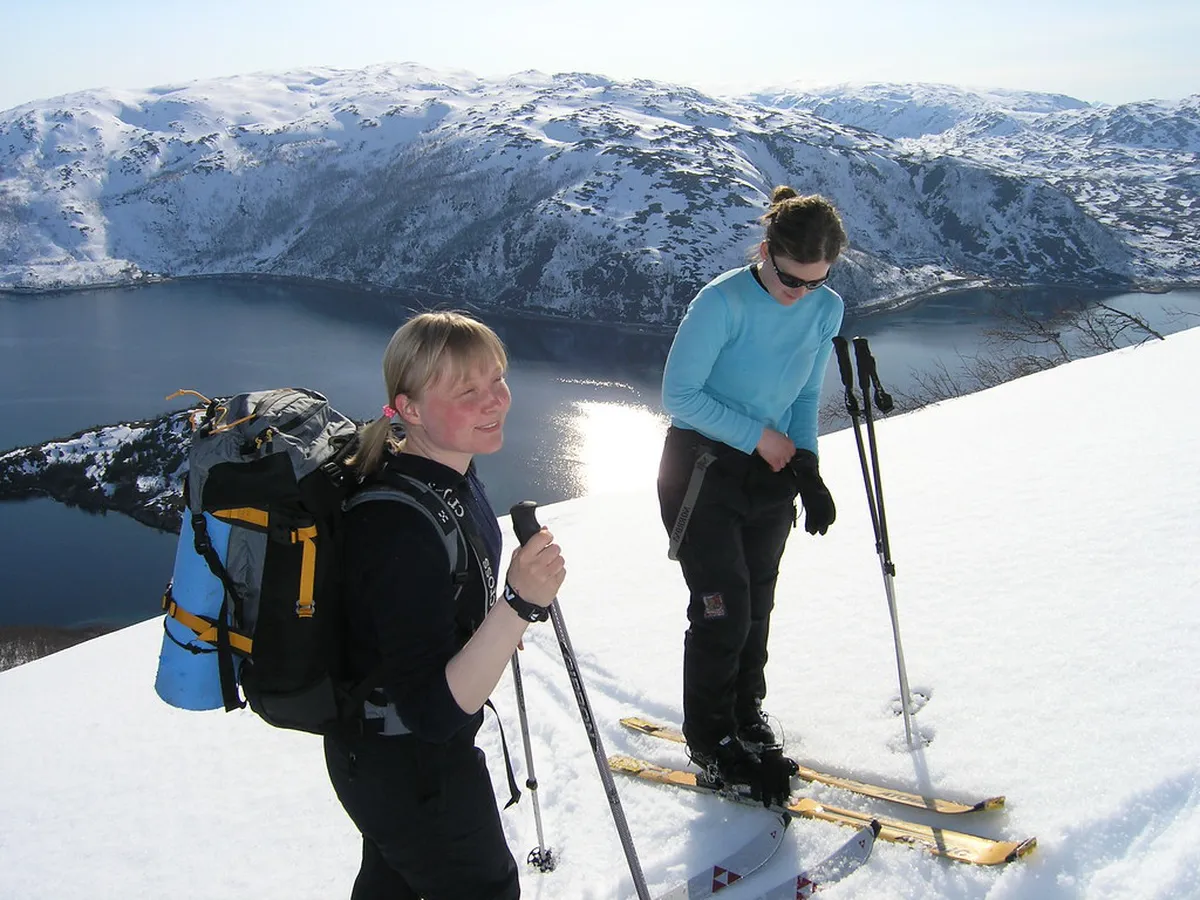
Ski touring is the defining activity here. The Lyngen Alps offer some of the most accessible steep descents in Europe — glacier runs, couloirs, and long continuous vertical drops from summit to fjord. The season typically runs from February to May, with April being the sweet spot for stable snow and longer daylight. Guided ski touring day trips from Tromsø operate throughout this window and can be booked independently from the ferry logistics.
In summer the same terrain becomes a hiking destination. The approach to Jiehkkevárri, the highest peak in the range at 1,833 m, is a challenging two-day route that requires glacier travel equipment and experience. Easier ridge walks start directly from Svensby or Lyngseidet and give spectacular views of the fjord system below without technical gear.
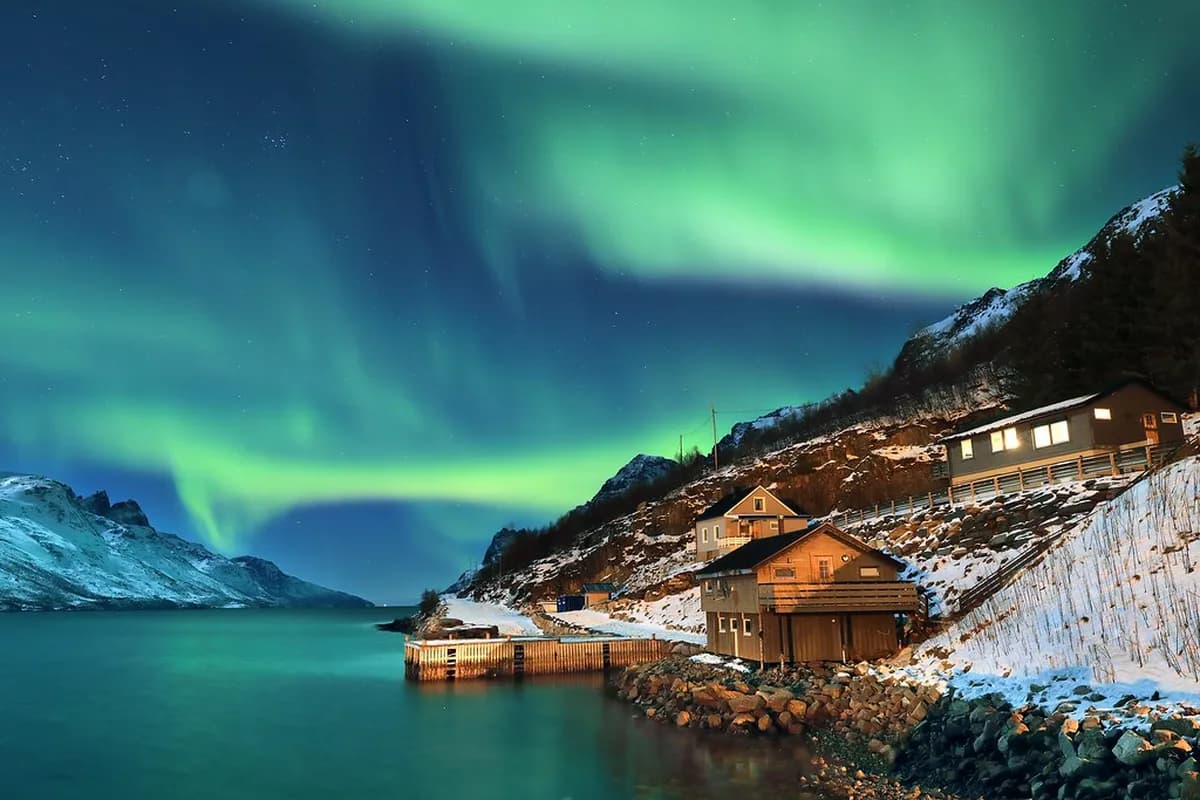
Northern lights viewing in the Lyngen Alps is excellent from late September through March. The lack of light pollution on the peninsula — combined with the elevation and the clear skies that come with the dry valley air — makes this one of the better aurora viewing locations in the Tromsø region. If you are 7 Best Options for Skiing in Tromsø peaks and the forecast shows KP3 or above, staying until after dark is worth the extra planning for the return ferry.

The Aurora Spirit Distillery, located on the Lyngen Peninsula, is a notable stop for those interested in craft spirits. It produces gin and aquavit using Arctic botanicals and local water, and offers tours and tastings that can be combined with a visit to the mountains. Check their opening schedule before adding it to your itinerary, as tour times are limited.
Frequently Asked Questions
How long is the ferry from Breivikeidet to Svensby?
The ferry crossing takes exactly 20 minutes to cross the fjord. It runs frequently throughout the day, usually every 45 to 60 minutes. You should arrive 15 minutes early to secure a spot.
Do I need to book the Tromsø to Lyngen ferry in advance?
No, you cannot book the ferry for standard cars in advance. It operates on a first-come, first-served basis for all vehicles. Simply drive into the queue and wait for the next departure.
What is the best way to pay for ferries in Norway?
The best way is using the FerryPay system or an AutoPASS tag. Most rental cars have a tag that bills you automatically. You can also register your plate online before you travel.
Visiting the Lyngen Alps from Tromso is a highlight of any Norway trip. Whether you take the bus or drive, the scenery is truly world-class. Watch the speed cameras on the Breivikeidet road, sort your AutoPASS or FerryPay before you leave Tromsø, and check the avalanche forecast if you plan to go beyond the road. Safe travels as you explore the majestic peaks of the Arctic North.
You might also like

Continue reading
More guides you'll find useful