Whale Watching In Tromso: The Ultimate Guide
Plan your Tromsø whale watching trip with expert advice on the best season, ethical tour operators, what to pack, and how to see Orcas and Humpbacks.
On this page
Whale Watching In Tromso
Seeing a massive humpback whale breach the surface is a life-changing experience for many Arctic visitors. Tromsø serves as the primary hub for these winter expeditions into the deep and icy northern fjords.
Travelers from around the globe arrive here to witness one of nature's most spectacular annual migrations. You will find a variety of things to do in Tromso, but whale watching remains a top priority.
Successful trips require careful planning regarding timing, transit logistics, and choosing the right type of boat for your needs. This guide covers everything you need to know about experiencing whale watching in Tromso responsibly in 2026.
Why Tromsø is the best place for whale watching in Norway
Tromsø sits at 69 degrees north, inside the Arctic Circle, where the geography of the surrounding fjords creates a natural trap for Atlantic herring during winter. That herring concentration is the engine that drives everything. When hundreds of millions of fish pack into the narrow fjords, orcas and humpback whales follow in numbers that are simply not found in other European destinations. As Norway's official whale watching guide documents, this migration pattern is unique to the region.
The city is also the most accessible point of entry. Tromsø Airport has direct connections from Oslo, London, and Copenhagen year-round. From the airport to the harbor is a ten-minute drive. No other northern Norwegian whale destination offers this combination of wildlife density and easy logistics, which is why tour operators have built their entire winter season around it.
During peak season from mid-November to mid-January, encounter rates on reputable tours exceed 90 percent. Groups of 30 or more humpbacks feeding alongside resident orca pods are not unusual. It is one of the only places on earth where both species feed in the same waters at the same time.
Is whale watching in Tromsø ethical?
Responsible tourism is essential when visiting sensitive marine habitats in the far north of Norway. Operators must follow guidelines to ensure that boats do not disturb the natural behavior of the animals. These rules include maintaining a safe distance and limiting the time spent near a single pod.
Engine noise is a real concern. It can interfere with the communication and hunting patterns of orcas and humpback whales. Many travelers now prefer Brim Explorer: Silent Whale Watching tours to minimize their acoustic footprint. Using hybrid-electric engines allows for a much quieter approach to the feeding grounds, and the whales show visibly more relaxed surface behavior around these vessels.
Norway does not currently enforce the same strict distance regulations as Iceland, so the ethical standard varies dramatically by operator. Look for companies that participate in research programs, carry a qualified marine biologist, or have signed a wildlife responsible-tourism pledge. Supporting these businesses helps protect the Arctic ecosystem. You can find more tromso travel tips to help you select a sustainable tour provider.
One useful screening step: check recent reviews specifically for comments about boat behavior near pods. Legitimate eco-operators will drive away from an agitated pod even if it costs passengers a close encounter. Any operator that races toward a breaching whale or crowds a feeding group alongside six other vessels is a red flag regardless of their marketing language.
Facts about the whales in Tromsø
The two most common species seen during the winter months are orcas and humpback whales. Orcas, also known as killer whales, are highly social animals that hunt in coordinated family groups called pods. They are often seen surfacing in synchronized patterns while working a school of herring into a tight bait ball before striking.
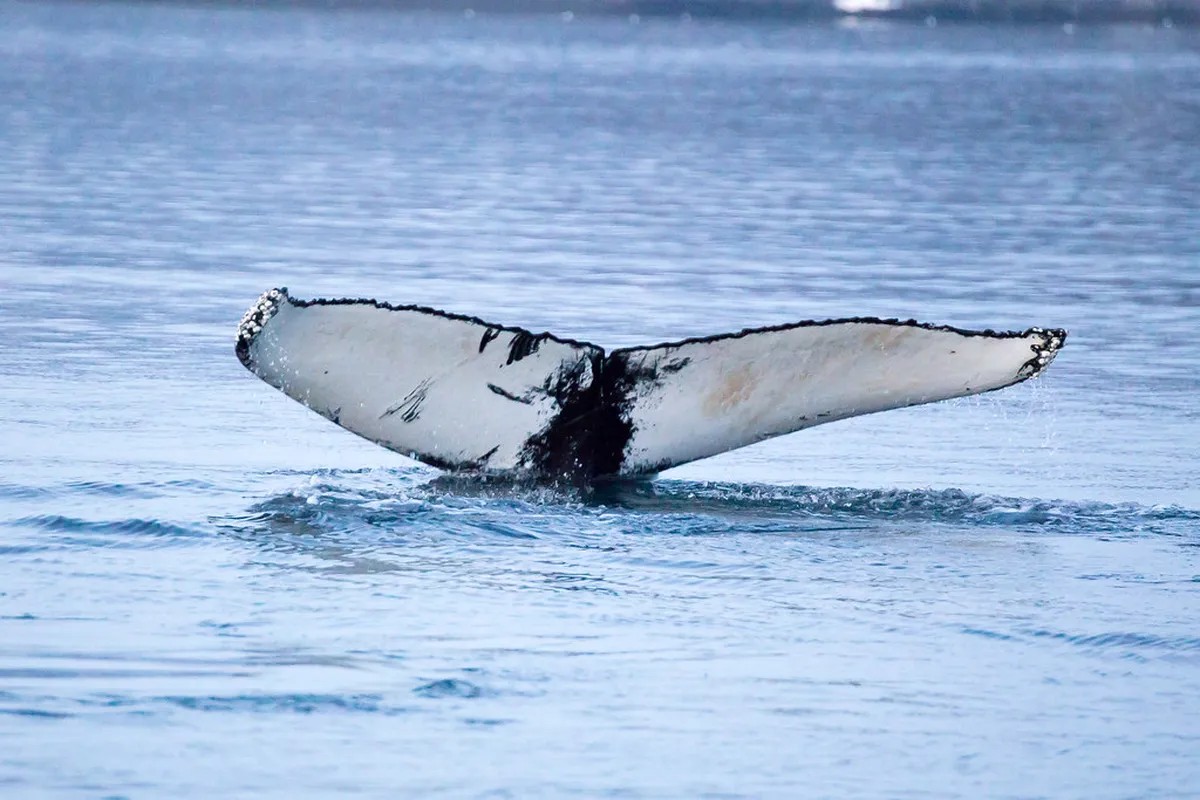
Humpback whales are famous for their massive size and their impressive displays of breaching and tail slapping. These giants can grow up to 16 meters long and weigh as much as 30 metric tons. Watching them lunge-feed alongside orcas is a powerful reminder of the scale and biodiversity found within the Norwegian Sea.
One fascinating detail that marine biologists share is the distinct smell of the blow from a whale. Each species produces a breath with a subtly different scent — orcas tend toward a fishy, oily odor while humpbacks produce a more sulfurous cloud. Experienced guides on reputable tours can often identify a species at distance partly by smell before the dorsal fin is even visible. This sensory detail creates a deep and lasting connection between the traveler and the animal.
Fin whales are also occasionally spotted in the deeper waters further offshore. In recent years, small numbers of sperm whales have also been sighted in the region, and minke whales appear at the margins of the season. While less predictable than orcas and humpbacks, their sheer size makes them a thrilling sight when they appear.
Best time for whale watching: The herring migration
The presence of whales in the region is directly tied to the massive annual migration of Atlantic herring. These fish move into the fjords in the far north to overwinter, providing a rich food source for the hungry predators that follow them in. This natural cycle determines exactly when and where the whale watching season takes place each year.
The peak window for sightings usually runs from early November through the end of January. You should check the best time to visit tromso to align your trip with this window. Mid-November to mid-December is particularly productive because you still get a few hours of golden twilight each day, which makes for dramatic conditions and better photography. By deep winter the polar night is fully established, producing a blue-grey twilight for four to five hours per day.
Due to climate variability, the exact timing of herring arrival has shifted in recent years. The whales have followed the fish further north, which is why most tours now travel to the Skjervøy area rather than staying in Tromsø fjord. Booking a trip in late November or early December gives you the best combination of high whale density and usable light.
Weather conditions in the Arctic can be unpredictable and may cause tour cancellations on very short notice. You can check Yr weather forecasts for real-time Arctic conditions before committing to dates. It is wise to book your whale tour early in your trip and build in at least one buffer day. Flexibility is key to ensuring you get a chance to see these animals in the wild.
The Skjervøy reality: what most tours don't explain upfront
Here is the logistical fact that many booking pages understate: the whales are no longer reliably found in Tromsøfjord. Over the past several years the herring — and the whales that follow them — have moved further north and now concentrate primarily around the Skjervøy archipelago, roughly 120 km north of Tromsø city. This migration of the migration has fundamental consequences for how you plan your day.
Tours that depart from Tromsø harbor must travel approximately two hours each way just to reach the whale grounds, then spend time searching, then return. Your total time on the water is 8 to 9 hours, but active whale time may be only 2 to 3 hours. Tours that depart directly from Skjervøy harbor spend the same total time on the water but dedicate far more of it to the whales themselves. They can also explore smaller side fjords where multi-boat congestion is lower.
Most tours now travel to Skjervøy, roughly 120 km north of Tromsø, because the herring — and the whales — have moved further north in recent years. Plan for 8–9 hours total on the water per tour, with 2–3 hours of active whale-watching time.
The practical choice depends on your base. If you have already booked accommodation in Tromsø, a Tromsø-departing catamaran tour is still a solid option — the onboard facilities are good and sighting rates remain high. If you are flexible on where to sleep, spending two or three nights in Skjervøy and joining local tours from the harbor is the higher-yield approach. Some Tromsø-based operators include a coach transfer to Skjervøy as part of their package; this is worth the additional price because it eliminates the long sea transit in each direction.
How tour operators actually find the whales
Most guides describe the herring migration without explaining the mechanics of how a boat crew actually locates a pod on any given morning. The answer involves the commercial fishing fleet. Norwegian herring purse-seiners and trawlers work the same feeding grounds every winter, and their position on the water is a real-time indicator of where the bait fish are densest. Tour operators monitor VHF radio traffic and vessel-tracking apps to position themselves near active fishing activity, because where the herring boats cluster, the whales almost invariably follow within minutes.
This symbiosis between the fishing industry and whale tourism is one reason sighting rates in northern Norway are so consistently high compared to other global destinations. The whales in this region are completely habituated to large vessels from decades of coexistence with the fishing fleet. They show no flight response to an approaching boat and will often swim directly under the hull or surface within meters of the stern — behavior that is essentially impossible to witness around whale populations that have no such history with commercial vessels.
The practical takeaway for travelers: if a guide tells you in the morning briefing that the fishing boats are active north of Skjervøy, that is a strong signal for an excellent day. If the fleet has not left harbor due to weather, that is often a warning sign that conditions may cancel or cut the tour short.
Top-rated tours: Hybrid-electric vs. RIB boats
Travelers must choose between large stable ships and small fast Rigid Inflatable Boats (RIB). The decision comes down to three trade-offs: warmth versus intimacy, group size versus access, and budget versus encounter quality.
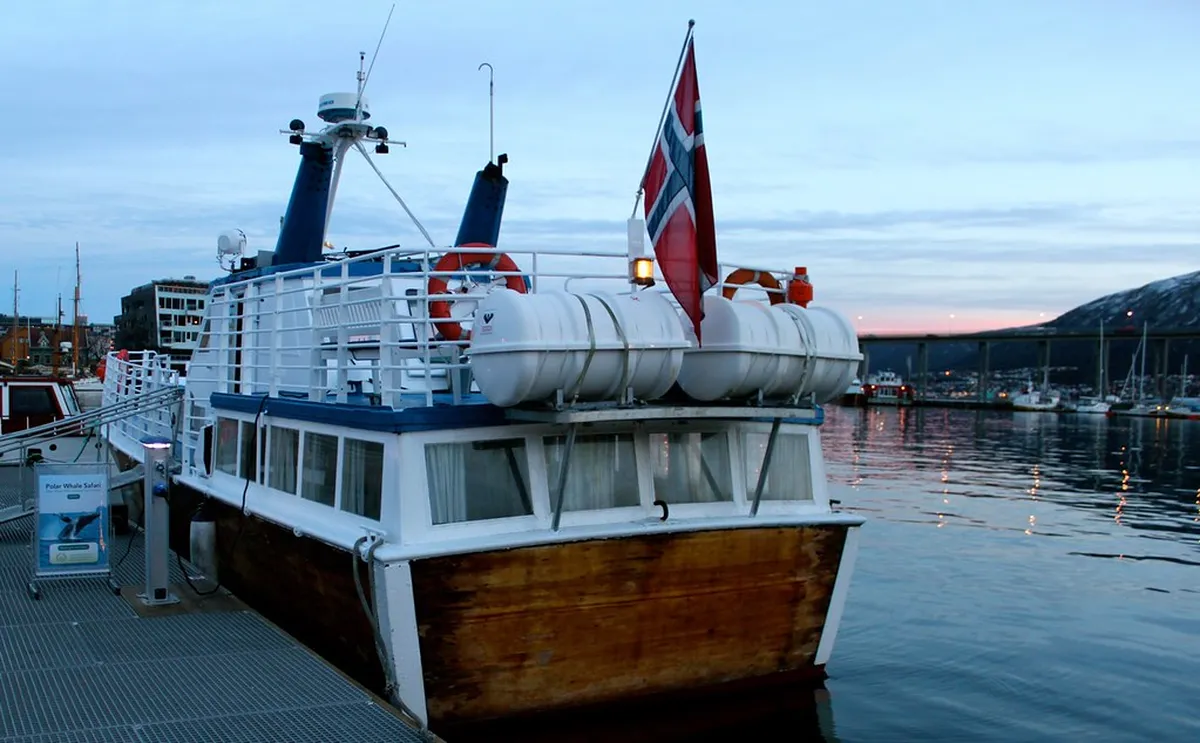
Large hybrid-electric catamarans — most notably Brim Explorer's vessel departing from Tromsø — offer heated panoramic lounges, onboard toilets, hot food, and a smooth ride suited to anyone prone to motion sickness. Prices for catamaran tours start around 1,495 NOK (approximately €130) per person. The vessel switches to near-silent electric mode when it reaches the feeding grounds, which meaningfully reduces acoustic disturbance. These boats carry 50 to 80 passengers, which can feel impersonal but does not significantly affect sighting quality.
RIB boats carry 6 to 12 people, sit low to the water, and can reach speeds of 40 knots. At the whale grounds they idle almost silently and can maneuver into positions a large catamaran cannot reach. The trade-off is exposure: you are fully in the wind and sea spray for the entire journey. Operators provide thermal dry suits, but you should still expect to be genuinely cold. RIB tour prices typically start around 2,500 NOK (approximately €220) per person, reflecting the smaller group and greater operational cost per head. For visit Visit Norway: Whale Watching Guide for an overview of what Norway's operators are required to declare about their practices.
A middle-ground option gaining popularity is the small semi-rigid boat or purpose-built whale safari vessel that carries 12 to 20 passengers with a small heated cabin. Companies operating from Skjervøy harbor tend to use this format. It balances exposure to the environment with enough shelter to stay functional over a full day.
Swimming with whales in Norway
Snorkeling alongside wild orcas and humpbacks is one of the most extreme wildlife experiences available anywhere. It requires professional-grade dry suits and calm sea conditions. Most operators providing this activity use small RIB boats to approach pods carefully, and participants must enter the water quietly and let the whales choose whether to approach or move away.
The ethical concerns around this activity are significant and worth understanding before you book. Norway imposes no legal minimum distance for swimmers near whales, which means operator standards vary enormously. The core problem on day tours is time pressure: guides feel compelled to get clients into the water quickly, sometimes in conditions that are not ideal for the whales or the swimmers. Inexperienced swimmers in dry suits in Arctic water can panic, and sudden movements near a feeding whale are genuinely disruptive.
Day tours that offer swimming with whales often rush the experience due to time pressure. If swimming is your goal, book a multi-day expedition instead, which allows operators to wait for the right conditions and prioritize whale welfare over quick highlights.
If swimming with whales is your primary goal, book a multi-day expedition rather than a single-day tour. Multi-day operators based in Skjervøy have the flexibility to wait for the right pod behavior before entering the water, avoid overcrowded areas, and prioritize whale welfare over a quick highlight for customers. Waterproof Expeditions and Reel Lofoten are operators with consistent positive feedback on ethical swimming practices. Budget at least 8,000 to 12,000 NOK (€700 to €1,050) for a quality multi-day swimming expedition.
Onboard experience: Heated lounges and Nordic design
Modern whale watching ships in Tromsø often feature elegant Nordic design and practical cold-weather amenities. Large panoramic windows allow you to scan for fins without stepping out into the wind. These heated lounges are essential for staying functional during the long transit times to the northern fjords.
Many vessels include a cafe or bar serving hot drinks and locally sourced food. Some Tromsø-based catamarans offer traditional reindeer stew as part of the onboard meal service — eating something warm and substantial midway through an eight-hour journey makes a real difference to how you feel on deck when whales appear. Check your booking confirmation to confirm whether food is included or available for purchase.
Outdoor decks are usually spacious with multiple viewing levels. Most boats also provide warm thermal suits that you can wear over your own winter clothing, and this is particularly important on RIB tours where you have no indoor refuge. The ability to retreat to a warm cabin and return to the deck multiple times is one of the key advantages of the large catamaran format for travelers who are not experienced in prolonged cold-weather exposure.
What to pack for the Arctic polar night
Staying warm is the most important factor in enjoying your whale watching experience. Dress in multiple layers of merino wool or high-quality synthetic materials to trap heat effectively. Avoid cotton entirely — it loses its insulating properties the moment it becomes damp, and sea spray or perspiration will dampen it faster than you expect.
A waterproof and windproof outer layer is essential. You can find a detailed tromso packing list winter to help you prepare for the full trip. Do not underestimate your extremities: insulated waterproof gloves, a warm hat, and a neck gaiter are not optional. Consider bringing a liner glove pair if you plan to use a camera, because removing heavy outer gloves repeatedly to operate controls is a fast route to numb fingers.
- Merino wool thermal base layer top and leggings
- Fleece or wool mid-layer
- Insulated down puffer jacket
- Waterproof and windproof outer shell (your operator may provide one — confirm before you pack)
- Waterproof ski or snow pants
- Insulated waterproof boots with grip for slippery decks
- Warm hat, neck gaiter or scarf, and insulated gloves
- Chemical hand warmers and toe warmers for the coldest hours
- Sunglasses for glare off the water and snow
- Motion sickness tablets if you are prone to seasickness, taken before departure
Sturdy waterproof boots with good grip are non-negotiable for walking on boat decks that will be wet and potentially icy. Proper gear allows you to spend more time on the outdoor deck when whales appear rather than retreating inside because you are too cold to function.
Photography tips for low-light whale sightings
Capturing photos of whales in the dim light of the polar night requires specific camera settings. Use shutter priority mode or manual, and set your shutter speed to at least 1/1000s to freeze the movement of a breaching animal. To maintain that shutter speed in low Arctic light you will typically need ISO 800 to 3200 — modern mirrorless cameras handle this range cleanly.
Enable continuous autofocus (AF-C mode on Sony/Nikon, AI Servo on Canon) and use burst mode when an animal surfaces. A 70 to 200mm zoom lens gives you the reach and flexibility to handle varying distances from a moving platform. Longer telephoto lenses above 400mm are difficult to stabilize on a boat deck and often miss more shots than they capture due to camera shake.
Salt spray is extremely damaging to camera sensors and glass elements. Keep your gear in a sealed bag or backpack when you are not actively shooting. Bring at least two microfiber cloths and wipe the front element frequently. Cold also drains batteries faster than normal — carry spares and keep them in an inside pocket against your body to maintain their charge. You might also capture the northern lights tromso if they appear during the transit sections of your journey.
Practicalities: departures, booking, and logistics for 2026
Most Tromsø-departing tours leave from the main harbor in the city center, a short walk or taxi ride from the majority of central hotels. Consult our guide on getting around tromso for details on bus routes and harbor access from outlying neighborhoods. Tromsø's official whale watching portal lists all departing operators and booking contacts. Arrive at least 30 minutes before your scheduled departure to collect your thermal gear and complete the safety briefing.
Book as early as possible. Whale watching is the single most popular winter activity in Tromsø, and peak-season dates in December sell out weeks in advance. If you book a Tromsø-departing tour, look for operators that offer a free rebook or credit on weather cancellations — several do. If you are traveling specifically for whales, give yourself a minimum of two days on your schedule to account for one cancellation.
For accommodation, staying where to stay in tromso near the city center keeps your pre-departure logistics simple. If you decide to base yourself in Skjervøy instead, accommodation options are limited so book several months ahead for the peak November to January window. Skjervøy has a small grocery store and a handful of local restaurants, but it is a working fishing village rather than a tourist town.
Use our guide to things to do in Tromsø for the wider city overview.
Frequently Asked Questions
What is the best month for whale watching in Tromsø?
The best time for whale watching in Tromsø is from November to late January. This period aligns with the annual herring migration that attracts orcas and humpbacks to the fjords. You can check the best time to visit Tromsø for more seasonal details.
Are you guaranteed to see whales on every tour?
While sightings are very common during the peak season, they are never 100% guaranteed. These are wild animals that move freely throughout the vast Arctic fjords. Most reputable operators have high success rates and will share recent sighting data before you depart.
How long does a typical whale watching trip last?
A typical tour from Tromsø lasts between 8 and 9 hours due to the long transit. The whales are currently located near Skjervøy, which requires a four-hour boat journey each way. Be prepared for a full day out on the water in cold conditions.
Is seasickness a common problem on these tours?
Seasickness can occur, especially if the weather is windy and the sea is choppy. Larger catamarans are generally more stable and offer a smoother ride than smaller RIB boats. If you are prone to motion sickness, consider taking medication before the boat leaves the harbor.
Whale watching in Tromso offers a rare chance to connect with some of the planet's most impressive creatures in a landscape that is dramatic even without them. By choosing an ethical operator, understanding the Skjervøy logistics, and dressing properly for Arctic conditions, you set yourself up for a genuinely memorable day on the water.
The sight of an orca fin cutting through the dark Arctic water, or a humpback breaching against a pink twilight sky, is something that stays with you. Make sure to book your accommodation early as the winter season is incredibly popular. Early planning helps you secure the best tours and the most convenient base.
Tromsø remains one of the premier wildlife destinations on earth for winter travelers. Whether you choose a silent electric ship or a fast RIB, the whales are waiting in the fjords north of the city. Prepare your camera, pack your warmest layers, and leave plenty of time in your schedule.
You might also like

Continue reading
More guides you'll find useful