Tromso Fjord Cruise Guide: Essential Arctic Sailing Tips
Discover the best Tromso fjord cruises. Compare whale watching, Northern Lights tours, and eco-friendly catamarans with our expert guide to Arctic sailing.
On this page
Tromso Fjord Cruise Guide
Tromsø sits far above the Arctic Circle in Northern Norway, and the landscapes here are best understood from the water. A Tromso fjord cruise puts you between towering snow-capped peaks and deep, dark fjords in a way no viewpoint or cable car can replicate. In 2026 you have more choices than ever: silent electric catamarans, traditional vessels with onboard kitchens, and dedicated wildlife safaris that chase both whales and the Northern Lights.
Top things to do in Tromsø
Tromsø packs a remarkable range of activities into a compact city. The Arctic Cathedral and the Fjellheisen cable car are the obvious starting points, but most visitors quickly realise the city is a base rather than a destination in itself. The fjords, mountains, and wildlife surrounding it are what drive people to fly this far north. Many visitors combine a boat trip with other 15 Best Things to Do in Tromsø, Norway to fill a three- or four-day winter itinerary.
Dog sledding and reindeer encounters with Sami guides operate a short drive from the city. These run November through March and can usually be combined with a morning fjord cruise on the same day. Tromsø's polar history museums and the Polaria Arctic Experience Center fill the darker afternoon hours when twilight sets in by 14:00 during the Polar Night.
The key to planning is understanding the seasons. The whale season (November to late January) and the Northern Lights season (September to March) overlap partially, which means late November through January is the sweet spot for stacking both a whale safari and an aurora cruise into one trip. Check the official Visit Tromsø tourism site for real-time activity schedules and seasonal weather updates.
Fishing & Fjord Cruise
Fishing tours from Tromsø follow the cod, and the Arctic cod season peaks in winter when the cold, nutrient-rich water draws large shoals into the fjords. Expert local guides supply all the gear including thermal suits, fishing rods, and bait. You do not need any prior fishing experience. Most guests pull their first Arctic cod within the first hour on the water.
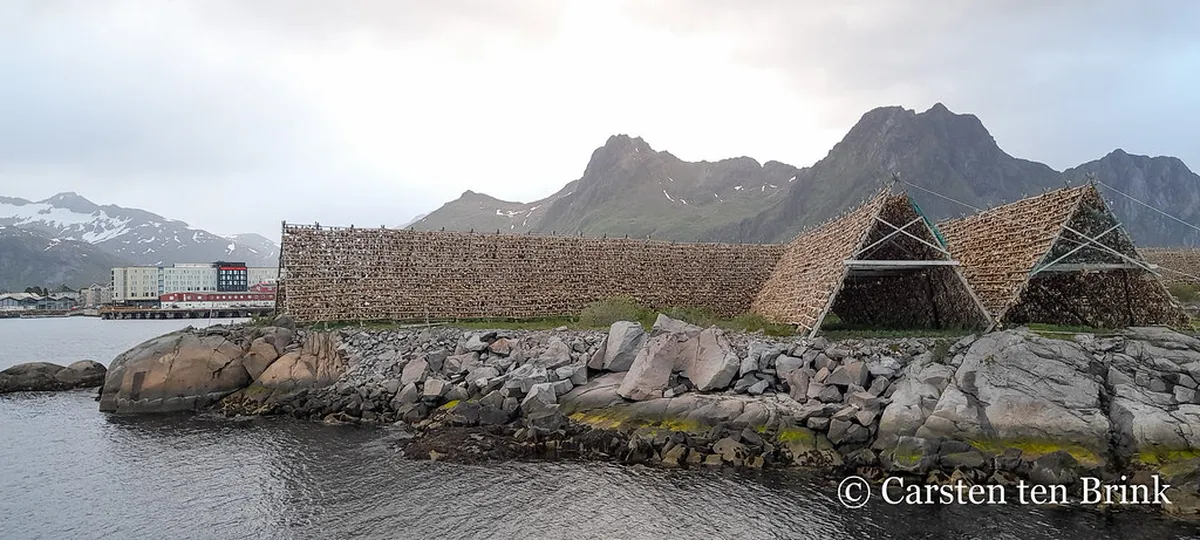
The guides double as storytellers, explaining how generations of Norwegian coastal families built their livelihoods on these same waters. Passing the wooden hjell — the traditional drying racks for stockfish — makes those stories tangible. You see the same racks that have lined the shore for centuries, often still loaded with drying cod.
Fish caught on board is sometimes prepared as a fresh snack before the boat returns to port. The combination of open air, physical activity, and the flavour of genuinely wild Arctic seafood makes fishing tours one of the most memorable ways to experience the fjords at a level beyond simple sightseeing.
Bring hand warmers and anti-fog wipes: Arctic fjord conditions cause instant lens fogging when stepping from warm cabins onto cold decks. Chemical heat packs (NOK 30–40) are available at Tromsø sports shops and are essential for extended outdoor photography.
Go on a Whale Watching Safari
Humpback whales and orcas follow the herring into the Tromsø fjords between November and late January. This is the primary reason many people choose to visit in winter rather than summer. Booking a whale watching safari in Tromso well in advance is essential during peak season — whale safaris are the first tours to sell out, often weeks ahead when the animals are actively sighted.
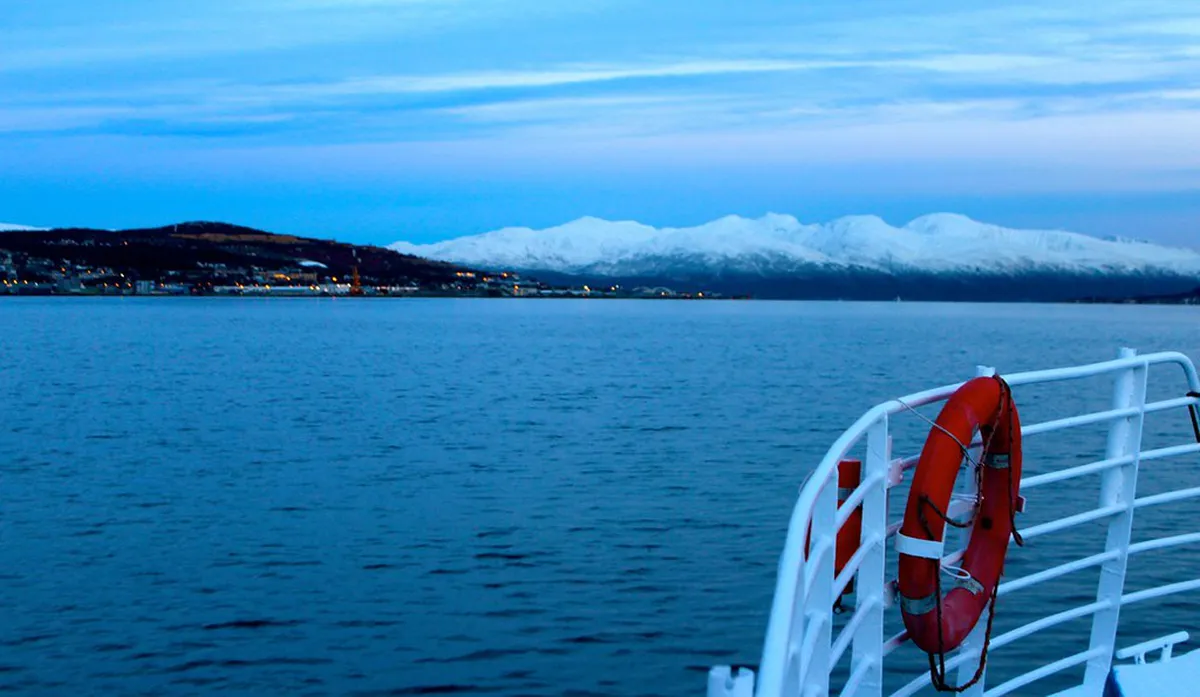
Whale safaris typically run six to eight hours because the pods can be far offshore and the captain follows real-time sighting reports from other vessels. Electric and hybrid-electric boats are increasingly common because silent propulsion lets the boat approach within a respectful distance without disturbing the animals. Guides carry hydrophones to let you hear the whales below the surface, which adds a dimension that photographs alone cannot capture.
Beyond whales, the fjords support year-round wildlife that often surprises visitors. Sea eagles are spotted on almost every cruise, wheeling over the water and occasionally diving for fish. Seals haul out on rocks near the shore. Even on days when whales prove elusive, the wildlife density in these fjords means you rarely return empty-handed. Bring a camera with a telephoto lens of at least 200mm for the best results.
Sail in comfort while discovering the fjords of Northern Norway
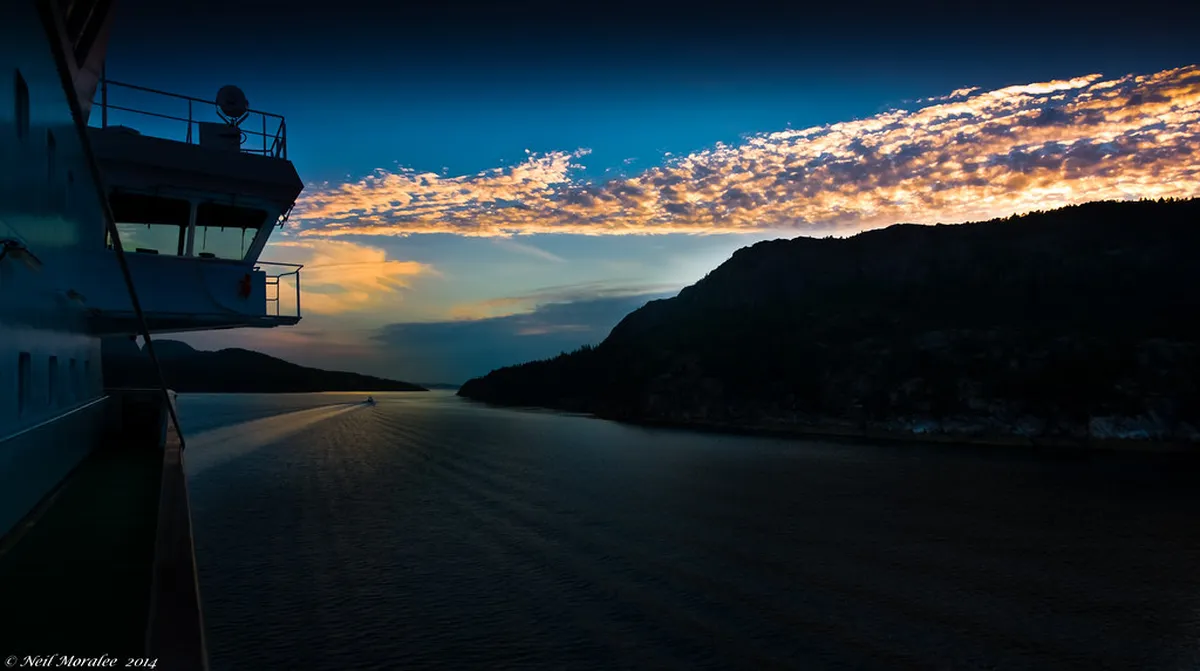
The leading Tromsø operators use purpose-built catamarans designed specifically for Norwegian fjord conditions. These vessels are wide-beamed and stable, which matters on winter days when Arctic swell makes smaller RIBs genuinely uncomfortable. Inside you will find panoramic windows, leather seating, and licensed cafes serving fresh baked goods from local bakeries. Free Wi-Fi and toilets on board mean a 3.5-hour cruise stays comfortable for families with children.
Outdoor viewing decks on both levels give everyone a clear sightline regardless of the boat's orientation. The crew positions the vessel to maximise views: when passing the Arctic Cathedral outbound, the starboard side offers the cleaner photographic angle. On the return leg the port side catches the best evening light over the Tromsøya island bridge. Ask a crew member for the current sightseeing side — they adjust based on conditions and route.
Most daytime cruises depart at 11:00 from the Nerstrandkaia dock in central Tromsø and return by 14:30. Arrive at least 20 minutes early to check in without rushing. The dock is walkable from most city-centre hotels.
Travel green in Tromsø and amplify your experience with raw nature and wildlife
Sustainable cruising in Tromsø goes beyond a marketing label. Several operators hold Norway's Eco-Lighthouse Foundation certification, which imposes strict criteria on fuel use, waste management, and wildlife interaction protocols. Hybrid-electric and fully electric catamarans now run on both the daytime fjord route and the evening Northern Lights route. Check the Best Time to Visit Tromsø: The Ultimate Seasonal Guide to plan an itinerary that pairs low-impact travel with peak wildlife activity.
The practical difference between a silent electric boat and a conventional diesel vessel is noticeable from the moment the engines cut. Engine noise drops to almost nothing, and you can hear wind, water, and seabirds clearly. Whales and sea eagles are measurably less disturbed by quiet boats, meaning wildlife sightings tend to be closer and longer-lasting. Some electric boats also carry underwater drones that give real-time video of what is happening below the hull — a feature no diesel operator offers.
Choosing a green operator is also an investment in the fjord's future. These ecosystems are already under pressure from warming water temperatures, and responsible operators actively support research and marine monitoring programmes in the region.
Old maps, dried fish and local flavours
Tromsø's relationship with the sea is encoded in its food. Traditional stockfish — dried cod hung on the wooden hjell racks that line the shoreline — has been an export staple from Northern Norway since the medieval period. From the water you can see these racks stretching along the islands, particularly visible in winter when the fish are hung to dry in the cold, dry Arctic air. Guides explain why this method of preservation made Norwegian cod famous across Europe long before refrigeration existed.
Onboard menus on the better-equipped cruises include Arctic tapas: smoked whale meat (an ethically complex but historically significant local product), dried reindeer, pickled herring, and local cheeses. Arctic cloudberries and sea buckthorn appear as condiments or desserts depending on the season. These are flavours you will not find on a restaurant menu in Oslo, let alone elsewhere in Europe.
The cultural storytelling aspect of a Tromsø fjord cruise is one of its underrated strengths. English-speaking guides typically combine landscape narration with the history of Sami sea trade, Norwegian polar exploration, and the cod economy that financed the city's early growth. Even if you choose the least food-focused cruise type, the shoreline itself is a living museum.
Chasing the Northern Lights on an Arctic Night
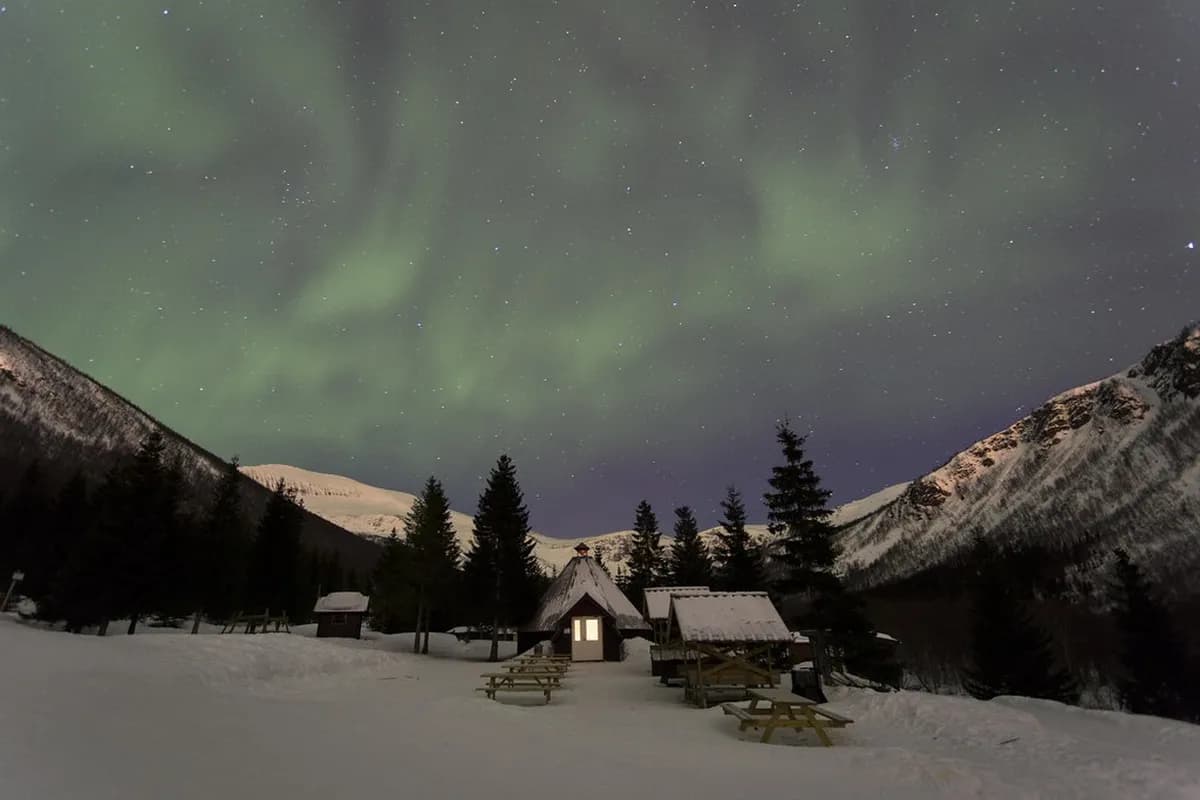
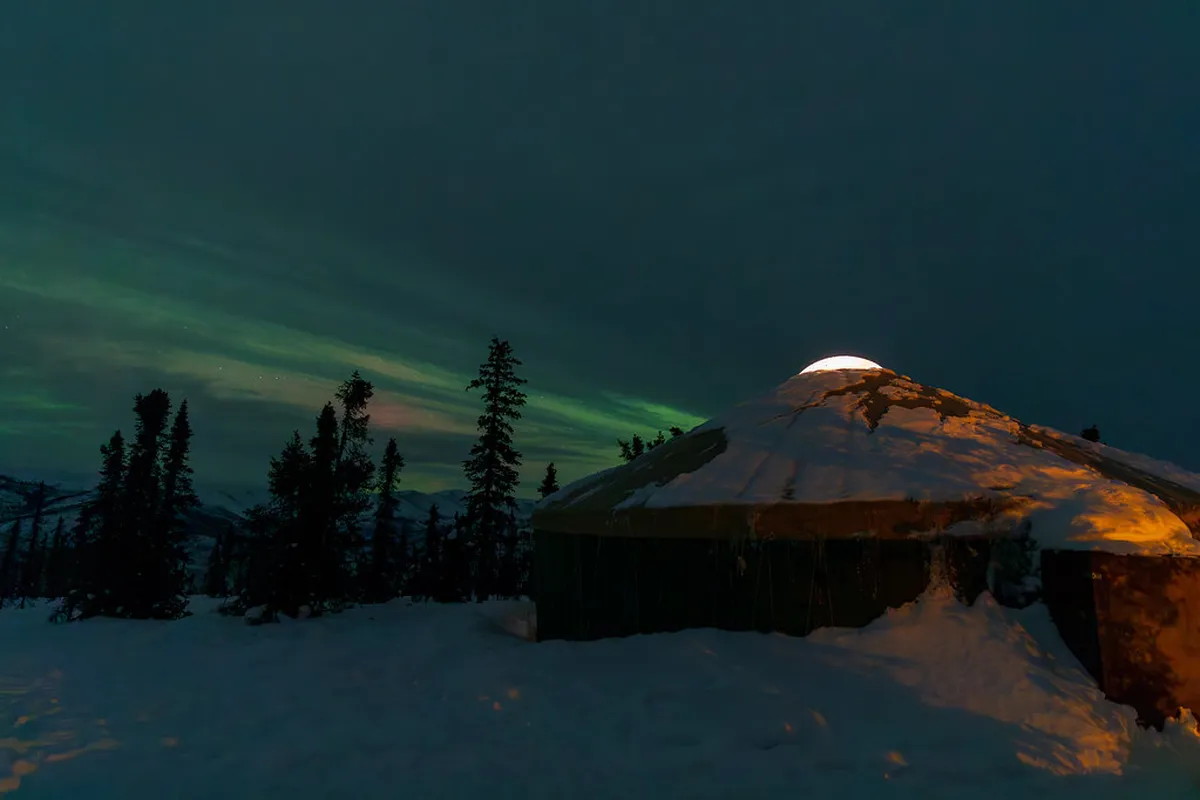
A Northern Lights cruise from Tromsø solves a problem that land-based tours cannot: cloud cover. When clouds blanket the city, driving inland is the only alternative on a land tour — and that costs hours. On a boat, the captain can navigate toward clearer skies along the fjords within a much shorter radius. This flexibility is the main reason experienced aurora-chasers often prefer the water. You can join Northern Lights tours in Tromso on catamarans that run from late September through March.
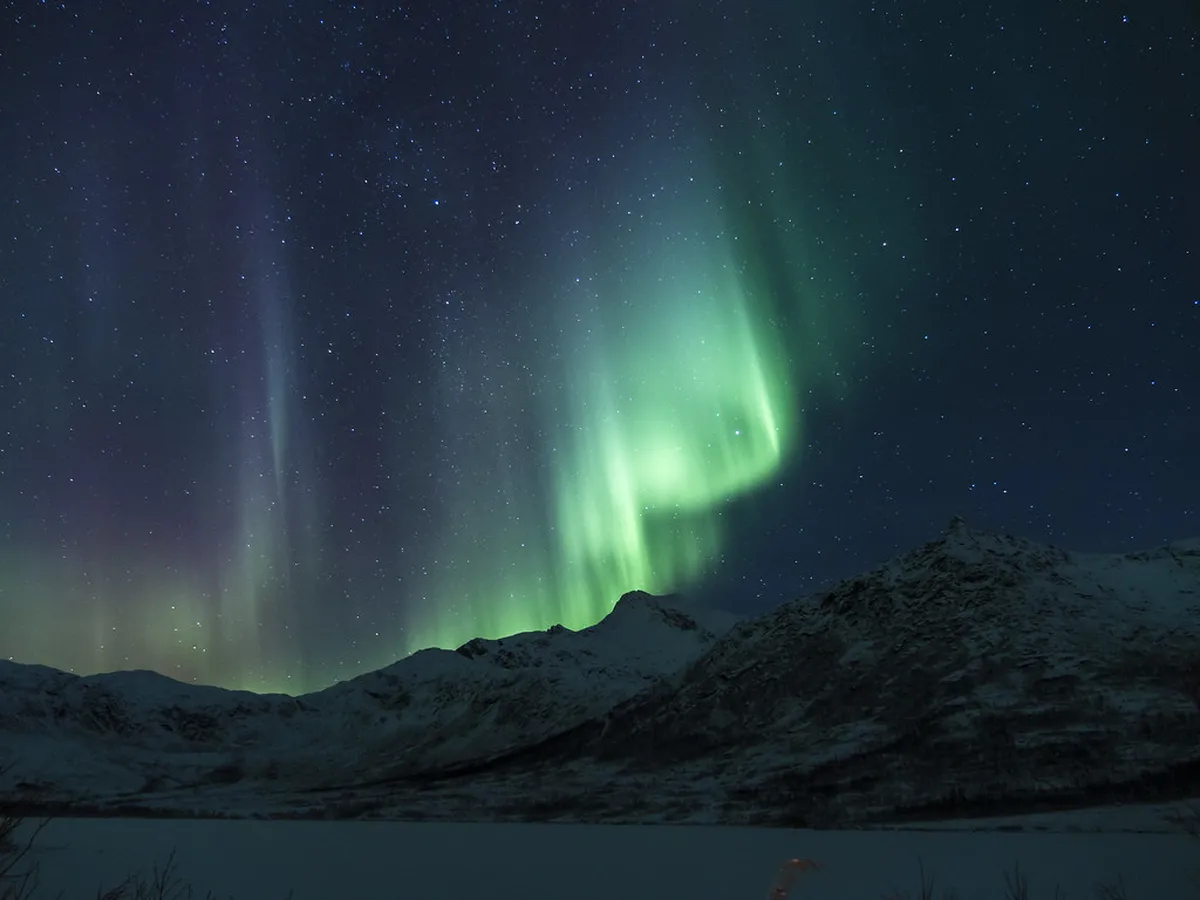
Evening cruises typically depart around 18:00 and run for three to four hours. The boat moves away from Tromsø's light pollution quickly — within 20 minutes you are in dark water surrounded by dark mountains. The warm lounge lets you wait in comfort and step outside the moment the aurora appears. Watching green or violet curtains shift above a fjord reflection, with no car noise and no other light sources, is a qualitatively different experience from standing in a field.
For photography, bring a wide-angle lens and a tripod. The boat's deck has dedicated flat rail sections for tripod placement. Note that the boat does move, so exposures longer than 10–15 seconds will introduce blur — a fast wide prime lens at f/1.8 or f/2.8 at ISO 3200–6400 works better than a slow zoom.
Olavsvern: The Cold War-era submarine base
One of the most striking landmarks visible from the fjord is Olavsvern, a NATO submarine base carved directly into the rock of Rya island. Construction began in 1967 and the base was classified top-secret for decades. Norwegian submarines and NATO vessels used the facility throughout the Cold War as a protected deep-water port — the heavy steel blast doors and reinforced tunnel entrances were designed to survive a direct attack. The Norwegian military decommissioned it in 2002, and it was controversially sold to a private company in 2008. Nearby, the iconic Arctic Cathedral (Ishavskatedralen) stands as another historic landmark visible from cruise routes.
Today the base operates as a private marina and logistics port. The cavernous main entrance, large enough to admit a full-sized submarine, remains intact and visible from the water. Guides typically slow the boat at this point and explain both the engineering story and the geopolitical logic of building a hardened base this far north — Tromsø was a critical chokepoint for any naval confrontation between NATO and the Soviet Union over control of the Arctic Ocean.
For passengers with an interest in military or Cold War history, this is one of the most genuinely rare sights available from any cruise route in Europe. No admission ticket, no museum display — just the real structure, seen from the water, explained by a guide who knows the local history in depth.
Whale safaris sell out weeks in advance during peak season (November–January). Book directly with the operator rather than through aggregators to access last-minute allocations and ask about re-cruise guarantees if wildlife sightings fail.
What to wear on an Arctic fjord cruise
Wind chill on the water drops the effective temperature well below the air temperature shown in any forecast. In mid-winter Tromsø, an air temperature of -5°C can feel like -15°C on an open deck. This catches visitors who dressed for city walking and then spent 30 minutes outside trying to photograph a sea eagle. The rule is simple: dress warmer than you think you need to, then add one more layer.
The baseline system that works across every cruise type starts with a moisture-wicking base layer (merino wool or synthetic), a mid-layer fleece or down jacket, and a fully windproof and waterproof outer shell. Extremities lose heat fastest at sea: bring thick wool or fleece gloves (liner gloves inside waterproof mittens is ideal), a hat that covers the ears fully, and a neck gaiter. Feet need insulated waterproof boots — standard winter city boots are not sufficient. Most operators provide thermal suits for whale safaris specifically, but daytime fjord cruises generally do not — arrive dressed.
Two items are consistently overlooked: hand warmers (chemical heat packs, available at Tromsø sports shops for around NOK 30–40 per pair) and anti-fog wipes for camera lenses and glasses. When you step from the warm lounge to the cold deck, condensation fogs optics instantly. A quick wipe with an anti-fog cloth prevents you from missing the one shot of the orca surfacing beside the boat.
Prices, booking and choosing the right cruise
Most tours depart from the Nerstrandkaia dock in central Tromsø. Prices in 2026 follow established tiers: a standard 3.5-hour Arctic fjord cruise costs around NOK 1,150 for adults, NOK 860 for students, and NOK 575 for children aged 4–15. Children under four travel free. Whale safaris are longer (6–8 hours) and more expensive, starting at approximately NOK 1,995 per adult. Northern Lights cruises run NOK 1,090–1,290 depending on the operator and vessel type. You can use a Tromso Itinerary: 8 Essential Planning Steps and Daily Routes to figure out which day slot works best for your broader trip.
Book directly with the operator rather than through aggregators where possible — operators hold back a small allocation of tickets for last-minute direct sales, and you can ask specific questions about accessibility and weather contingencies. The daytime fjord cruise is the lowest-risk choice for first-timers and families. Whale safaris and Northern Lights cruises involve more unpredictable conditions; most operators offer a re-cruise guarantee if sightings fail to materialise on wildlife tours.
- Classic Daytime Arctic Fjord Cruise: 3.5 hours, runs year-round (most active February–March), from NOK 1,150 adults. Best for families and first visits.
- Winter Whale Watching Safari: 6–8 hours, November to January, from NOK 1,995 adults. Orcas and humpbacks; thermal suits included.
- Arctic Northern Lights Cruise: 3–4 hours, September to March, from NOK 1,090 adults. Evening departures; warm lounge with deck access.
| Cruise Type | Duration | Season | Adult Price (NOK) | Highlights |
|---|---|---|---|---|
| Classic Daytime Fjord Cruise | 3.5 hours | Year-round (Feb–Mar most active) | 1,150 | Sea eagles, seals, mountains; best for families |
| Winter Whale Watching Safari | 6–8 hours | Nov–Jan | 1,995 | Orcas, humpbacks; thermal suits included |
| Northern Lights Cruise | 3–4 hours | Sep–Mar (evening) | 1,090–1,290 | Aurora hunting; cloud-avoidance flexibility |
Accessibility note: the gangway at Nerstrandkaia is steep during low water in February and March. Wheelchair users should contact the operator in advance — crew assist with boarding, but passengers need enough mobility to manage the incline. Attendants travel free with documentation. Prams and pushchairs face the same steep gangway and require crew assistance.
Frequently Asked Questions
Which Tromso fjord cruise options fit first-time visitors?
First-time visitors should consider a classic sightseeing cruise that departs during the day. These tours offer a great overview of the local landscape and wildlife. You can find many options near where to stay in Tromso for easy access. They usually last about three to four hours.
How much time should you plan for a Tromso fjord cruise?
Most fjord cruises in this region last between three and five hours. This time allows you to travel deep into the fjords and see the wildlife. You should arrive at the dock at least fifteen minutes before departure. This ensures a smooth boarding process for all guests.
Is a fjord cruise worth it during the Polar Night?
Yes, a fjord cruise is still very much worth it during the Polar Night. The twilight colors over the snowy mountains create a beautiful and moody atmosphere. You also have a great chance to see the Northern Lights while out on the water. It is a very peaceful experience.
What should travelers avoid when booking an Arctic boat tour?
Avoid booking your tour at the last minute during the peak winter season. Popular cruises often sell out weeks in advance when the whales are in the fjords. You should also avoid wearing thin clothing as the wind on the water is very cold. Always check the forecast.
A Tromso fjord cruise is an essential part of any trip to Northern Norway. Whether you sail in daylight to watch sea eagles hunt, wait on a quiet deck for orcas to surface, or scan a dark sky from the water for the aurora, the experience is difficult to replicate anywhere else on earth.
Remember to check out our 10 Essential Tromso Travel Tips: The Ultimate Arctic Guide before you begin your journey. These suggestions will help you prepare for the unique conditions of the Arctic environment. Every traveler should experience the beauty of the fjords at least once.
You might also like
Continue reading
More guides you'll find useful