Snowmobiling in Tromso: 9 Things to Know for Your Arctic Safari
Plan the ultimate snowmobiling trip in Tromso. Compare Camp Tamok vs. Lyngen Alps, check license requirements, and find the best tours for beginners and experts.
On this page
Snowmobiling in Tromso: 9 Things to Know for Your Arctic Safari
Snowmobiling in Tromso is one of the most accessible Arctic adventures you can book from the city center. Tours pick you up at the harbor, drive you roughly 90 minutes into the wilderness, and put you on a machine within an hour of arriving at camp. You can choose between a daytime safari through mountain valleys or an evening hunt for the Northern Lights — both options depart December through early April in 2026.
This guide covers everything you need to decide: which location to pick, how much to budget, what to wear, and what the license rules actually mean in practice. Whether you have never touched a snowmobile or you are returning for a second season, the practical details below will save you time when comparing tours.
Tours pick you up at Samuel Arnesens gate 5 near the harbor and include a 90-minute bus transfer, professional guide, thermal gear, helmet, and a hot meal inside a traditional Sámi lavvu. Most tours run 7 hours total and are available December to early April.
Camp Tamok vs. Lyngen Alps: Choosing Your Route
The two main snowmobiling hubs around Tromsø offer very different terrain, and picking the right one depends on what you want from the day. Camp Tamok sits about 90 minutes south of the city on the E8 highway. It occupies a sheltered inland valley system — Tamokdalen, Vassdalen, and Finndalen — where the mountains block coastal winds and the snowpack builds reliably from late November. This stable microclimate makes Tamok the most consistent choice for beginners and the main reason most operators base their flagship tours there. Visit Tromsø's official site lists the full range of guided options available at this popular basecamp.
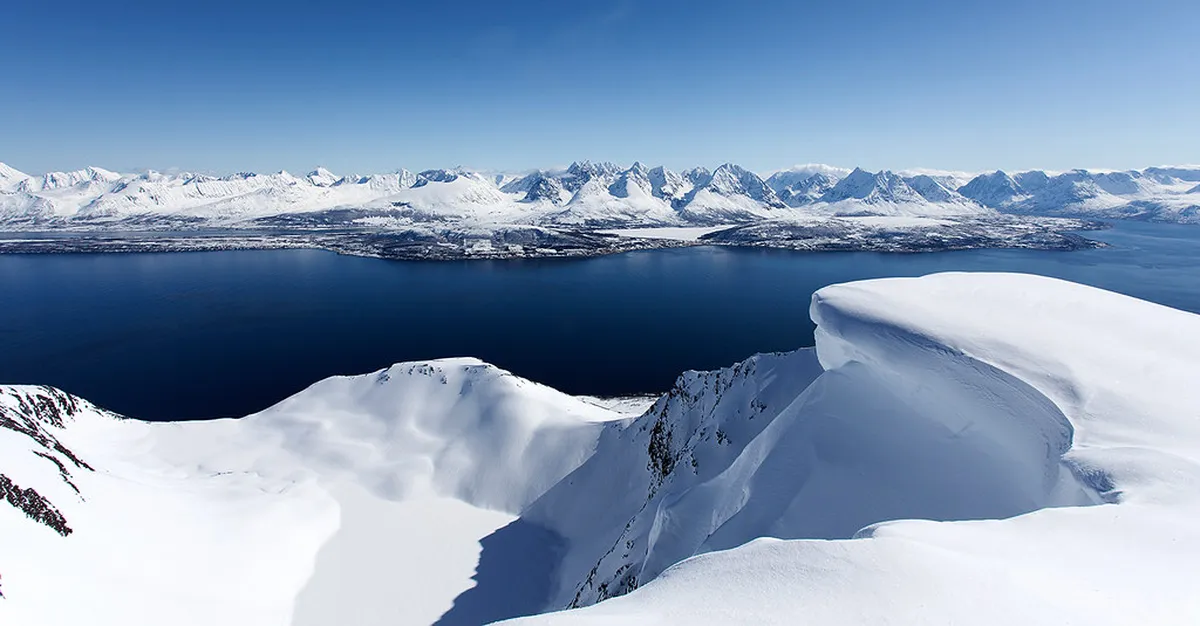
The Lyngen Alps from Tromso sit to the east and require a bus transfer plus a short ferry crossing from Breivikeidet to Svensby. Aurora Wonderland Basecamp meets you on the far side. The payoff is dramatic coastal scenery — the snowmobile trail runs alongside peaks such as Trollvasstinden and Jægervasstinden, with frozen lakes like Jægervatnet below. The terrain is steeper and more exposed than Tamok, which means the views are more cinematic but conditions can be less predictable on stormy days.
A useful rule: if you want guaranteed snow and a relaxed first experience, choose Tamok. If you want mountain grandeur and do not mind the extra logistics, Lyngen delivers scenery that is hard to match anywhere else in Northern Norway. Visit Norway's Arctic guides describe the Lyngen peaks as among the region's most dramatic. Both hubs finish the day with a warm meal and a return transfer to the city.
| Tour type | Duration | Approx. price (per person) | Scenery focus |
|---|---|---|---|
| Daytime Camp Tamok | 7 hours | 2,000–2,800 NOK | Valley forests, mountain plateaus |
| Evening Camp Tamok (aurora) | 7 hours | 2,000–2,800 NOK | Dark sky, Northern Lights chances |
| Lyngen Alps day tour | 7–8 hours | 2,500–3,500 NOK | Fjord views, steep coastal peaks |
| Overnight Lyngen (glass igloo) | Multi-day | From 4,500 NOK | Lyngen peaks + aurora sleeping experience |
Top Snowmobile Tours and Safaris from Tromsø
The daytime Camp Tamok safari is the most popular snowmobile tour in Tromsø and runs from 1 December 2025 to 6 April 2026. Pick-up is at Samuel Arnesens gate 5 near the harbor. After the 90-minute bus transfer you receive a safety briefing, are fitted with thermal gear and a helmet, then spend several hours riding through the valley before a hot meal inside a traditional Sámi lavvu. The pace is relaxed enough for complete beginners while still covering enough ground to feel like a genuine expedition.
The evening tour at Camp Tamok follows the same schedule but departs later so that darkness falls while you are out on the trail — giving you a realistic shot at the Northern Lights in Tromso. Guides stop at open viewpoints away from any camp lighting to maximize visibility. During high season the ride and lavvu dinner may be swapped in order depending on group size, so confirm the schedule when you book.
The Lyngen Alps guided tour includes the ferry crossing in the ticket price. You board the bus at Tromsø Havn Prostneset, take the ferry from Breivikeidet to Svensby, and are collected by Aurora Wonderland for the ride to base camp. The overnight variant adds a night in a glass igloo or crystal lavvu, a traditional Norwegian breakfast, and departure the following morning — making it the most complete Arctic package available from Tromsø in 2026. Check the full list of available snowmobile tours for live departure dates and pricing.
Driver's License Rules and the Passenger Option
A valid Category B car driver's license is required to operate a snowmobile on any guided tour in Norway. This is a legal requirement, not a formality — guides check your physical card before the safety briefing begins. Digital copies stored on your phone are generally not accepted, so carry the original. If you leave your license at the hotel, you will be assigned the passenger seat for the entire day with no refund on the price difference.
Travelers without a license can ride as a passenger behind a licensed driver. On shared machines, two adults take turns: if both hold licenses, you swap at a designated midway stop. If only one person in a pair holds a license, that person drives the full route while the other rides behind. Solo travelers without licenses are paired with another solo participant or slotted behind a guide — operators handle this at check-in, so you do not need to arrange it in advance.
Children can join as passengers if they meet minimum age and height requirements, which vary by operator but typically start around seven to ten years old. Some operators provide a dedicated safety sled towed by the guide's machine for younger children who cannot sit on the main snowmobile. Confirm the age policy with your specific operator when booking because rules differ between Camp Tamok and Lyngen providers.
Risks, Requirements, and Safety Regulations
Snowmobiling is one of the higher-risk activities available in Tromsø, but the risk is well-managed on guided tours if you follow instructions. The mandatory safety briefing at camp covers throttle control, braking distance, hand signals, and the procedure if your machine gets stuck in deep snow. Listen carefully — guides will not repeat the briefing on the trail. Arriving already knowing the basics makes the briefing land faster and gives you more confidence when you pull away from the start line.
Pregnant travelers are not permitted on snowmobile trails. Drivers must be at least 18 years old and physically able-bodied. If you may need to help push the snowmobile out of a drift, a basic level of fitness is required.
Drivers must be at least 18 years old and physically able-bodied. Pregnant travelers are not permitted on the trail. A basic level of fitness is needed not because the riding itself is strenuous but because you may need to help push the snowmobile out of a drift — this happens occasionally even on well-maintained routes. Speed limits are set by the guide and strictly enforced to protect both riders and the fragile Arctic terrain.
Stay on marked trails at all times. Venturing off-piste risks breaking through ice over frozen water bodies or triggering a snowslide on steep slopes. Follow the rider in front at a safe distance and never overtake unless the guide signals that it is safe to do so. If you feel uncertain at any point, slow down and raise your hand — guides check behind them regularly and will wait.
Best Season and Timing for Snowmobiling
The snowmobiling season in Tromsø runs from early December through late March or early April. Snow conditions are most reliable from mid-January when the base layer has fully consolidated on the inland trails. December tours operate under polar night — the sun does not rise above the horizon — which creates an otherworldly atmosphere but limits mountain scenery visibility during the day. Yr.no's Arctic forecasts help you plan based on current snow depth and weather patterns.
February and March each have a distinct character worth understanding before you book. February offers the deepest snowpack of the season and the longest polar or near-polar nights, which maximizes your chances of Northern Lights on an evening tour. The trade-off is very short or absent daylight, so daytime riders see the landscape under a blue twilight rather than direct sunlight. March brings the return of the sun: by mid-March Tromsø sees five or six hours of proper daylight, the light on the mountains is spectacular, and temperatures begin to moderate slightly. Snow is still deep at elevation even as lower trails soften. If you want dramatic mountain photographs, March is the better month. If aurora is your primary goal, late January or February gives you the longest viewing windows each night.
Visiting in March is often considered the best time to visit Tromso for outdoor activities because you get a genuine taste of both winter and Arctic spring in a single trip. Late April can still offer riding at higher elevations on multi-day Lyngen itineraries, though most Camp Tamok tours close by early April as valley snow becomes patchy.
Essential Equipment and What to Wear
Tour operators provide the core kit: a heavy-duty thermal suit, insulated boots, a safety helmet with a full facemask, and mittens. The provided suit is designed for sustained Arctic exposure and will almost certainly be warmer than anything you packed from home. Wear it over your own layers rather than instead of them — the combination is what keeps you comfortable over a seven-hour outing.
Base layers in high-quality merino wool are the single most important thing you bring yourself. Wool regulates temperature and stays warm when damp; cotton does neither. Pack thin wool socks that fit inside the provided boots without bunching, and bring a neck gaiter for the gap between helmet and suit collar. If you wear glasses, ask about helmet-and-facemask combinations when you book — most Camp Tamok operators use full-face helmets that accommodate glasses without goggles.
- Bring: merino base layers (top and bottom), thin wool socks, neck gaiter, hand warmers as backup, personal balaclava if you prefer your own
- Provided: outer thermal suit, insulated boots, helmet, mittens
- Leave at camp: city shoes, heavy backpack, anything fragile — operators have storage areas
- Keep accessible: camera or phone in a chest or arm pocket, not a bag on your back
One practical detail that guides do not always mention: the driver's handlebars on most machines have heated grips. Ask about them during the briefing if your hands get cold — the switch is usually on the left handlebar pod. This does not help the passenger, who should prioritize hand warmers and keeping mittens on at all times regardless of how warm it feels at camp before departure.
Base layers in high-quality merino wool are the single most important thing you bring yourself. Wool regulates temperature and stays warm when damp, and combining your layers with the provided thermal suit is what keeps you comfortable over a seven-hour outing.
Prices and Budgeting for Your Arctic Adventure
Standard Camp Tamok safaris (both daytime and evening) cost roughly 2,000–2,800 NOK per person in 2026, which works out to approximately 175–250 EUR at current exchange rates. That price includes the bus transfer from the city harbor, all thermal gear, a professional guide, and a hot meal at camp. The Lyngen Alps day tour costs 2,500–3,500 NOK per person given the additional logistics of the ferry and the longer travel time each way.
Most tours are priced for two people sharing one snowmobile and swapping the driver seat. If you want your own machine for the full route, a single-rider supplement is available from most operators — expect to add 500–800 NOK to the base price. The overnight Lyngen option with a glass igloo stay starts from around 4,500 NOK per person and books out months in advance during the Christmas and February school holiday windows.
The total Tromso travel cost impact of a snowmobile safari is significant but the price reflects real costs: fuel, machine maintenance in sub-zero temperatures, guide wages, and remote logistics. Booking directly with the operator or through established platforms at least four to six weeks ahead secures the best availability, especially for February and the first week of March which are the busiest weeks of the winter season.
Practical Tips: How to Drive a Snowmobile
Modern tour snowmobiles use a thumb throttle on the right handlebar and a hand-brake lever on the left. The transmission is fully automatic, so there are no gears to worry about. The main physical skill you need is weight distribution: lean your upper body toward the inside of a corner to help the skis grip and steer. On straight sections, keep your weight centred and your arms relaxed — gripping too tightly causes fatigue within the first hour.
Keep both feet planted on the running boards at all times when moving. On uphill sections, shift your weight slightly forward to help the tracks maintain traction. On steep descents, ease the throttle and let engine braking do most of the work rather than squeezing the hand brake hard, which can lock the skis on icy sections. Maintain at least one full snowmobile length of gap between yourself and the rider ahead.
If your machine bogs down in deep powder, do not gun the throttle — this digs the track deeper. Instead, gently rock the snowmobile forward and back with your body weight while applying light throttle pulses. Guides will help, but knowing this technique means you will rarely need to wait more than thirty seconds to free yourself and catch up with the group.
Life in the Arctic: What to Expect Beyond the Sled
Every tour ends at a warm base camp where a hot meal is served. At Camp Tamok this is typically Bidos — a traditional Sámi reindeer stew — served inside a lavvu around an open fire. The lavvu is the social centre of the experience, and the hour you spend there eating and warming up is often what travelers remember most clearly. Guides use this time to explain Sámi culture and the history of nomadic reindeer herding in this part of Norway.
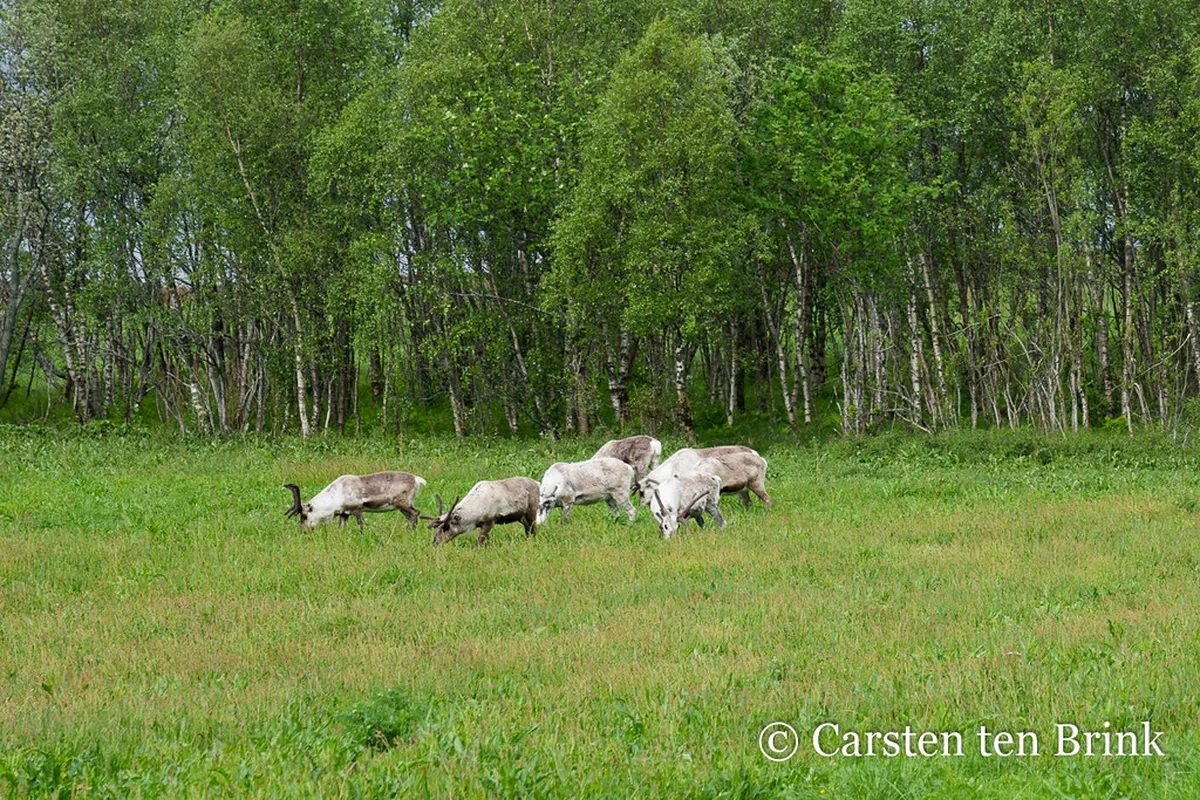
The silence outside during a trail stop is unlike anything most visitors have encountered before. When guides cut the engines at a mountain viewpoint, the only sounds are wind and the occasional call of a raven or mountain hare crossing the trail. Keep an eye on the treeline during low-speed sections for reindeer, moose, and arctic fox, all of which are regularly spotted on Tamok valley routes.
If you are looking at how to combine the safari with other winter activities on the same trip, snowmobiling in Tromso pairs naturally with a dog sledding morning the day before — the two activities cover different terrain and appeal to the same traveler. You will return to the city in the early to mid-afternoon on most tours, leaving the evening free for a Northern Lights chase or a meal at one of Tromsø's harbor restaurants. Learning how to get to the trailheads is straightforward because all transfers are included — details on city logistics can be found in our guide on how to get to Tromso.
Frequently Asked Questions
Do you need a driver's license to snowmobile in Tromso?
Yes, you must have a valid Category B car driver's license to drive a snowmobile in Norway. This is a legal requirement enforced by all tour operators. If you do not have a license, you can still participate as a passenger on a shared sled or with a guide. Check Tromso travel tips for more advice.
Is March a good time to visit Tromsø for snowmobiling?
March is an excellent time for snowmobiling because it offers deep snow and longer daylight hours. The weather is typically more stable than in mid-winter, providing better visibility for mountain views. You also have a great chance of seeing the Northern Lights during the evenings in March.
How much does a snowmobile tour in Tromso cost?
A standard snowmobile safari usually costs between 2,000 and 3,500 NOK per person. This price includes professional guides, thermal clothing, round-trip transportation from the city, and a hot meal. Single-rider upgrades or private tours will increase the total cost of the experience.
Can children go snowmobiling in Norway?
Children can participate in snowmobile tours as passengers if they meet the age and height requirements set by the operator. Most tours require children to be at least seven years old to sit behind an adult. Some operators provide specialized sleds pulled by the guide's snowmobile for younger kids.
What is the difference between a snowmobile safari and a tour?
In Tromso, the terms safari and tour are often used interchangeably to describe guided snowmobiling trips. A safari usually implies a focus on wildlife and nature exploration in remote wilderness areas. Both options include safety briefings, professional equipment, and transportation from the city center.
Snowmobiling in Tromso is a must-do activity for anyone seeking a mix of adrenaline and natural beauty in the Arctic. Whether you choose the inland valleys of Camp Tamok or the coastal peaks of Lyngen, the scenery will leave you speechless. Remember to bring your driver's license and dress in warm wool layers to ensure a comfortable and safe adventure.
Booking your tour in advance will help you secure a spot during the busy winter months in Northern Norway. The combination of high-speed riding and peaceful wilderness stops creates a perfectly balanced Arctic experience for every traveler. Prepare to create lasting memories as you navigate the snowy trails of this incredible polar destination.
You might also like
Continue reading
More guides you'll find useful