Tromso Weather by Month: A Guide to Seasons & Daylight
Plan your trip with our Tromso weather by month guide. Discover average temperatures, daylight hours for the Midnight Sun, and the best time for Northern Lights.
On this page
Tromso Weather by Month
Tromsø sits 350 kilometres above the Arctic Circle, yet the Norwegian Sea's Gulf Stream keeps it far milder than most places at this latitude. Average winter temperatures hover around -4°C (25°F) rather than the -20°C extremes you might expect. What the city lacks in extreme cold it makes up for in dramatic daylight shifts — from zero sun for seven weeks in winter to 24-hour daylight for two months in summer. Understanding those shifts month by month is the real key to planning your trip.
This guide covers every month with hard temperature and precipitation numbers, a full daylight table, and specific activity windows. It also explains why the city's coastal weather and the inland valleys can differ sharply on the same day — a fact that matters most for Northern Lights hunters. Use the monthly breakdown and the best-time recommendations to decide exactly when to book.
Tromsø Weather at a Glance
Tromsø has a subarctic oceanic climate. The Norwegian Sea prevents hard freezes, keeping January averages around -3°C (27°F) and July averages near 13°C (55°F). Annual precipitation totals roughly 1,358 mm (53 in), making it considerably wetter than Oslo. Rain or snow falls on more than half the days in any given month, so waterproof gear is non-negotiable regardless of season.
Four distinct seasons define the year, but the boundaries between them are blurry. Winter stretches from December through March, spring covers April and May, summer runs June to August, and autumn fills September to November. The two most dramatic shifts are not temperature-driven but light-driven: Polar Night from late November to mid-January, and Midnight Sun from late May to late July. Both affect mood, activity timing, and tour availability more than any thermometer reading.
Coastal winds amplify cold in winter and cap warmth in summer. Humidity stays high year-round because of the surrounding fjords. Cloud cover is frequent, which has direct consequences for Aurora viewing — a point covered in detail in the winter section below. Checking the Tromsø travel tips before you go will help you read local forecasts accurately.
Coastal cloud traps moist maritime air over Tromsø city while inland valleys 50+ km east (Skibotn, Lyngen) often have clear skies simultaneously. Serious Aurora hunters plan to be mobile: check real-time forecasts for the E8 valley and book chase tours rather than watching from a hotel balcony.
Winter in Tromsø (December–March): Snow and Northern Lights
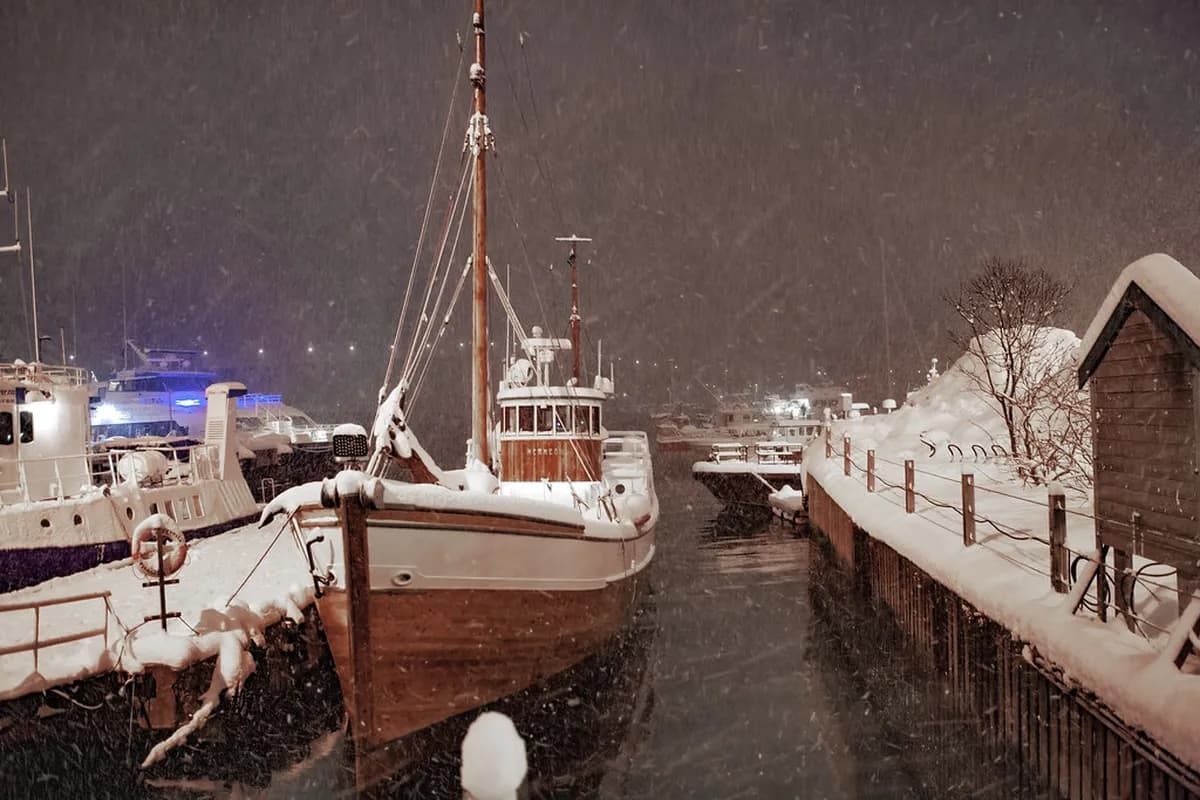
Winter is Tromsø's busiest tourist season, driven entirely by the Aurora Borealis. Polar Night begins around 27 November and ends on 15 January, during which the sun never clears the horizon. In its place, a deep blue twilight lasts two to three hours around noon — moody and photogenic, but not daylight. Once the sun returns in mid-January, it stays low and golden, casting long shadows across snow-covered rooftops.
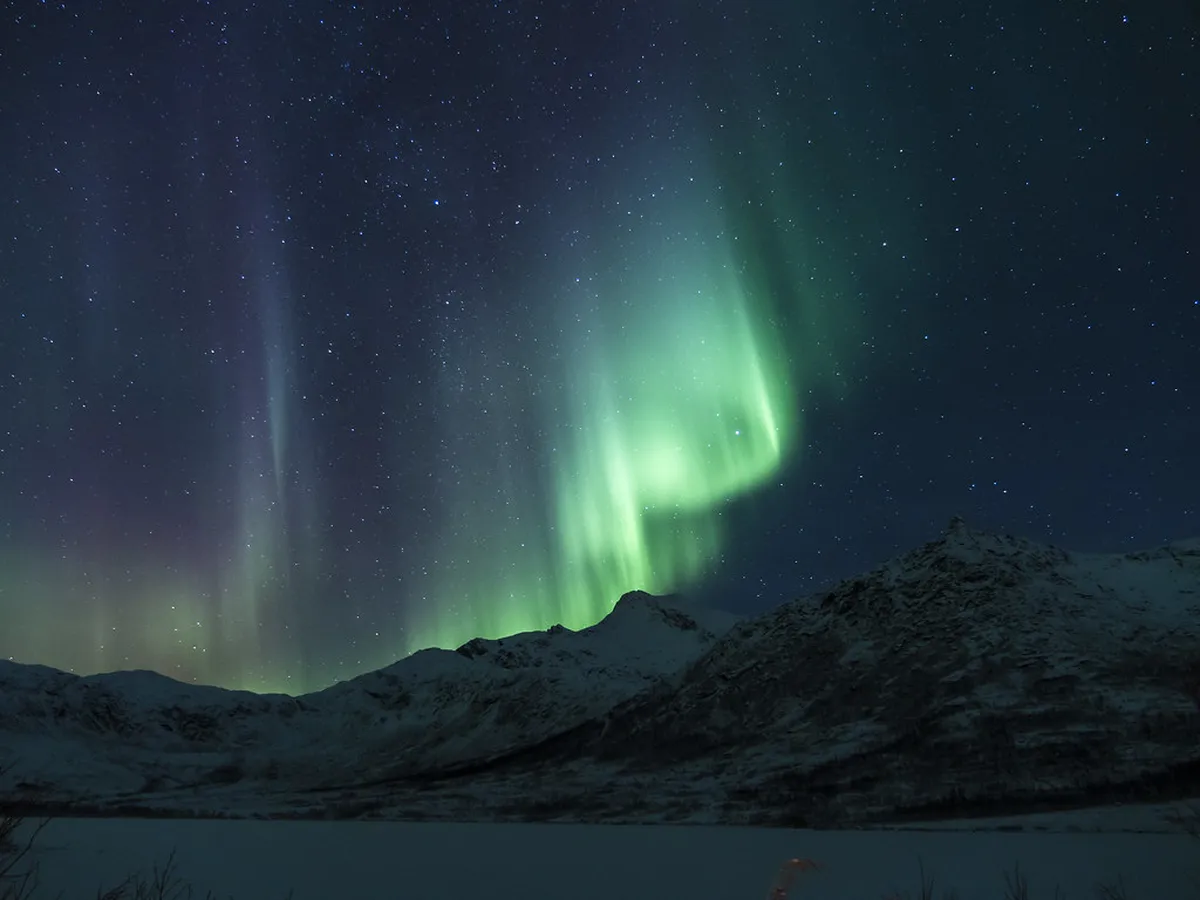
Temperatures in December and January average -3°C to -4°C (25°F to 27°F) in the city. February is slightly colder on the exposed coast, while March begins warming. Snowfall is consistent from December through March, with snow depth typically peaking in March. That peak makes March the prime month for dog sledding, snowshoeing, and ski touring in the Lyngen Alps.
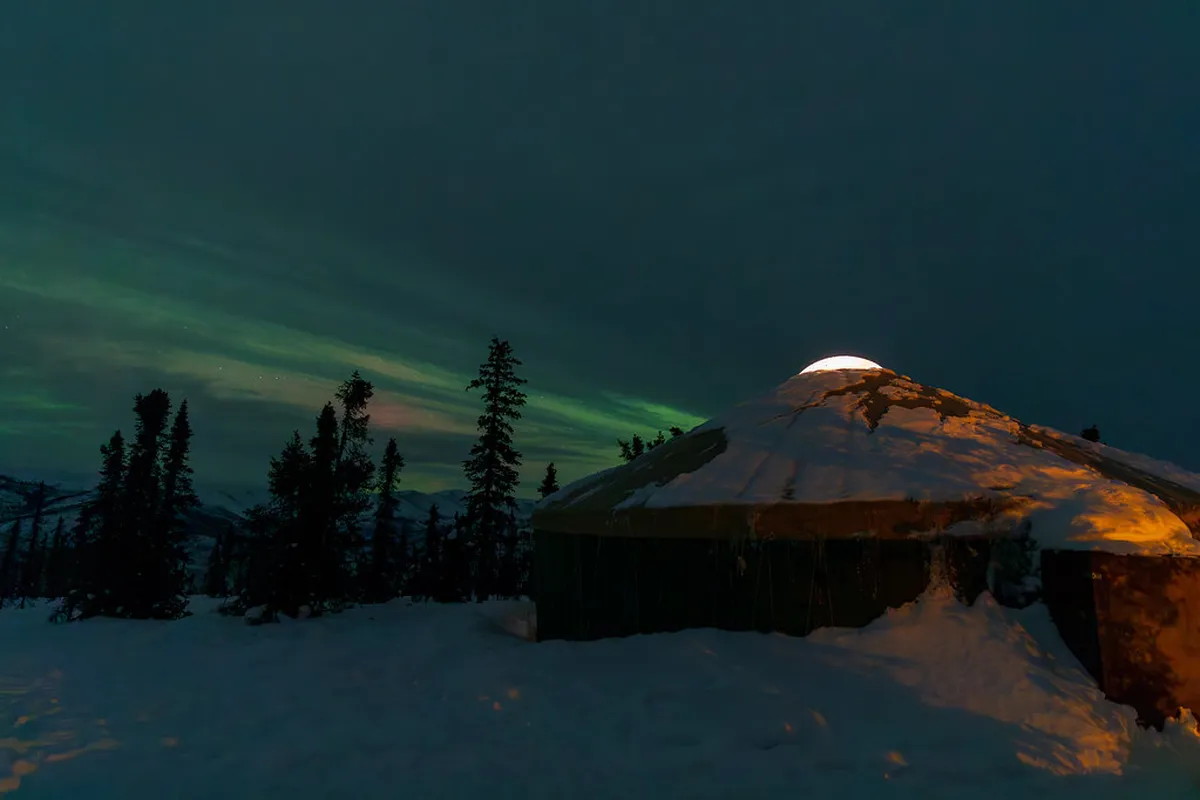
Aurora activity is statistically strongest in February and March when nights are fully dark but temperatures are marginally more comfortable than January. However, cloud cover from the Norwegian Sea blocks the sky on most nights in the city. Local guides routinely drive toward Skibotn or the Kvaløya valleys to escape the coastal cloud layer — a strategy described in detail in the microclimate section below. Always check the local forecast and book a chase tour rather than watching from a hotel balcony.
January and February are the coldest months, but -4°C (25°F) is manageable with proper layering. Tour operators provide full thermal suits on overnight excursions. Wind chill is the real threat: exposed skin on the open coast can freeze within minutes in a strong north wind. Pack Yaktrax or screw-in boot spikes for the city's icy pavements, where black ice forms under packed snow.
Spring in Tromsø (April–May): The Great Thaw
Spring arrives fast and messily. Daylight grows by five to seven minutes per day in April, and by mid-May the sun is up past 23:00. Snow begins melting at sea level in April, but refreezes overnight, creating icy mornings followed by slushy afternoons. Locals have a word for this: slapseføre, meaning slushy road conditions. Pack tall, fully waterproof boots — not just water-resistant ones — if you visit between late March and mid-May.
Average temperatures rise from 0°C (32°F) in early April to around 7°C (45°F) by late May. Precipitation falls mostly as rain rather than snow at sea level, though the mountains stay white into June. April still receives around 97 mm (3.8 in) of precipitation according to historical climate data, so you cannot rely on dry days. The city is quiet in April and May, with accommodation prices noticeably lower than the winter peak.
The Midnight Sun officially begins on 20 May and the last Aurora-possible nights fall in mid-April when darkness is still sufficient. Early April is therefore a niche sweet spot: you can potentially see both the Northern Lights and long Arctic evenings within the same week. Lower-elevation trails on Tromsdalstinden become accessible from late May, and migratory seabirds return to the coastal cliffs. Spring is the best season for budget travelers willing to trade predictable weather for significant savings.
Summer in Tromsø (June–August): The Midnight Sun
The Midnight Sun runs from 20 May until 22 July. The sun does not set at all during this period, and even after it returns to briefly dipping below the horizon in late July, civil twilight means the sky never truly darkens. July is the warmest month with average highs of 17°C (63°F), though rare warm spells can briefly push temperatures toward 20°C (68°F). A light fleece or windproof jacket remains necessary for coastal evenings.
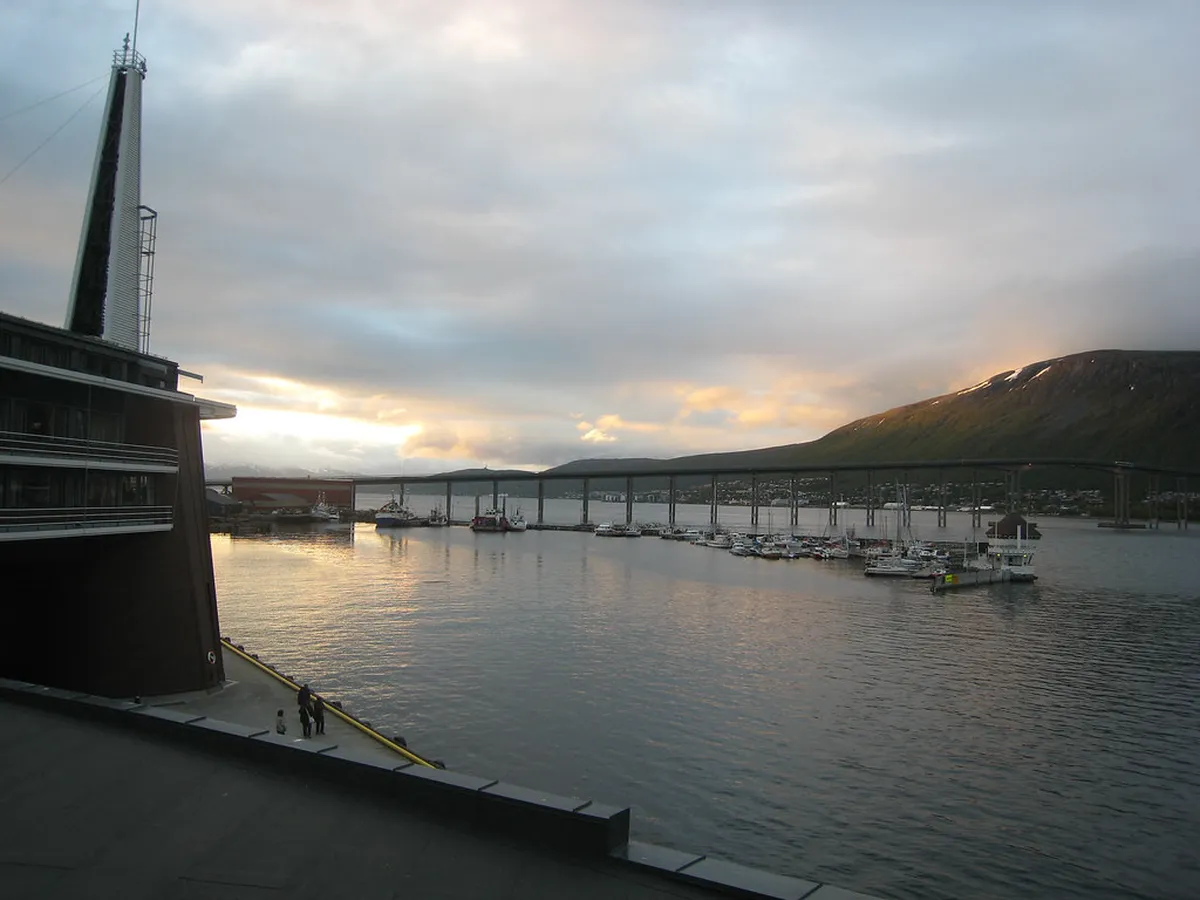
July is also the wettest summer month, averaging 102 mm (4 in) of rain. August tends to be drier and is preferred by hikers. The trails on Tromsdalstinden and in the Lyngen Alps are snow-free and accessible throughout summer. Kayaking, cycling, and fjord cruises all operate at full capacity from June to August. Boat tours to Sommarøy and around Senja island offer some of the most dramatic Arctic coastline scenery in Norway.
Summer crowds are significant but lighter than the winter Northern Lights peak. Accommodation is in high demand and prices reflect that. Book well in advance if you want specific hotels or guided wilderness trips. The city buzzes with festivals and outdoor events through July and August, and the waterfront stays lively until well past midnight. The constant daylight takes adjustment — bring a good eye mask.
Autumn in Tromsø (September–November): Rain and First Snow
Autumn is Tromsø's wettest season. September is the single rainiest month, averaging 141 mm (5.6 in) of precipitation. Temperatures drop from around 10°C (50°F) in early September to 1°C (34°F) by late November. The foliage peaks in early October, when birch trees on the hillsides turn orange and gold before the first significant snowfall strips the leaves.
The Northern Lights return to view in late August as nights grow dark enough. September and October offer a compelling proposition: Aurora chasing without the extreme cold of winter, still above 2°C (36°F) on most nights. However, the high rainfall also means more cloud cover than winter, which directly suppresses visibility. The pattern that locals know well is this: after a heavy rain system passes, the sky often clears sharply for 12 to 24 hours, producing some of the strongest Aurora displays of the season. Watch forecasts closely and be ready to move quickly on a clear night.
First snowfall at sea level typically arrives in late October or early November. Mountain peaks get their first dusting in September. Whale watching tours begin operating in November, tracking herring migrations into the fjords. Some summer-only tours and coastal ferry routes reduce frequency in November, so verify schedules before booking. Waterproof outer layers are more critical in autumn than warmth — the temperatures are manageable, but persistent rain will exhaust any non-waterproof shell within an hour.
Monthly Temperature and Precipitation Breakdown
The table below shows average daily high and low temperatures in Celsius and Fahrenheit, plus monthly precipitation totals, based on long-term historical averages from WeatherSpark and Weather and Climate data for Tromsø. Use it as a planning baseline — individual years vary, and coastal weather changes fast.
| Month | Avg High | Avg Low | Precipitation |
|---|---|---|---|
| January | -1°C (30°F) | -6°C (21°F) | 95 mm (3.7 in) |
| February | -1°C (30°F) | -7°C (19°F) | 89 mm (3.5 in) |
| March | 1°C (34°F) | -5°C (23°F) | 79 mm (3.1 in) |
| April | 4°C (39°F) | -1°C (30°F) | 97 mm (3.8 in) |
| May | 9°C (48°F) | 3°C (37°F) | 61 mm (2.4 in) |
| June | 14°C (57°F) | 7°C (45°F) | 68 mm (2.7 in) |
| July | 17°C (63°F) | 10°C (50°F) | 102 mm (4.0 in) |
| August | 16°C (61°F) | 9°C (48°F) | 90 mm (3.5 in) |
| September | 11°C (52°F) | 5°C (41°F) | 141 mm (5.6 in) |
| October | 6°C (43°F) | 1°C (34°F) | 129 mm (5.1 in) |
| November | 1°C (34°F) | -3°C (27°F) | 114 mm (4.5 in) |
| December | -1°C (30°F) | -5°C (23°F) | 103 mm (4.1 in) |
May is the driest month overall, which partly explains why it has the highest sunshine hours despite not being the warmest. December gets zero hours of direct sunlight due to the Polar Night. September's high precipitation makes it the statistically worst month for clear skies, yet it remains popular because Aurora hunting is possible and temperatures stay above freezing.
Tromsø's coastal moisture means rain or snow falls on more than half the days in any given month. Pack a fully waterproof shell (not just water-resistant) with sealed seams for every season. In April–May, tall waterproof boots with Yaktrax or screw-in spikes are essential for slushy conditions (slapseføre) on icy pavements — glazed ice forms under packed snow and black ice is a real hazard.
Daylight Hours: From Polar Night to 24-Hour Sun
No other climate factor shapes a Tromsø trip more decisively than daylight. The table below shows approximate sunrise, sunset, and total daylight on the 15th of each month. Times are local Norwegian time (CET in winter, CEST in summer).
| Month (15th) | Sunrise | Sunset | Daylight | Notes |
|---|---|---|---|---|
| January | — | — | ~2 h twilight | Polar Night; sun below horizon |
| February | 08:54 | 14:35 | ~5 h 40 min | Sun returns mid-January |
| March | 07:12 | 17:15 | ~10 h | Rapid gain; golden blue hour light |
| April | 05:08 | 19:38 | ~14 h 30 min | Long evenings; snow still on ground |
| May | 02:19 | 22:49 | ~20 h 30 min | Midnight Sun starts 20 May |
| June | — | — | 24 h | Continuous daylight |
| July | — | — | 24 h until 22 Jul | Sun returns to setting after 22 Jul |
| August | 03:09 | 22:00 | ~18 h 50 min | Nights begin returning |
| September | 05:28 | 19:28 | ~14 h | Aurora possible from late August |
| October | 07:45 | 16:55 | ~9 h 10 min | Dark evenings; good Aurora window |
| November | 09:52 | 13:45 | ~3 h 50 min | Approaching Polar Night |
| December | — | — | ~1 h twilight | Deep Polar Night; 0 h sunshine |
The rapid swing from 2 hours of twilight in January to 24-hour sun by June happens in just five months. March stands out as a transitional gem: around 10 hours of daylight with low sun angles that produce a long blue-and-golden hour lasting most of the morning. Photographers particularly prize late March for this reason — the snow is still deep, the light is warm, and darkness still falls early enough for Aurora photography. Real-time observations from UiT's Arctic observatory document these seasonal transitions in detail.
City vs. Inland: Why Aurora Hunters Leave Tromsø
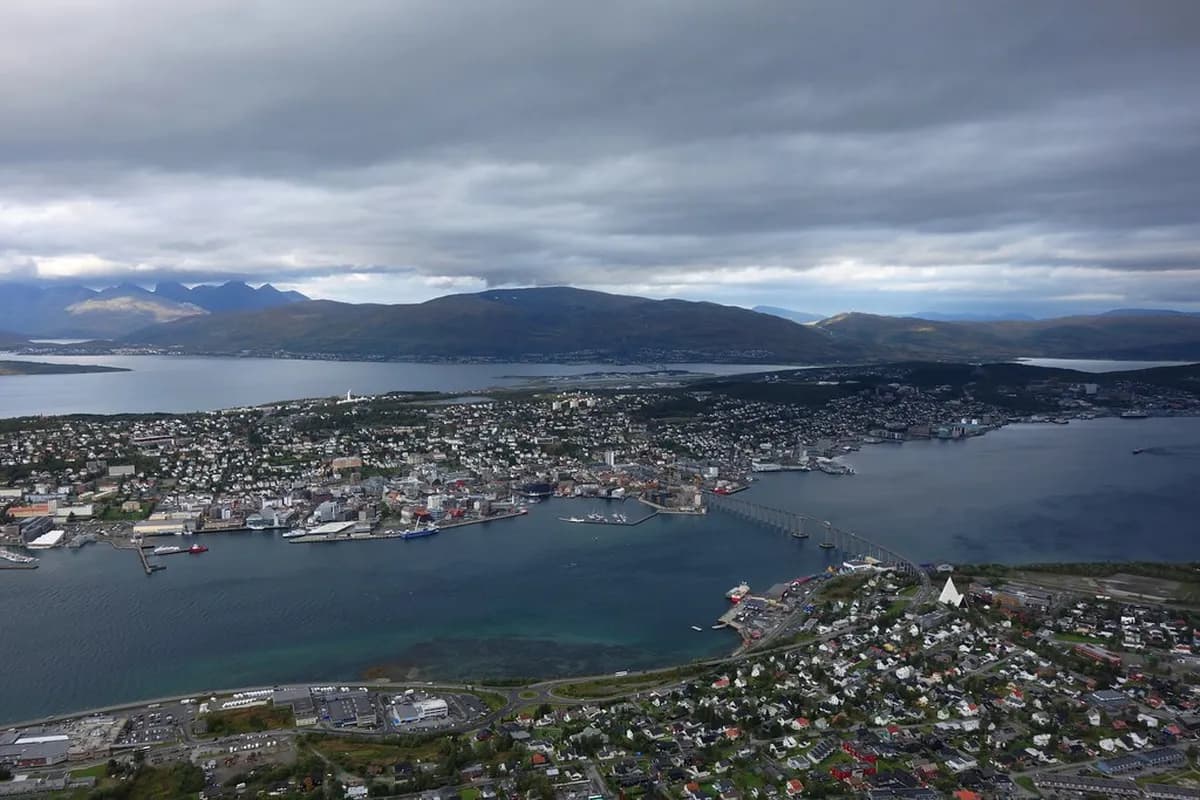
Tromsø sits in a narrow fjord corridor flanked by islands. That geography traps moist maritime air from the Norwegian Sea, which means the city regularly sits under cloud when the sky is clear just 50 kilometres inland. Local tour guides call this the coastal shadow effect: the city gets the moisture, the inland valleys get the view.
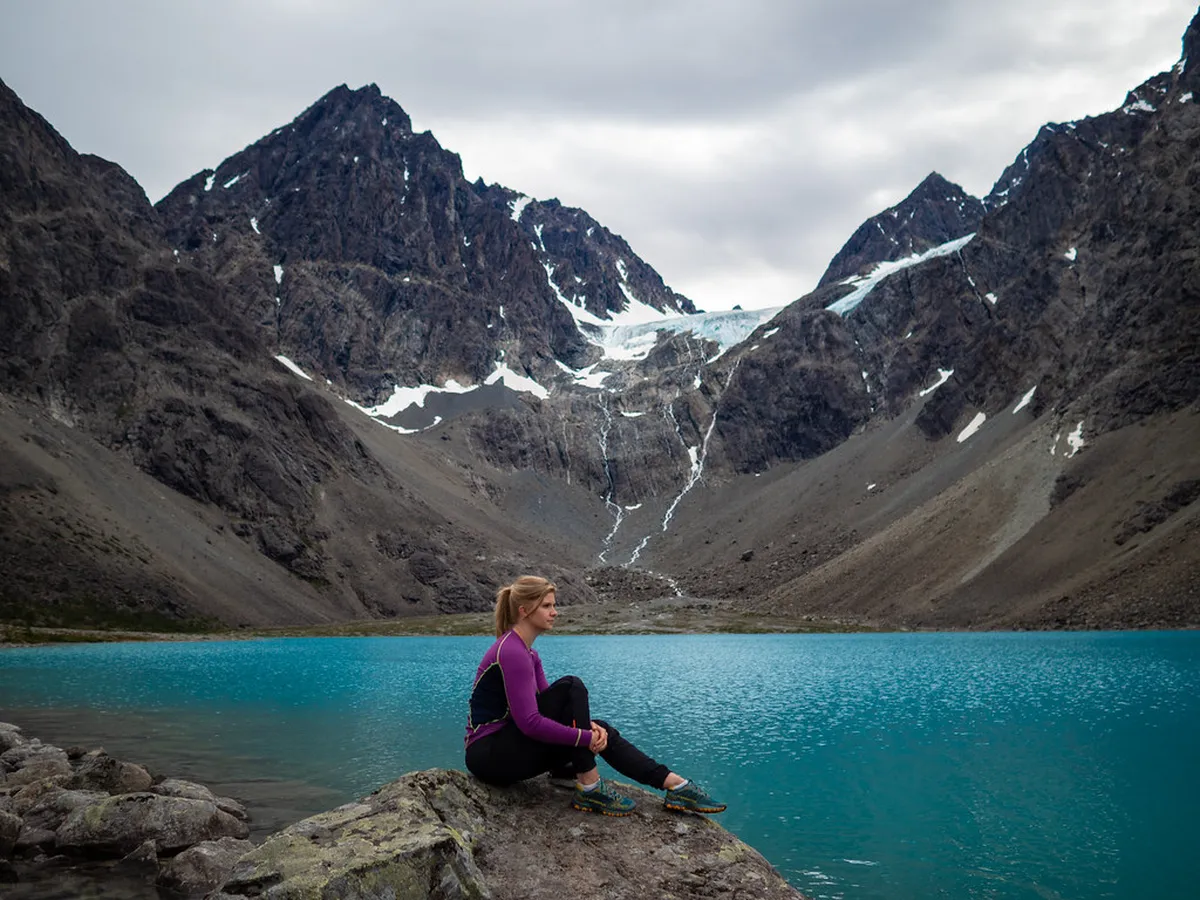
The most reliable escape route is east along the E8 highway toward Skibotn, roughly 90 minutes from Tromsø city centre. Skibotn sits in a rain-shadow valley on the Finnish border where annual precipitation is less than half of Tromsø's total. On nights when the city is overcast, Skibotn often has clear skies and strong Aurora displays. Serious Aurora photographers plan to be mobile, not stationary — and they check live weather forecasts for the Skibotn and Storfjord area before committing to a night out.
The Lyngen Alps corridor, south of the city via the E6 and ferry, offers a second option. The mountains there create their own partial rain shadow on the eastern slopes. In winter, this area is also prime for ski touring and heli-skiing, which means you can combine Aurora hunting and backcountry skiing in a single day trip. The microclimate difference between coast and inland is the single most underestimated planning factor for visitors chasing clear skies — more important, on most nights, than the Kp index or the phase of the moon.
Best Time to Visit Tromsø for Specific Activities
Different goals demand different windows. The list below cuts through the seasonal generalities and maps specific activities to the months where conditions are genuinely optimal, not just adequate.
- Northern Lights photography: February and March for the combination of full darkness, manageable cold, and snow-covered landscapes. Late January is the first reliable window after Polar Night. Avoid September–October unless you plan to chase clear skies inland — coastal cloud is heavy.
- Midnight Sun hiking: Late June and July for warm temperatures and full 24-hour light. August is drier than July and less crowded. The Tromsdalstinden summit (1,238 m) is accessible without crampons from late June to late September.
- Ski touring and winter sports: March is the sweet spot — maximum snow depth, returning daylight, and temperatures rarely below -8°C (18°F). The Lyngen Alps are the primary backcountry destination.
- Whale watching: November through January as orca and humpback whales follow herring into the Kvaenangen and Skjervøy fjords north of the city. Book well in advance — this is a niche, high-demand window.
- Budget travel: April, May, and early October offer the lowest accommodation prices. May is particularly attractive: dry weather, long days, and spring wildflowers, without summer crowds.
- Arctic photography (blue hour + snow): Late March, when the sun is low enough to produce a two-hour blue-and-pink twilight across unbroken snow. Local landscape photographers rate March as the best month of the year for this reason, and it is almost entirely absent from international travel content.
For a full planning breakdown by interest, see our best time to visit Tromsø guide.
Essential Packing List for Tromsø Weather
Layering is the core principle, but the specific items matter more than the general advice. The list below is calibrated to the actual conditions in Tromsø — coastal moisture, icy pavements, and rapid temperature shifts — rather than a generic cold-weather checklist.
- Merino wool base layer (top and bottom): Regulates body temperature without retaining sweat smell. Synthetic fleece works too, but merino handles the sauna-to-exterior transition better.
- Insulated mid-layer (down or synthetic puffer): A 600-fill-power down jacket covers November through March. A lighter fleece works for April–May and September–October.
- Windproof, fully waterproof shell: Non-negotiable in every season. Look for sealed seams and a hood with adjustment — the coastal gusts in Tromsø drive rain and snow horizontally.
- Waterproof boots rated to -20°C (-4°F): Standard leather boots fail within days on wet, icy streets. Boots with a Vibram sole provide grip on packed snow. Add Yaktrax or screw-in spikes (sold cheaply in every local outdoor shop) for glazed ice on city pavements.
- Wool or fleece hat covering the ears, plus balaclava for Aurora tours: The balaclava becomes essential when you stand still for 30–90 minutes during a night excursion.
- Liner gloves plus over-mitts: Two layers allow you to operate a camera or phone without removing your main gloves.
- Polarized sunglasses: Essential in March–April when low sun on bright snow creates blinding glare.
- Tall gaiters or waterproof over-trousers: Specifically for the slapseføre season in April–May, when slush can be ankle-deep.
Our winter packing list covers these items in detail with brand recommendations and weight estimates for carry-on travelers.
Pair this with our main Tromsø things-to-do guide to plan the rest of your trip.
Frequently Asked Questions
What is the coldest month in Tromso?
January and February are typically the coldest months in the city. Temperatures average around -4°C (25°F) but can drop lower during cold snaps. You must wear high-quality thermal layers to stay warm.
When does the Midnight Sun start in Tromso?
The Midnight Sun officially begins around May 20th and lasts until July 22nd. During this time, the sun never sets below the horizon line. This provides 24 hours of daylight for hiking and exploration.
Does it snow in Tromso in October?
Yes, the first snowfall often occurs in late October or early November. The snow usually melts quickly at sea level but stays on the mountains. You should prepare for wet and chilly conditions during this month.
Tromsø is a spectacular destination regardless of when you choose to visit. The shifting Polar Night and Midnight Sun create two entirely different worlds. By understanding the monthly weather patterns, you can pack correctly and set realistic expectations. Whether you want the Northern Lights or mountain hikes, the Arctic is waiting for you.
Remember to book your tours and accommodation early for the peak winter season. The city offers a warm welcome even when the outside temperatures are freezing. Safe travels as you plan your incredible journey to the heart of Northern Norway.
You might also like
Continue reading
More guides you'll find useful