Northern Lights Chase vs Camp Tromso: Which is Best?
Deciding between a northern lights chase or a camp in Tromsø? Compare success rates, comfort, photography, and costs in our expert guide.
On this page
Northern Lights Chase vs. Camp in Tromsø: 10 Critical Differences
I have spent many cold nights hunting the aurora in Tromsø. Last winter I completed both a mobile minibus chase and a stationary camp tour in the same week, on purpose, so I could compare them back to back. This guide is built on that direct experience. Choosing between a northern lights chase vs camp Tromso is genuinely consequential — the two tours feel nothing alike once you are standing in the dark at 23:00.
The Arctic weather changes fast and can ruin even the most optimistic plans. You should consider the Best Time to Visit Tromsø: The Ultimate Seasonal Guide before booking any tour. One format prioritises mobility and success rates; the other prioritises warmth, food, and a social atmosphere. If this is your only night in Tromsø, book the chase. If you have two or more nights, you may want both.
Defining the Northern Lights Chase: The Mobile Strategy
A northern lights chase uses a minibus to pursue clear sky. Guides monitor satellite weather imagery, Yr.no forecasts, and local road conditions throughout the evening. When clouds settle over Tromsø, the driver moves — sometimes 50 kilometres east toward the Lyngen Alps, sometimes all the way to Skibotn or even across the border into Finland. Operators like Best Arctic run minibus tours with groups of up to 14 guests, which keeps the vehicle nimble and the atmosphere intimate.
The guide's job is equal parts meteorologist and photographer's assistant. They scan multiple weather models simultaneously and make a route call before departure or redirect en route. You will spend portions of the night seated in a warm vehicle, which is actually a welcome break from the cold. But when the guide pulls over and says the lights are starting, you must be ready to step outside immediately and work fast.
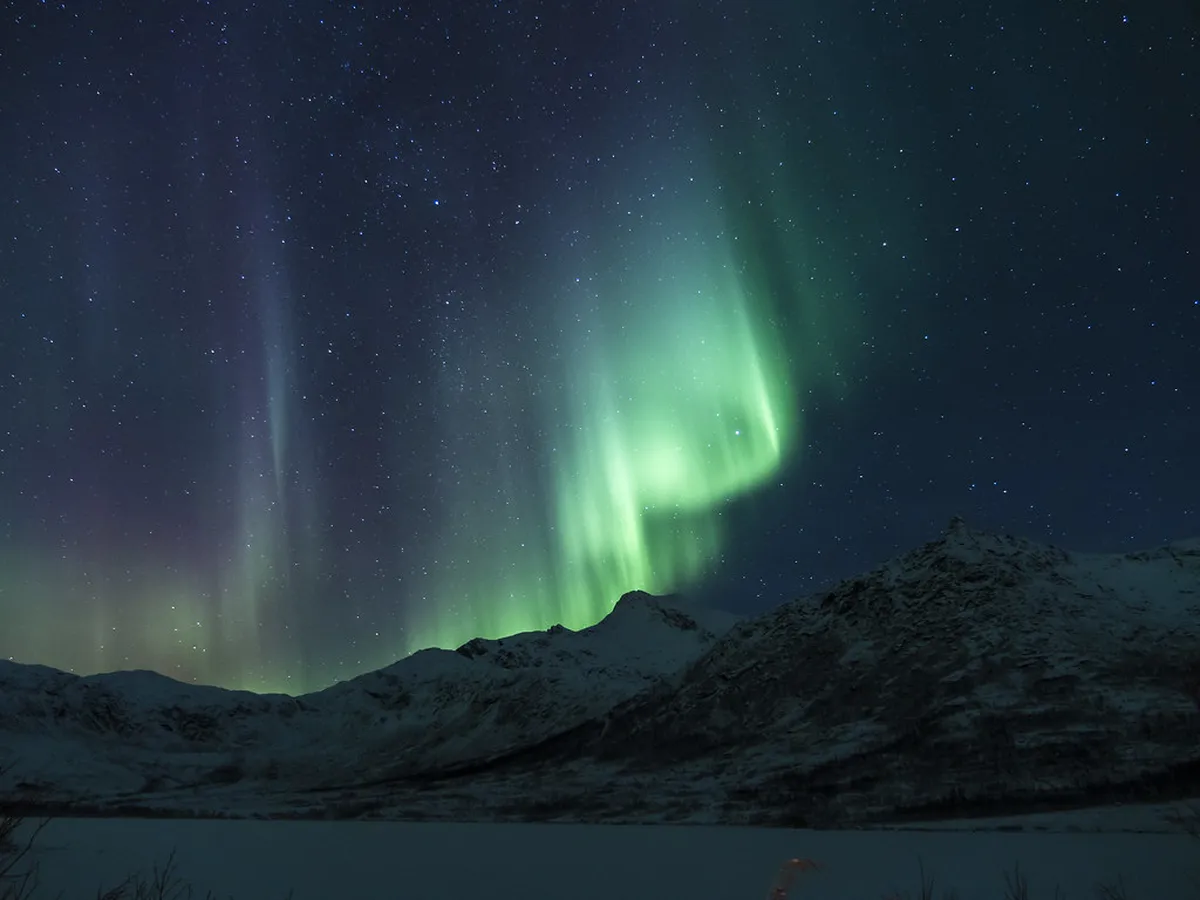
You get the full benefit of 10 Essential Tips for Northern Lights Photography in Tromso coaching on a chase. Guides help you set up tripods on uneven snow, advise on ISO and shutter speed, and often scout a striking foreground — a frozen lake, a silhouette of pines, a shoreline with reflections — before the bus stops. The variety of locations you visit in one evening is something a fixed camp simply cannot replicate.
Defining the Northern Lights Camp: The Stationary Experience
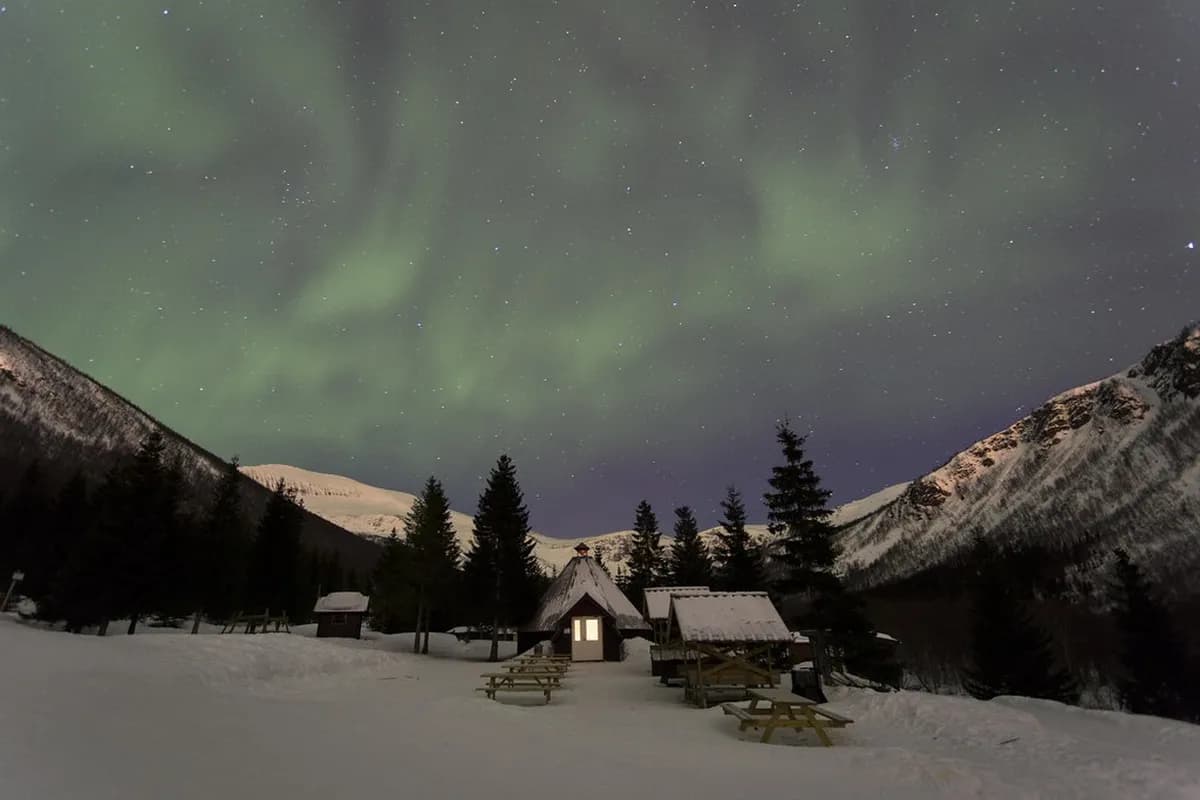
A camp tour takes you to a single pre-chosen private location, usually selected two hours before departure based on that night's forecast. The site might be a wooden cabin by a fjord, a Sami-style lavvu tent in a pine clearing, or a small farmstead with mountain views. You stay there for the entire evening — typically five to seven hours — and the aurora either appears or it does not. This fixed nature is the camp's main limitation and also its greatest strength: there is nowhere else to be, so you relax.
The Best Arctic Aurora Safari Camp, one of the most popular formats in Tromsø, accommodates up to 44 guests transported by a large coach. That larger group size is worth noting. It changes the social texture of the evening considerably. You are sharing warmth and conversation with more strangers, which many travellers enjoy and others find overwhelming. Smaller camp-style tours do exist but tend to cost more.
The facilities are a genuine draw. Having access to a real indoor toilet and a place to sit down makes the long winter night vastly more comfortable. You can step outside when guides announce the lights and retreat inside when the cold becomes too much. Knowing Where to Stay in Tromsø: 10 Best Areas & Hotel Picks helps you understand which camps are closest to your hotel for easy pickup logistics.
Success Rates: How Mobility Impacts Your Aurora Chances
The success rate is consistently higher on a mobile chase, and the reason is simple: Tromsø sits on the coast, where weather is volatile and unpredictable across short distances. A single evening might bring cloud cover over the city while the valley at Skibotn, 90 kilometres southeast, sits under a completely clear sky. A chase can reach that gap. A camp, even one sited in a historically drier zone, cannot move if the weather does not cooperate.
The "Blue Hole" phenomenon is real and well-known to local guides. Cold continental air from the inland plateau sometimes creates a pocket of clear sky that drifts slowly through an otherwise overcast night. Experienced chase guides track this gap in real time and position the bus underneath it. I have personally seen guides drive two hours in one direction, stop, then reverse course and drive an hour the other way when a better clearing opened up. A camp guest in a fixed location that night would have seen nothing.
That said, some camps are deliberately placed in micro-climates with naturally low cloud frequency — inland sites near Balsfjord or the Lyngen peninsula approach, for instance. On a night when the entire region is clear, the camp and the chase deliver equivalent results. The divergence appears on the ambiguous nights, which in Tromsø are the majority of nights between October and March. Using 10 Essential Tromso Travel Tips: The Ultimate Arctic Guide can help you understand the local weather rhythms before you arrive.
Comfort Levels: Comparing Facilities, Toilets, and Warmth
Both tours typically provide thermal suits and insulated winter boots. Even so, the type of cold you encounter differs significantly. On a chase, you experience intermittent cold — you get out of the warm bus, stand in a field for 30 to 90 minutes, and get back in. The vehicle stays heated. On a camp tour, you are exposed to the full duration of the Arctic night, though the indoor shelter makes this very manageable. Check your 8 Essential Categories for Your Tromso Winter Packing List before either tour: merino wool base layers are non-negotiable regardless of which format you choose.
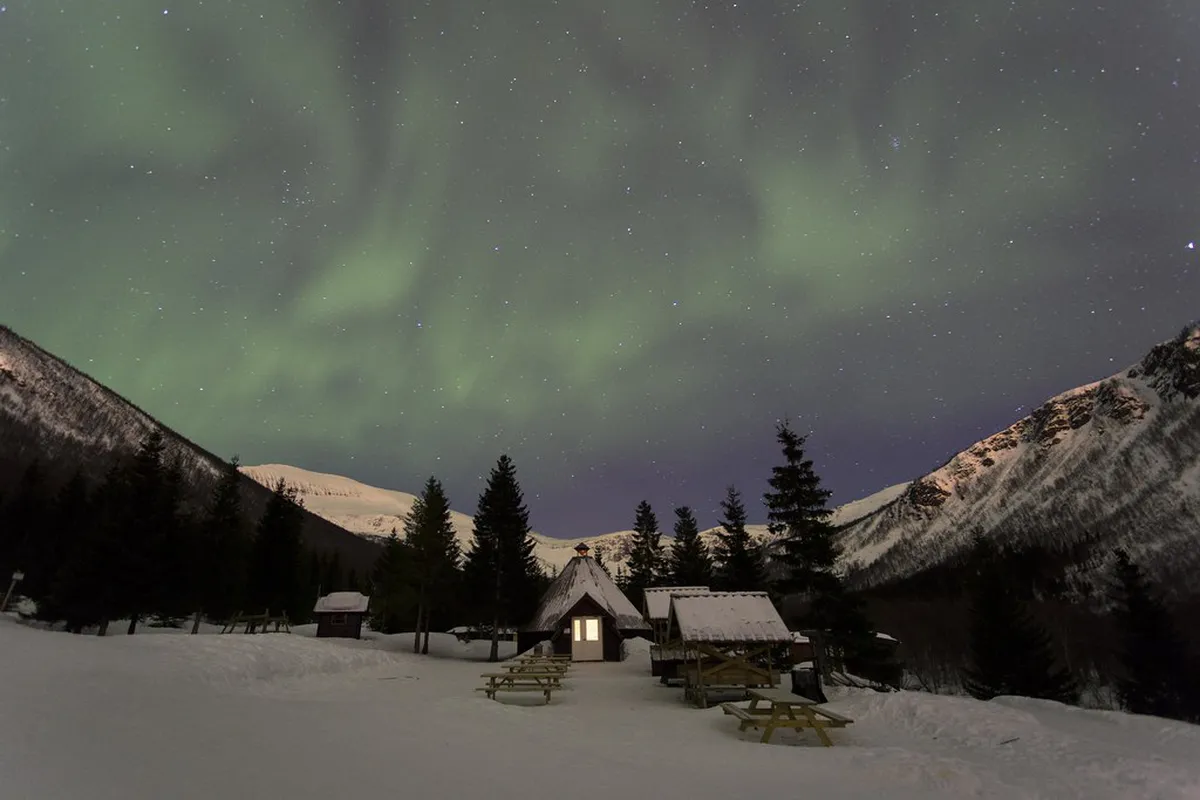
The toilet situation is a genuine differentiator. On a chase, facilities depend entirely on wherever the bus happens to stop — sometimes a roadside petrol station, sometimes a roadside pull-off with no facilities at all. On a camp, there are proper indoor toilets at the basecamp. This sounds minor until you are six hours into a cold night and the nearest town is 60 kilometres away. Families travelling with young children should weight this very heavily.
Camps also offer something a chase cannot: a place to sit down and warm your feet by an open fire while still scanning the horizon for lights. On a chase, your seating options are the vehicle seat or a snow-covered hillside. I found the camp fire far more restorative on a long night, even if I sacrificed some aurora probability.
Food and Drink: Hot Meals vs. Thermal Flasks
The food difference between the two formats is stark. Camp tours serve a proper hot meal — reindeer stew and local vegetable soup are common, along with hot drinks and a Norwegian sweet pastry. This is part of the cultural experience and not merely a practical convenience. Sharing a bowl of warm soup with strangers while waiting for the sky to move is genuinely pleasant. Vegetarian alternatives are available on request at most established camps including Best Arctic's Aurora Safari Camp.
Chase tours vary more on food. Budget-tier large-bus chases may provide nothing beyond a hot drink from a thermos. Mid-range minibus tours typically include hot drinks and a light snack. Only the premium all-inclusive minibus tours offer a full hot meal stop, usually at a roadside café or a prearranged restaurant en route. When comparing prices between a chase and a camp, factor in whether a meal is included — it affects the real cost differential.
If you are on a full-day Tromsø itinerary and plan to eat dinner before the tour, the food difference matters less. But if you are heading straight from the hotel lobby to the tour departure at 18:00 or 19:00, and the tour runs until 01:00, a hot meal mid-evening is a genuine necessity rather than a perk.
Photography: Professional Portraits and Tripod Availability
Both tour formats now typically offer guided photography assistance and the option to borrow a tripod. The key difference is the depth of that support and the quality of the locations. On a chase, the guide actively selects foreground elements — a frozen river, a mountain silhouette, a shoreline with aurora reflections — which dramatically improves your results compared to standing in a flat car park. Guides on good minibus tours will also crouch behind your camera and adjust settings with you, not just shout instructions from ten metres away.
Camp tours offer a different photography value: the guide has unlimited time at a fixed location and will take portrait-quality shots of each guest or couple under the lights. Best Arctic's camp guides take winter portraits and landscape photos that guests can download in standard resolution for free, with high-resolution files available for purchase. If you want a record-quality photo of yourself in the Arctic, the camp's dedicated portrait session is actually superior to the ad-hoc approach on a chase.
For serious photographers who bring their own camera equipment and want creative control over composition, the chase wins decisively. You will reach multiple locations in a single night, each with different natural foregrounds and light angles. Popular chase routes often include stops at Fjellheisen, the cable car summit offering dramatic mountain backdrops, along with fjord shorelines and alpine clearings. The camp gives you one location and one perspective, which can be stunning but lacks variety. If you are travelling with a smartphone only and mainly want a professional portrait, the camp delivers more reliably.
Group Dynamics: Big Bus Socialising vs. Small Group Flexibility
Group size shapes the entire character of the evening. Chase minibuses typically carry 8 to 14 guests — intimate enough that the guide can give individual attention, nimble enough to park on a rural road where a coach would be impossible. The smaller group also means less light pollution when everyone pulls out their phones and torches, which matters for long-exposure photography. If one person in the group does something disruptive — leaves a torch on during an exposure, makes noise at a critical moment — it affects everyone. Guides manage this actively on small tours.
Camp tours run the spectrum from boutique (8 to 20 guests) to very large (Best Arctic's camp bus carries up to 44 guests). The large-format camp is a social event as much as an aurora hunt. You will meet people from many different countries, share a meal around a common table, and listen to the host's stories about life in the Arctic. Some travellers love this; others find 44 strangers in a small cabin overwhelming. Check the specific group size cap when booking — it is not always prominently advertised.
For solo travellers, both formats work well, but the camp often generates more conversation and spontaneous connection. For couples, the small minibus feels more private and adventurous. For groups of friends, either format suits depending on whether your group wants action or atmosphere.
Group size caps vary dramatically between tours. Check the specific group size limit when booking — some camps advertise flexibility but operate at near capacity. A tour listed as "8–20 guests" may run consistently at 18–20. This makes a measurable difference to your experience, especially for photography.
Practical Logistics: Duration, Pick-up, and Drop-off
Most chase and camp tours depart between 18:00 and 20:00 from central Tromsø and return between 23:00 and 02:00. That puts the total duration at roughly five to eight hours. Chase tours on cloudy nights frequently run longer because the guide continues driving to find clear sky — a six-hour tour can stretch to nine. Camp tours are more predictable in timing because the bus does not need to reposition.
Pick-up logistics differ. Minibus chases typically collect guests from a list of central hotels — Thon Hotel Polar and Clarion Hotel The Edge are standard pick-up points for most operators. If your accommodation is outside the standard hotel zone, confirm pick-up availability when booking. Camp tours using a large coach often depart from a fixed central bus stop rather than hotel-by-hotel pick-up, which requires guests to make their own way to the departure point.
Return drop-off is usually the reverse of pick-up — hotel-by-hotel for minibuses, central stop for large coaches. If you have an early morning flight, a camp tour that ends reliably by 23:30 may be safer than a chase that could run to 02:00. Factor your next-day plans into the booking decision. Tromsø Airport is small and early check-ins are common on regional Norwegian routes.
Price Comparison: Which Option Fits Your Budget?
In 2026, the price range for northern lights tours in Tromsø runs roughly as follows. Large-bus camp tours with 40+ guests typically cost 900–1,200 NOK (approximately €80–€110) per person. Small-group minibus chases range from 1,200–1,700 NOK (approximately €110–€155) per person for a standard tour including thermal suit, hot drinks, and snack. Premium all-inclusive minibus tours with a full hot meal, professional photos, and boots included reach 1,800–2,200 NOK (approximately €165–€200).
The apparent price advantage of the camp tour narrows once you account for inclusions. A camp tour that includes a full hot meal and professional photos at 1,000 NOK competes strongly with a chase tour at 1,400 NOK that provides only hot drinks. Compare the full inclusion list, not just the headline price. Budget chase tours exist — large-bus options without thermal suits start around 600–700 NOK — but the lack of cold-weather kit and guide flexibility makes them a false saving in January.
If you are comparing value per aurora-viewing minute, the chase is usually superior simply because of the higher probability of actually seeing lights. An €80 camp tour where clouds never break delivers zero value. A €155 chase tour that drives to Finland and finds a clear window delivers the core experience you came to Tromsø for. Book the best hotels in Tromsø using our guide to 12 Best Hotels in Tromso: Local Guide to Where to Stay and budget for one quality tour rather than two budget options.
Avoid ultra-budget chase tours (under 700 NOK) in deep winter that don't include thermal suits and winter boots. The false saving evaporates quickly when you're standing in -15°C without proper insulation — you'll either miss the lights because you stay in the bus the whole time, or risk genuine cold injury. Invest in the mid-range tour that includes cold-weather gear.
Seasonal Timing: How the Right Choice Shifts Across the Winter
The optimal decision between a chase and a camp changes meaningfully depending on when you visit. In early season — September through October — temperatures are relatively mild (often -2°C to +4°C overnight) and the landscape lacks deep snow. The comfort gap between standing outdoors on a chase and sitting in a camp shelter is narrower. The aurora can be vivid in October, but the lack of snow on the ground means foreground elements for photography are less dramatic. Either tour works in this window.
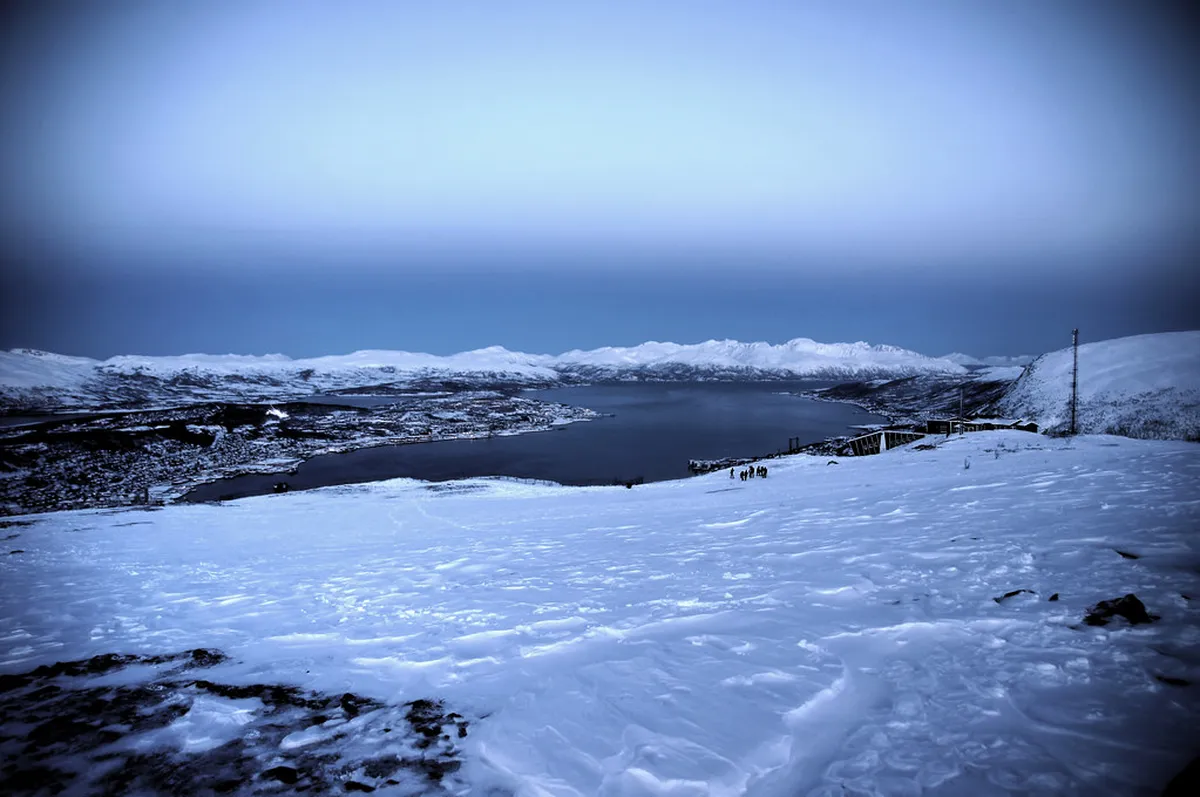
In deep winter — December through February — the calculus shifts. Temperatures regularly drop to -10°C to -20°C inland, which makes the chase's intermittent outdoor exposure genuinely punishing for guests not accustomed to Arctic cold. Families with children, older travellers, and anyone who runs cold should strongly weight the camp for January and February. The tradeoff is that snow-covered landscapes make chase photography spectacular when guides find clear skies — the best aurora images from Tromsø are nearly all shot in this deep-winter window.
March is arguably the most balanced month. Temperatures are rising, snow remains on the ground, and daylight is returning, which means you can enjoy daytime activities and still hunt the aurora after dark. Both formats perform well in March. If you can only visit once and want the best all-round experience, early-to-mid March 2026 is the sweet spot where photography, comfort, and activity options align most favourably.
Summary Table: Chase vs. Camp at a Glance
My honest recommendation is to book a mobile chase on your first night in Tromsø. You came to the Arctic to see the lights, and the chase gives you the highest probability of achieving that. If you have a second free night, add a camp tour — it offers a completely different atmosphere and makes the whole trip feel balanced between adventure and relaxation. Most visitors who do both in the same trip say the chase is more exciting and the camp is more memorable as a cultural evening.
| Factor | Northern Lights Chase | Northern Lights Camp |
|---|---|---|
| Success rate | Higher (can move to clear sky) | Lower (fixed location) |
| Group size | 8–14 guests | 8–44 guests (varies widely) |
| Tour duration | 6–9 hours (flexible) | 5–7 hours (predictable) |
| Food | Snack or meal (tour-dependent) | Hot meal included |
| Toilets | Gas stations / outdoors | Proper indoor facilities |
| Photography | Multiple locations, guide coaching | Professional portraits, one location |
| Cost (2026) | 1,200–2,200 NOK (€110–€200) | 900–1,400 NOK (€80–€130) |
| Best for | Photographers, solo travellers, cloudy nights | Families, couples, cultural experience |
| Ideal season | Year-round, best in deep winter for photos | October–March, especially for families in Jan–Feb |
Frequently Asked Questions
Is a northern lights chase or camp better for families?
A camp is usually better for families with children. It provides warm indoor spaces and real toilets. Kids can play inside while adults watch for the lights. Check 15 Best Things to Do in Tromsø, Norway for more family ideas.
Do northern lights camps have toilets?
Yes, most established northern lights camps have proper toilet facilities. This is a major advantage over mobile chases. Chases often rely on gas stations or outdoor spots. It makes the long night much more comfortable.
Which tour has a higher success rate in Tromsø?
The mobile chase has a higher success rate because it moves. Guides can drive away from clouds to find clear sky. A camp is stationary and depends on local weather. Chases can travel hundreds of kilometers if needed.
Choosing between a chase and a camp is about your priorities. The chase is for the dedicated hunter who wants the view. The camp is for the traveller who wants a cozy night and a cultural Arctic evening. Both offer a unique way to experience the wilderness above the Arctic Circle in 2026.
I suggest booking your first tour early in your trip and leaving at least one backup night in case weather cancels or disappoints. Tromsø is a magical place regardless of which format you choose. The dancing green lights overhead make every cold, dark hour worth it.
You might also like
Continue reading
More guides you'll find useful